
Order Designating the Qikiqtait Marine Protected Area: SOR/2026-57
Canada Gazette, Part II, Volume 160, Number 7
Registration
SOR/2026-57 March 24, 2026
OCEANS ACT
Whereas the annexed Order designates the Qikiqtait Marine Protected Area in a manner that is not inconsistent with a land claims agreement that has been given effect and has been ratified or approved by an Act of Parliament;
Therefore, the Minister of Fisheries and Oceans makes the annexed Order Designating the Qikiqtait Marine Protected Area under subsection 35.1(2)footnote a of the Oceans Act footnote b.
Ottawa, March 20, 2026
Joanne Thompson
Minister of Fisheries and Oceans
Order Designating the Qikiqtait Marine Protected Area
Definitions
1 The following definitions apply in this Order.
- Marine Protected Area
- means the area of the sea that is designated in section 2. (zone de protection marine)
- Nunavik Agreement
- means the land claims agreement between the Nunavik Inuit and Her Majesty the Queen in right of Canada signed on December 1, 2006, including any amendments made to it. (Accord du Nunavik )
- Nunavut Agreement
- means the land claims agreement between the Inuit of the Nunavut Settlement Area and Her Majesty the Queen in right of Canada, signed on May 25, 1993 and tabled in the House of Commons for the Minister of Indian Affairs and Northern Development on May 26, 1993, and includes any amendments to that agreement made under the agreement. (Accord du Nunavut)
Designation of Marine Protected Area
2 (1) The area of the sea in the Arctic Ocean consisting of a part of the waters of Hudson Bay — as described in field book FB44738 CLSR, certified on November 1, 2024 and depicted in plan 113359 CLSR, which are both deposited in the Canada Lands Surveys Records — is designated as the Qikiqtait Marine Protected Area.
Seabed, subsoil and water column
(2) The Marine Protected Area consists of the seabed, the subsoil to a depth of five metres and the water column above the seabed, including the sea ice, each of which is below the low-water line.
Ongoing activities
3 For the purposes of paragraph 35.1(2)(a) of the Oceans Act, the following classes of activities are ongoing activities in the Marine Protected Area:
- (a) hunting and trapping;
- (b) fishing;
- (c) harvesting marine plants;
- (d) constructing, dismantling, maintaining, repairing and using temporary structures on sea ice;
- (e) marine navigation;
- (f) national defence activities carried out by the Department of National Defence;
- (g) Canadian Coast Guard activities carried out by the Canadian Coast Guard;
- (h) tourism activities;
- (i) recreational activities;
- (j) educational activities;
- (k) travelling over sea ice using motorized vehicles and non-motorized methods;
- (l) Inuit Qaujimajatuqangit and community-based research activities;
- (m) scientific research activities; and
- (n) filming and media content development.
Prohibitions
4 It is prohibited in the Marine Protected Area to carry out any activity — other than those that are part of a class of activities set out in section 3 — that disturbs, damages, destroys or removes from the Marine Protected Area any unique geological or archeological features or any living marine organism or any part of its habitat, or is likely to do so.
Non-application
5 This Order does not apply with respect to the exercise of rights of the Inuit as provided for in either the Nunavut Agreement or the Nunavik Agreement.
Coming into force
6 This Order comes into force on the day on which it is registered.
REGULATORY IMPACT ANALYSIS STATEMENT
(This statement is not part of the Order.)
Executive summary
The Qikiqtait Study Area (or Qikiqtait) is a unique and critically important habitat in Canada’s Arctic. It is located in the Nunavut Settlement Area (NSA), within the Belcher Island Ecologically and Biologically Significant Area in southeast Hudson Bay. This area maintains a number of annually recurring polynyas (i.e. open water surrounded by thick sea-ice cover), which provide key habitat for species such as polar bears, sea birds, seals, belugas, Atlantic walrus and Arctic char. The polynya system in Qikiqtait is central to Inuit harvesting and food security, ensuring that activities such as fishing and hunting can continue year-round.
In 2021, Fisheries and Oceans Canada (DFO), Qikiqtani Inuit Association (QIA), Environment and Climate Change Canada (ECCC), Transport Canada (TC), and the Government of Nunavut (GN) formed a working group to advance the consideration of marine protection in Qikiqtait. In 2022, following a joint statement from Canada’s Prime Minister and Canadian Inuit leaders to advance sustainable marine management and environmental protection in the Qikiqtani region of the NSA, partners agreed to pursue a Ministerial Order Marine Protected Area (MPA) in this area, and to work collaboratively to explore long-term marine protection for the area, including the development of an Inuit Protected and Conserved Area (IPCA) that upholds Inuit-led conservation and stewardship. The protection of the Qikiqtait area is also a commitment under the SINAA Agreement (formerly known as the Qikiqtani Project Finance for Permanence initiative).
The Minister of Fisheries and Oceans made the Order Designating the Qikiqtait Marine Protected Area (MPA) under s. 35.1(2) of the Oceans Act (Ministerial Order MPA). This Ministerial Order MPA freezes the footprint of activities in the area for up to 5 years. This means that no new human activities, other than Inuit activities provided for in the Nunavut Agreement and the Nunavik Agreement, and activities otherwise subject to the statutory exceptions provided for under subsection 35.1(3) of the Oceans Act, are allowed in the area for the duration of the Ministerial Order MPA. Activities that have lawfully occurred in the area over the 12 months prior to designation (or that were authorized by federal or territorial permit, licence, or some other form of express authorization to occur but have not yet taken place) are allowed to continue for the duration of the Order. In addition, marine scientific research and activities carried out in response to emergency situations or for purposes of public safety, national defence, national security or law enforcement, are already covered by the statutory exceptions set out under subsection 35.1(3) of the Oceans Act and are therefore allowed.
The establishment of the Qikiqtait Ministerial Order MPA contributes 0.74% to Canada’s 2030 marine conservation target (MCT) and advances Canada’s mandate toward increasing Indigenous collaboration on marine conservation.
In addition to respecting the rights of Inuit as provided for in the Nunavut Agreement and the Nunavik Agreement, this Ministerial Order MPA respects the objectives of the jointly developed Inuit Nunangat Policy, developed to promote prosperity and support community and individual well-being throughout Inuit Nunangat, with the goal of socio-economic and cultural equity between Inuit and other Canadians.
Issues
The Qikiqtait MPA is considered ecologically unique in that it maintains several annually recurring polynyas made possible by the presence of small estuaries, strong inter-island currents, and local oceanography. These polynyas provide critical habitat for Arctic species such as polar bears, sea birds, seals, belugas and Atlantic walrus and are vital winter feeding grounds. Qikiqtait also has some of the coldest summer sea-surface temperatures in coastal Hudson Bay south of Southampton Island, which suggests that there is strong vertical mixing in this area to sustain high primary productivity and energy transfer through the food web. The area falls within an area that is central to Inuit harvesting and food security, as this polynya system enables Inuit to fish and hunt year-round.
The Qikiqtait MPA represents a portion of the Canadian Arctic that contains critical year-round and seasonally important habitat for a variety of aquatic species. As part of the marine waters surrounding the Belcher Islands, Qikiqtait is a unique and important environment largely due to
- Strong upwelling and a recurrent biologically important polynya system in the winter;
- Large river plumes and estuaries providing nutrient-rich water to the Qikiqtait region;
- A productive benthic invertebrate community;
- Large aggregations of common eider (Somateria mollissima sedentaria);
- Migratory Arctic char (Salvelinus alpinus) and subsistence foods such as scallops, sea urchin and sea cucumber. Subsistence foods are acquired by hunting, fishing and gathering of natural resources for food and livelihood needs of individuals, households, and communities. In the case of Qikiqtait, these foods are harvested by and for the community of Sanikiluaq;
- Resident marine mammals such as Atlantic walrus (Odobenus rosmarus rosmarus), bearded seal (Erignathus barbatus), beluga whale (Delphinapterus leucas), polar bear (Ursus maritimus), and ringed seal (Pusa hispida); and
- Feeding and calving areas for a proportion of these marine mammal species.
Qikiqtait has been identified by the community of Sanikiluaq and the QIA as an important area to protect due to its importance to Inuit in providing key habitat for ecologically and culturally significant species. With the support of the community of Sanikiluaq, DFO and QIA have collaborated on the Ministerial Order MPA under the Oceans Act in Qikiqtait. The overarching objective being to limit the impact of additional unforeseen stressors on the area, while options for long-term protection of the area are explored.
Background
DFO received funding in Budget 2021 to advance marine protection initiatives in this region, and later that year established a working group with membership from DFO, QIA, ECCC, TC, and the GN to advance the consideration of marine protection in Qikiqtait. Following the December 2022 joint statement from Canada’s Prime Minister and Canadian Inuit leaders committing to advance sustainable marine management and environmental protection in the Qikiqtani region of the NSA, partners agreed that a Ministerial Order MPA should be pursued. The Ministerial Order MPA freezes the footprint of ongoing activities in the area for a period of up to five years, while DFO collaborates with its partners in contemplation of long-term options for protection, including consideration of an IPCA.
On February 27, 2025, DFO and ECCC signed the SINAA Agreement with QIA and the Pew Charitable Trusts (representing the philanthropic donors), which includes a shared commitment to advance the protection of the Qikiqtait Ministerial Order MPA. The SINAA Agreement is a historic Indigenous-led project in the Qikiqtani region of Nunavut, which will support one of the largest networks of Inuit-led protected areas worldwide. Through funding from the Government of Canada and philanthropic donors, the SINAA Agreement will enable the Inuit partner to implement its regional conservation model over almost one million square kilometres of lands and waters in the Qikiqtani region.
This phased approach to protection for this area has also received initial support and commitment from local boards and organizations and from local government. This approach helps the Government of Canada and its partners in advancing reconciliation and Inuit self-determination in Nunavut. This approach also aligns with the jointly developed Inuit Nunangat Policy, developed to promote prosperity and support community and individual well-being throughout Inuit Nunangat, with the goal of socio-economic and cultural equity between Inuit and other Canadians. Inuit leadership in marine management is considered vital to helping maintain sustainable development, securing community benefits, mitigating impacts on the sensitive ecosystem, and protecting the area and its resources.
Arctic temperatures are rising faster than the global average, with significant negative effects on sea ice. The Arctic marine environment surrounding Qikiqtait is entering a new state where the open water season is greatly increasing in duration. The species found in Qikiqtait play a critical role in maintaining ecosystem health; however, data pertaining to sea-ice composition and associated biota in this region are limited.
Figure: Map of the Qikiqtait MPA
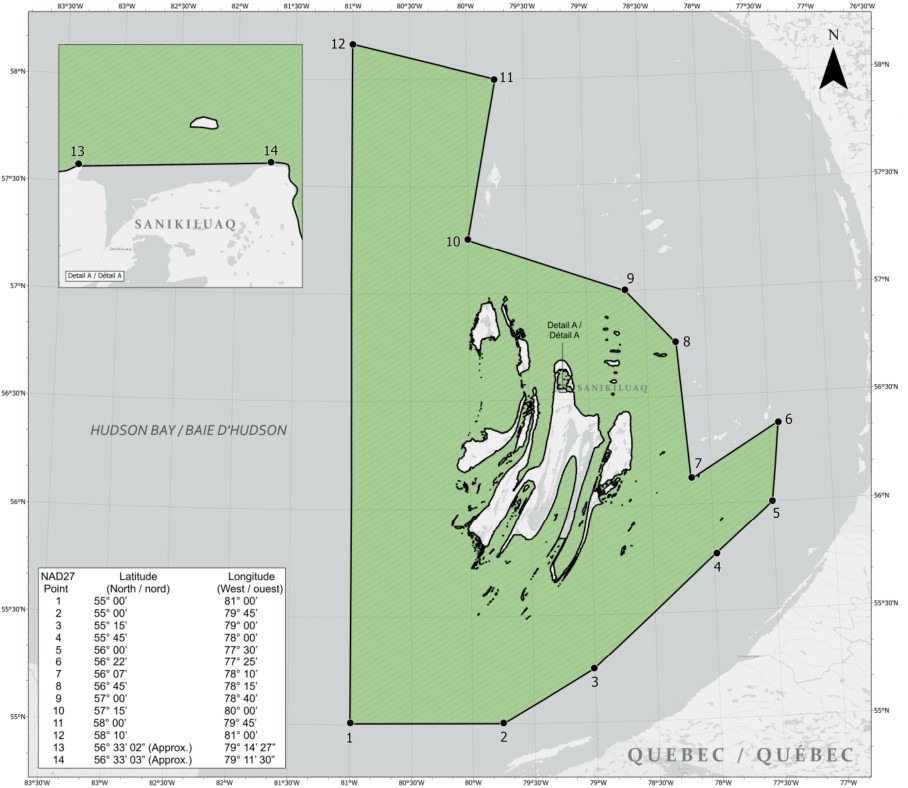
Figure 1: Map of the Qikiqtait MPA - Text version
Figure 1 is a map of the location of the Qikiqtait Marine Protected Area. The map encompasses a large area around the Belcher Islands, located in the Hudson Bay, starting from the low-water mark and extending to the outward boundary of the Marine Protected Area. The outward boundary of the area is delineated by 12 points connected by lines. The coordinates of each point (latitude North, longitude West) are presented in a table at the left bottom corner of the map and are as follows: point 1 at 55°00' North and 81°00' West, point 2 at 55°00' North and 79°45' West, point 3 at 55°15' North and 79°00' West, point 4 at 55°45' North and 78°00' West, point 5 at 56°00' North and 77°30' West, point 6 at 56°22' North and 77°25' West, point 7 at 56°07' North and 78°10' West, point 8 at 56°45' North and 78°15' West, point 9 at 57°00' North and 78°40' West, point 10 at 57°15' North and 80°00' West, point 11 at 58°00' North and 79°45' West, and point 12 at 58°10' North and 81°00' West. At the top left of the figure is a bigger scale map presenting the details of the MPA boundary around the Sanikiluaq community, defined by 2 points with the following coordinates that are also presented in the table: point 13 at 79°14'27” West and approximately 56°33'02” North, and point 14 at 79°11'30” West and approximately 56°33'03” North. The north arrow appears on the top right corner of the map. The map also depicts a portion of the Quebec land, which is located southeast of the Marine Protected Area.
Subsistence harvesting is occurring in the area and is of particular importance for community members from Sanikiluaq. There is also a potential and strong interest in a fisheries economy in the MPA, particularly for scallops, sea urchins, and sea cucumbers. In fall 2024, a Stage I feasibility licence was issued to the Sanikiluaq Hunters and Trappers Association under the authority of the Fisheries Act and Subsection 4(1) of the Aboriginal Communal Fishing Licences Regulations for Icelandic scallops (Chlamys islandica) and sea cucumbers (Cucumaria frondose).
A June 2024 Natural Resources Canada Qualitative Economic Resource Assessment indicated negligible or non-existent petroleum resource potential in the Qikiqtait Ministerial Order MPA.
Currently, shipping and navigation activities around the Belcher Islands for the purposes of community resupply, bulk transport, subsistence fishing, passenger vessels/tourism, research, and government operations (e.g. ice breaking for safety and security) are expected to increase as climate change lengthens the open-water season.
Objective
Objectives for the Qikiqtait Ministerial Order MPA were identified based on current knowledge of the area and are as follows:
- (a) To support the conservation, protection, and understanding of the marine environment around the Belcher Islands, including wildlife and other species, that is of immense value to Inuit and Inuit culture; and
- (b) To support Inuit leadership in the conservation of Qikiqtait to ensure the continuity of Inuit culture, values, and practices, including accumulating and passing down Inuit knowledge as well as Inuit stewardship and governance.
Establishing a Ministerial Order MPA in Qikiqtait provides for the initial conservation and protection of this highly ecologically and biologically significant area, while DFO and its partners explore long-term protection options for the area, including an IPCA. The Ministerial Order MPA freezes the footprint of human activities in the area for a period of up to five years. Data collection will continue in the Qikiqtait area, including research and monitoring to explore the potential of inshore fisheries, supported by DFO in collaboration with the community of Sanikiluaq and Qikiqtaaluk Corporation. In addition, harvesters in Sanikiluaq will continue to log harvesting and monitoring data on the SIKU app,footnote 1 which provides baseline information to users in the area about the types of species found, the condition of wildlife, the local food web, and the seasonal migration of various marine species.
Description
The Qikiqtait Ministerial Order MPA establishes the boundaries and designates an MPA in the southeast portion of Hudson Bay, spanning from the north end of James Bay in the south to Inukjuak in the north.
The Qikiqtait Ministerial Order MPA prohibits all human activities that disturb, damage, destroy or remove from that MPA any unique geological or archeological features or any living marine organism or any part of its habitat or is likely to do so within the designated boundaries, except the activities identified below:
Classes of ongoing activities
For the purposes of paragraph 35.1(2)(a) of the Oceans Act, the following classes of activities are ongoing activities in the MPA:
- Hunting and trapping (including sport hunting)
- Fishing (including sport fishing)
- Harvesting of marine plants
- Constructing, dismantling, maintaining and repairing, and using temporary structures on sea ice
- Marine navigation
- National defence activities carried out by the Department of National Defence
- Canadian Coast Guard activities carried out by the Canadian Coast Guard
- Tourism activities
- Recreational activities
- Educational activities
- Travel over sea ice using motorized vehicles and non-motorized methods
- Inuit Qaujimajatuqangitfootnote 2 and community-based research activities (including stewardship activities)
- Scientific research activities
- Filming and media content development
DFO has consulted with the community of Sanikiluaq, stakeholders, and other federal departments to identify existing and authorized (i.e. ongoing) activities in the Qikiqtait MPA.
Activities under the Nunavut Agreement and the Nunavik Agreement
The Ministerial Order MPA does not apply with respect to the exercise of rights of the Inuit as provided for in either the Nunavut Agreement or the Nunavik Agreement.
Public safety
Any activity carried out on behalf of His Majesty for the purpose of public safety, national defence, national security, or law enforcement or carried out in response to an emergency (including environmental emergencies) is allowed by way of the statutory exception provided under subsection 35.1(3) of the Oceans Act, such as emergency search and rescue, response to shipping or aircraft accidents, or national security requirements.
The entire boundary (which was refined in collaboration with the community of Sanikiluaq and QIA), of the Qikiqtait Ministerial Order MPA falls within the NSA. It also includes the seabed, the subsoil to a depth of five metres and the water column, including sea ice, each of which is below the low-water line. A PDF version of the official description and a map of the boundaries can be found in the Canada Lands Surveys Records (CLSR) by entering the following CLSR numbers: description of the Qikiqtait MPA (FB44738 CLSR) and map of the Qikiqtait MPA (113359 CLSR).
Under a Ministerial Order MPA, the Minister of Fisheries and Oceans freezes the footprint of activities in the area in a manner that is not inconsistent with a land claims agreement that has been given effect and has been ratified or approved by an Act of Parliament, for a period of up to 5 years. This means that activities that have lawfully occurred in the area over the 12 months prior to designation (or that were authorized by a federal or territorial permit, licence, or some other form of express authorization to occur but have not yet taken place) are allowed to continue for the duration of the Ministerial Order MPA. For the duration of the Ministerial Order MPA, no new human activities, other than Inuit activities provided for in the Nunavut Agreement and the Nunavik Agreement, and marine scientific research, and activities carried out for purposes of public safety, national defence, national security or law enforcement, or in response to emergency situations provided for under subsection 35.1(3) of the Oceans Act, are allowed to occur in the area following this designation.
Regulatory development
Consultation
Partnerships
Since 2019, the Government of Canada and QIA have been working together to identify options for the conservation and protection of Qikiqtait and other sites within the Qikiqtani Region of Nunavut. In September 2021, a Qikiqtait and Sarvarjuaq Working Group (the Working Group) was created to advance the conservation and protection of the Qikiqtait and Sarvarjuaq areas toward site establishment by Ministerial Order MPAs under the Oceans Act. The Working Group also provided awareness and shared information with the Inuit Impact and Benefit Agreement (IIBA) negotiation table as needed, with the objective of working in parallel.
Community consultations
In 2019, the community-led Sanikiluaq Qikiqtait Steering Committee (SQSC) was formed to help advance Inuit environmental stewardship in and around Sanikiluaq. The SQSC is the primary point of contact for DFO on area-related conservation matters and includes representatives of the Sanikiluaq Hunters and Trappers Association (HTA), Arctic Eider Society (AES), QIA, and the Hamlet of Sanikiluaq.
The SQSC initially met with QIA, stressing their position that conservation in Qikiqtait must align with community priorities and include community input, while also expressing their support for the Government of Canada’s proposed approach to protecting the area. QIA supported the SQSC’s vision, and worked with the community to secure funding via the Canada Nature Fund while IIBA negotiations were underway.
Meetings between the SQSC, QIA, and the Government of Canada (represented by DFO and ECCC) began in July 2020 to help generate an inventory of resource-related activities in Qikiqtait. In 2021 and 2022, the SQSC further advanced its community-driven efforts monitoring a wide variety of subject matter, including sea ice, and both oceanographic and wildlife monitoring programs. These programs supported a whole-of-community approach using SIKU (the Indigenous Knowledge Social Network app) to document the ongoing resource inventory and support long-term management of Qikiqtait by the community.
At the SQSC’s request, representatives of the Government of Canada (DFO and ECCC), QIA, and the GN conducted the first round of community consultations between November 6 and November 9, 2023, in Sanikiluaq. Meetings were held with the Hamlet, HTA, SQSC and the broader community to share information on the area, seek feedback on a proposed approach to protection, and to address community questions and/or concerns. The Qikiqtait MPA conservation boundary, protection of rights secured under the Nunavut Agreement (including traditional harvesting rights), IIBA negotiation status, Sanikiluaq community interest in commercial fisheries for benthic species, and MPA priorities for Qikiqtait were discussed and consulted upon. There was also meaningful discussion around conservation and other objectives for the Qikiqtait Ministerial Order MPA, and the community’s vision for protecting the area for future generations. Other topics discussed included the ongoing conservation work of the community of Sanikiluaq and priorities being advanced by the community of Sanikiluaq in this area, the connections with Cree and Nunavik communities and the greater Hudson Bay ecosystem, and the role of Sanikiluaq in connecting communities and ecosystem components across the Hudson Bay region. Confirmation was received from the HTA Board Chair that the draft objectives proposed for the Qikiqtait Ministerial Order MPA reflected the community’s vision. The HTA Board Chair indicated that there was strong community support for the proposal.
Between April 15 and April 18, 2024, DFO, ECCC, QIA, and GN conducted a second round of community consultations in Sanikiluaq to seek feedback on DFO’s proposed regulatory intent for an MPA by Ministerial Order under the Oceans Act in Qikiqtait. The SQSC, HTA, and the community of Sanikiluaq were consulted. While the proposal was well received, the community and QIA indicated the need for further discussions on the possibility of a commercial fishery in Qikiqtait and an approach to marine and terrestrial conservation in the long term. The SQSC and community of Sanikiluaq also identified the importance of incorporating Inuit Qaujimajatuqangit (IQ) into DFO’s process to establish and manage MPAs under the Oceans Act. DFO is continuing to engage QIA and the SQSC on these topics.
Other stakeholders
DFO engaged key stakeholders in the Qikiqtait Ministerial Order MPA in two phases. In July 2024, a letter was sent to all parties of the Working Group (DFO, ECCC, GN, QIA) seeking stakeholder input on any ongoing activities currently being conducted or planned within the Qikiqtait Study Area. Following this first round of engagement, in fall 2024, DFO engaged these same stakeholders on its proposed regulatory intent for a Ministerial Order MPA in Qikiqtait, seeking their input.
The stakeholders engaged in this process were identified in collaboration with Working Group partners and included the following: Nunavut Tunngavik Incorporated, Nunavut MCT Steering Committee, Nunavut Water Board, Qikiqtaaluk Wildlife Board, Makivvik, Kativik Regional Government, Nunavik Marine Region Planning Commission, Nunavik Marine Region Wildlife Board, Regional Nunavimmi Umajulirijiit Katujiqatigininga (RNUK), World Wildlife Fund-Canada, Oceans North, Ecology Action Centre, Arctic Eider Society, Canadian Wildlife Federation, Nunavut Fisheries Association (NFA), relevant stakeholders within the Eastern Arctic Groundfish Stakeholder Advisory Committee (EAGSAC), Northern Shrimp Advisory Committee (NSAC), Prairies and Northern Region-Canadian Marine Advisory Council (PNR-CMAC), Nunavut Eastern Arctic Shipping Inc. (NEAS), Shipping Federation of Canada, Woodward Group of Companies, Association of Arctic Expedition Cruise Operators, Northwest Territories and Nunavut Chamber of Mines, Canadian Association of Petroleum Producers, Travel Nunavut, ArcticNet, Nunavut Research Institute, Amundsen Science, RV William Kennedy, Memorial University, Hudson Bay Consortium, Arctic Security Consultants, Inuit Circumpolar Council (ICC), Inuit Tapiriit Kanatami (ITK), and Keewaytinook Okimakanak.
Throughout the consultation process, DFO also engaged all implicated federal departments, including (but not limited to) ECCC, TC, Crown-Indigenous and Northern Affairs Canada, Parks Canada, Natural Resources Canada (NRCan), Canadian Coast Guard, Global Affairs Canada, and the Department of National Defence.
Prepublication in the Canada Gazette, Part I
The proposed Order Designating the Qikiqtait Marine Protected Area was prepublished in the Canada Gazette, Part I for a 30-day comment period from December 21, 2024, to January 20, 2025. Advance notice of the prepublication was sent to stakeholders and interested parties. During that period, comments were received from two Indigenous groups, an environmental non-governmental organization, and an individual.
The majority of the comments were supportive of protecting the area and its biodiversity, and encouraged the implementation of long-term protections as soon as possible.
Concerns have been raised by the GN on how “Small Enclosed Bays” were understood for the purposes of mapping and implementing the MPA boundaries provided in the Ministerial Order MPA.
The role of the MPA is not to define the boundaries of “Small Enclosed Bays” as described in the Nunavut Devolution Agreement. The boundaries illustrated for the Ministerial Order MPA are without prejudice to any positions the GN or the Government of Canada may adopt in ongoing collaborative efforts to interpret/apply the Devolution Agreement’s definition of “Small Enclosed Bays,” including to any other proposed MPAs. The extent of lands that will be under the administration and control of the GN upon the April 1, 2027, transfer date will be determined by the relevant provisions of the Nunavut Devolution Agreement.
DFO, NRCan, and the GN continue to work together to delineate the MPA’s boundaries and in alignment with the Devolution Agreement definition. If necessary, a change to the MPA map and the legal description may be pursued following these collaborative efforts between the Government of Canada and the GN. Correspondingly, the Ministerial Order MPA may, where appropriate, be amended during the period of the Ministerial Order MPA.
Indigenous engagement, consultation and modern treaty obligations
Information on Indigenous engagement and consultation can be found in the above section. As per the Cabinet Directive on the Federal Approach to Modern Treaty Implementation, an assessment was conducted on this proposal. The assessment concluded that implementation of this proposal has an extremely low risk of impacts on the rights, interests, and/or self-government provisions of Nunavut Agreement and Nunavik Agreement Treaty partners. DFO will continue to respect the consultation obligations set out in the Nunavut Agreement and the Nunavik Agreement as is detailed in this proposal. DFO will also continue with its engagement with QIA and other governance bodies in the Treaty area on policy and program changes as part of the implementation of the Ministerial Order MPA and subsequent work related to the establishment of longer-term conservation for the area.
The entire boundary of this Ministerial Order MPA falls within the NSA. It is subject to the requirements specified in the Nunavut Agreement and the Nunavik Agreement (for traditional Nunavik Inuit wildlife harvesting rights within the NSA as provided for under Article 27 of the Nunavik Agreement); including conformity determination by the Nunavut Planning Commission and the review of the MPA by the Nunavut Wildlife Management Board (NWMB). The Qikiqtait proposal was submitted for NPC conformity determination on November 5, 2024. On November 15, 2024, a letter was received from NPC completing its review of Qikiqtait. NPC determined that Qikiqtait was outside the area of an applicable land use plan and that the proposal required screening by the Nunavut Impact Review Board (NIRB). NIRB reviewed the proposal and on February 6, 2025, NIRB provided their screening decision recommending the proposal continue. Under the Nunavut Agreement, the NWMB is the main Institution of Public Government responsible for overseeing wildlife management. It is also the main regulator of access to wildlife in the NSA. Therefore, the proposal to make this Ministerial Order MPA was formally presented to the NWMB for review on February 26, 2025. On March 25, 2025, the NWMB wrote a letter to the Minister of Fisheries and Oceans approving the proposal to protect Qikiqtait through a ministerial order. As per the Nunavut Agreement, Nunavut Inuit have been involved in the decision-making processes for the Qikiqtait Ministerial Order MPA.
Under the Nunavut Agreement, the Government responsible for the establishment of the conservation area is required to negotiate with the Designated Inuit Organization (in this instance QIA), in good faith, for the purpose of concluding an IIBA. On September 22, 2022, the President of QIA wrote a letter to the Minister of Fisheries and Oceans, acknowledging the desire to proceed with MPAs by Ministerial Order for Qikiqtait and Sarvarjuaq, while also seeking agreement to advance the long-term designation of these sites as IPCAs. QIA’s support for the Ministerial Order MPA is contingent on a commitment by the Government of Canada to explore putting in place a long-term conservation approach that supports an IPCA. A phased approach to marine protection is being undertaken whereby Qikiqtait is being protected under a five-year Ministerial Order MPA, while DFO and its partners explore QIA’s vision for long-term protection. It also provides the means for harmonizing QIA’s regional approach to conservation for the Qikiqtani Region, and further opportunities to advance reconciliation and promote Inuit self-determination. An IIBA was signed by the Government of Canada and the QIA prior to the establishment of the Qikiqtait Ministerial Order MPA.
This Ministerial Order MPA does not apply with respect to the exercise of rights, including fishing rights, of the Inuit, as provided for in either the Nunavut Agreement or the Nunavik Agreement.
Instrument choice
Certain marine activities are currently regulated under provisions of the Fisheries Act, the Species at Risk Act, the Canada Shipping Act, 2001, and other federal legislation. However, existing regulatory mechanisms do not protect the habitats, species, ecological integrity, biodiversity, and productivity in the Qikiqtait area from stressors stemming from new human activities resulting from climatic and environmental change.
The Oceans Act provides the Minister of Fisheries and Oceans the authority to, by way of a Ministerial Order MPA, “freeze the footprint” of human activities in an area for a period of up to five years.
This will give the Government of Canada and its partners time to continue exploring long-term protection options for the area — including the consideration of an IPCA — while still protecting the area.
Regulatory analysis
Benefits and costs
Methodology and data
The socio-economic impacts related to the regulatory initiative are framed around the concept of cost and benefit analysis, regional economic impacts, and the distribution of economic impacts. This approach is consistent with previous analyses undertaken by DFO and is aligned with the Treasury Board of Canada Secretariat (TBS) requirements for a regulatory impact analysis. Incremental impacts are estimated over a five-year time frame to align with the time frame of the Ministerial Order MPA comparing the baseline scenario against the regulatory initiative.
The data used to develop the community profiles around the Qikiqtait Ministerial Order MPA primarily came from the 2021 Census Community Profiles. Other sources of information and data came from the Government of Canada, GN, industry and corporations, boards, academic researchers and consultants. While a non-exhaustive search of the existing literature provided very limited social, cultural, and economic information on the Qikiqtait Ministerial Order MPA, where appropriate, the report used information available from relevant publicly accessible sources and in the literature as secondary sources of information.
These limitations have been mitigated to some extent through qualitative discussions that illustrate the expected economic and social outcomes. The appropriate remedy for these limitations is to conduct further research and discussions with communities. Despite data limitations and uncertainties associated with the report, it provides information which may be found useful for decision making, including the development of regulatory intent.
Baseline economic and policy profile
The economic activities that are currently ongoing in the area were identified based on information from one year prior to the potential establishment of the Ministerial Order MPA, as well as any future activities that are allowed to continue in the Qikiqtait Ministerial Order MPA.
The baseline takes into account existing federal, provincial and territorial management measures in force in the area. This also reflects the current ongoing human activities, if any, and the expansion/growth of activities. An assessment of the activities occurring in the Qikiqtait Ministerial Order MPA over the last 12 months indicated the presence of ongoing activities discussed below:
- There is minimal economic activity occurring within the Qikiqtait Ministerial Order MPA.
- Fishing is currently occurring in the area. Limited data is available on these activities. However, consultations confirmed that there are active fisheries in the Qikiqtait Ministerial Order MPA. There is an interest by the community of Sanikiluaq in establishing a multi-species commercial fishery surrounding the Belcher Islands targeting scallops, sea cucumbers, and possibly sea urchins. Community interest in developing this fishery has been consistent since the 1980s and there is a desire for the fishery to be sustainable.
- Subsistence harvesting activities are vital to the community of Sanikiluaq. The community currently engages in activities related to hunting and trapping, fishing, and harvesting.
- No oil and gas exploration, significant discovery, or production licences have been issued in the area. NRCan estimates the oil and gas potential for the Qikiqtait Ministerial Order MPA to be very low.
- Marine vessel and other marine traffic occur for subsistence and traditional use; tourism and recreational use; (outfitting for the purpose of observing wildlife in the area); commercial use (Sealift/goods transportation); scientific research (academic or government research, community-based monitoring program, coastal habitat comprehensive research project); and for National Defence and Canadian Coast Guard activities.
- The area is also used for tourism, educational and recreational activities (e.g. fishing camps, driftwood gathering areas, camp site travel by ATV during summer, spring hunting camps, beluga hunting camps, Eider duck hunting camps, visits to the grave of the man Sanikiluaq is named after, Tuniit camp site visits, camp site travels by dog teams, and outpost camps at the Hudson’s Bay post).
- Traditional knowledge research also takes place in the area through community-led monitoring programs for the entire Belcher Islands.
- There are several travel routes and areas of greatest familiarity, such as travel routes for hunting (e.g. hunting travel routes by skidoo, travel routes by boat to hunt moulting geese, travel through the entire Belcher Islands for seal and polar bear hunting, early summer travel routes to the Baker Dozens Islands), and travel routes to visit nearby communities/Islands for leisure time (sea ice transportation routes to; Baker Dozens Islands, Salikuit Islands, Camsell Island, Kugong Island, Sleeper Islands, etc.).
Costs of establishing the Ministerial Order MPA
Due to the comprehensive list of exemptions and allowed classes of ongoing activities described above for the Qikiqtait Ministerial Order MPA, the marine protections put in place are unlikely to impose any incremental costs to Canadians or industry in the form of foregone revenue or higher costs of operation. Moreover, due to the constitutionally protected Inuit rights under the Nunavut Agreement and the Nunavik Agreement, there are no incremental impacts on Inuit communities. Based on this analysis, no major changes to peoples’ way of life or livelihood are anticipated.
As the Ministerial Order MPA freezes the footprint of activities in the area for a period of up to five years, compliance and enforcement activities will not significantly change from current levels during that time. Occasional costs associated with investigating reports of non-compliance with the Order will likely be limited to isolated and infrequent incidents. These costs will continue to be carried out by the federal government and funded through existing resources.
Benefits of establishing the Qikiqtait Ministerial Order MPA
It is unlikely that increases in benefits from ecosystem services will be realized over a five-year period. That said, it is possible that the long-term protection of the area might result in preservation (i.e. maintaining at current levels) and an increase in benefits for Canadians and for communities that are in close proximity to Qikiqtait. Conducting more marine scientific research in the area may provide valuable information that could help inform the types of benefits that may be realized over the long term.
There are a number of key benefits associated with establishing a Ministerial Order MPA in Qikiqtait. The MPA contributes to enhancing the resilience of Arctic ecosystems and helps maintain critical habitat for a number of important species, such as the common eider, migratory Arctic char, Atlantic walrus, bearded seal, beluga whale, polar bear, ringed seal, and productive benthic invertebrates. The Ministerial Order MPA further limits new pressures on an environment that is already experiencing impacts due to climate change. This initiative and the associated IIBA will help support Inuit leadership, stewardship, and self-determination within the Qikiqtani Region, while also conserving ecosystems, wildlife, and Inuit culture. The IIBA also promotes employment and economic opportunities for communities.
The efforts taken to protect Qikiqtait may also indirectly help to preserve the cultural heritage within and adjacent to the Ministerial Order MPA. Preserving natural and cultural resources benefits Canadians as they learn about the cultural values that exist within Qikiqtait.
Small business lens
The small business lens does not apply, as there are no anticipated incremental costs to small businesses as a result of this Ministerial Order MPA.
One-for-one rule
The Qikiqtait Ministerial Order MPA does not impose any administrative burden on businesses; therefore, the one-for-one rule does not apply.
Regulatory cooperation and alignment
In 2018, the G7 published the Charlevoix Blueprint for Healthy Oceans, Seas and Resilient Coastal Communities. In this, the leaders of the G7, recognizing the need for action in line with previous G7 commitments and the 2030 Agenda, committed to supporting strategies to effectively protect and manage vulnerable areas of our oceans and resources. As an element of this, the leaders of the G7 committed to “advancing efforts beyond the current 2020 Aichi Targets, including the establishment of MPAs where appropriate and practicable....” In line with this, Canada continues to advance marine conservation and set targets beyond the 2020 Aichi Target. During the December 2022 United Nations Convention on Biological Diversity (CBD) conference (COF 15), Canada helped champion an additional target of 30% by 2030. At the meeting, Parties to the CBD adopted the Kunming-Montreal Global Biodiversity Framework (GBF), which includes the target of conserving at least 30% of coastal and marine areas globally by 2030 (Target 3). In the 2025 Speech from the Throne, the Government of Canada reaffirmed its commitment to protecting nature and addressing the global biodiversity crisis and as part of its ongoing leadership, Canada is implementing the GBF. These commitments are reflected in Canada’s 2030 Nature Strategy.
The Qikiqtait Ministerial Order MPA contributes an additional 0.74% to Canada’s Marine Conservation Targets.
Effects on the environment
The Qikiqtait Ministerial Order MPA fulfills targets and key priorities of the Federal Sustainable Development Strategy (2022–2026) Goal 14 to conserve and protect Canada’s oceans. The Qikiqtait Ministerial Order MPA contributes to the United Nations 2030 biodiversity goals and targets for Canada with respect to healthy coasts, oceans, and healthy wildlife populations.
In accordance with the Cabinet Directive on Strategic Environmental and Economic Assessment, DFO conducted an overview scan of the Qikiqtait MPA and adjacent waters in 2023 to provide a comprehensive synthesis of the unique physical, biological, and ecological features that characterize this area and its adjacent waters, as well as known vulnerabilities and knowledge gaps. A strategic environmental and economic assessment is not required, as the Qikiqtait Ministerial Order MPA “freezes the footprint” of activities in the area for a period of up to five years, which further enhances the environmental integrity of the area.
This Ministerial Order is not likely to result in any form of adverse environmental effects to the area.
Gender-based analysis plus
A gender-based analysis plus (GBA+) has been conducted and no GBA+ impacts have been identified for this proposed initiative on the Sanikiluaq (i.e. Qikiqtait’s adjacent community) populations.
There are no target people/groups in Sanikiluaq that are expected to be disproportionately impacted by this MPA.
Anticipated benefits of the Qikiqtait Ministerial Order MPA include those pertaining to research, ecosystem values, and non-use values associated with conserving the marine ecosystem. The SINAA Agreement will have implications for Inuit-led conservation efforts in the Qikiqtani Region of Nunavut, where the Qikiqtait Ministerial Order MPA is located.
Anticipated direct impacts on various socio-economic activities in the community of Sanikiluaq are expected to be negligible given that no restrictions or prohibitions will be placed on the classes of ongoing activities for the five-year period of the Ministerial Order.
No additional compliance barriers will be experienced by any Sanikiluaq populations as a result of this Ministerial Order.
No impacts based on gender and other identity factors have been identified for this Ministerial Order.
Implementation, compliance and enforcement, and service standards
Implementation
The Qikiqtait Ministerial Order MPA comes into force upon its registration.
To complement the overall direction provided by the Ministerial Order, an implementation plan will be developed based on the Ministerial Order MPA and objectives, and in accordance with the relevant IIBA. To ascertain whether the MPA’s objectives are being met and to explore options for the long-term protection of the area, data collection, research and monitoring, as well as Inuit Qaujimajatuqangit will continue.
As required by the IIBA, the Qikiqtait Ministerial Order MPA will be supported through the establishment of a Qikiqtait Working Group with partners to guide the management and monitoring of the Ministerial Order MPA.
Compliance and enforcement
As the federal authority responsible for the designation and management of the Qikiqtait Ministerial Order MPA, DFO will have overall responsibility for ensuring its compliance and enforcement. These activities will be carried out through DFO’s official mandate and enforcement responsibilities under the Oceans Act, the Fisheries Act, the Coastal Fisheries Protection Act, and other legislation related to fisheries conservation and protection and maritime security.
Because the Ministerial Order MPA freezes the footprint for up to five years, compliance and enforcement activities are not expected to significantly change from levels during that time.
Monitoring efforts, occurrence reporting, and approaches and strategies to achieve compliance will be outlined in a risk-based enforceable compliance plan.
Enforcement officers designated by the Minister under section 39 of the Oceans Act will enforce the Order. Every person who contravenes the Ministerial Order will have committed an offence and will be subject to the enforcement measures contemplated under section 39.6 of the Oceans Act.
Under section 39.6 of the Oceans Act, any contravention of the regulations is punishable by a maximum fine of $8,000,000 for a summary conviction offence, and a maximum fine of $12,000,000 for an indictable offence. Violation of permit and licence conditions, applicable to activities in this Ministerial Order MPA, may also result in charges under other applicable Canadian legislation, such as the Fisheries Act, the Coastal Fisheries Protection Act, the Species at Risk Act, or other applicable laws or regulations.
Contact
Bethany Schroeder
Regional Manager
Marine Planning and Conservation
Fisheries and Oceans Canada, Arctic Region
Freshwater Institute
501 University Crescent
Winnipeg, Manitoba
R3T 2N6
Email: DFO.ArcticMPC-ArctiquePCM.MPO@dfo-mpo.gc.ca