
Regulations Amending the Regulations Respecting Reduction in the Release of Methane and Certain Volatile Organic Compounds (Upstream Oil and Gas Sector): SOR/2025-280
Canada Gazette, Part II, Volume 159, Number 27
Registration
SOR/2025-280 December 12, 2025
CANADIAN ENVIRONMENTAL PROTECTION ACT, 1999
P.C. 2025-938 December 12, 2025
Whereas, under subsection 332(1)footnote a of the Canadian Environmental Protection Act, 1999 footnote b, the Minister of the Environment published in the Canada Gazette, Part I, on December 16, 2023, a copy of the proposed Regulations Amending the Regulations Respecting Reduction in the Release of Methane and Certain Volatile Organic Compounds (Upstream Oil and Gas Sector) and persons were given an opportunity to file comments with respect to the proposed Regulations or to file a notice of objection requesting that a board of review be established and stating the reasons for the objection;
Whereas, under subsection 93(3) of that Act, the National Advisory Committee has been given an opportunity to provide its advice under section 6footnote c of that Act;
And whereas, in the opinion of the Governor in Council, under subsection 93(4) of that Act, the proposed Regulations do not regulate an aspect of a substance that is regulated by or under any other Act of Parliament in a manner that provides, in the opinion of the Governor in Council, sufficient protection to the environment and human health;
Therefore, Her Excellency the Governor General in Council, on the recommendation of the Minister of the Environment and the Minister of Health, makes the annexed Regulations Amending the Regulations Respecting Reduction in the Release of Methane and Certain Volatile Organic Compounds (Upstream Oil and Gas Sector) under subsection 93(1)footnote d, section 286.1footnote e and subsection 330(3.2)footnote f of the Canadian Environmental Protection Act, 1999 footnote b.
Regulations Amending the Regulations Respecting Reduction in the Release of Methane and Certain Volatile Organic Compounds (Upstream Oil and Gas Sector)
Amendments
1 (1) The definitions completion, design bleed rate, flowback, gas-to-oil ratio, hydraulic fracturing, pneumatic controller and pneumatic pump in subsection 2(1) of the Regulations Respecting Reduction in the Release of Methane and Certain Volatile Organic Compounds (Upstream Oil and Gas Sector) footnote 1 are repealed.
(2) The definition fugitive in subsection 2(1) of the Regulations is repealed.
(3) The definition hydrocarbon in subsection 2(1) of the Regulations is replaced by the following:
- hydrocarbon
- means methane, which has the molecular formula CH4, or a volatile organic compound referred to in item 60 of Part 2 of Schedule 1 to the Canadian Environmental Protection Act, 1999. (hydrocarbure)
(4) The portion of the definition venting in subsection 2(1) of the English version of the Regulations before paragraph (a) is replaced by the following:
- venting
- means the emission of hydrocarbon gas from an upstream oil and gas facility in a controlled manner, other than the emission of gas arising from combustion, due to
(5) Subsection 2(1) of the Regulations is amended by adding the following in alphabetical order:
- emission monitoring system
- means a system consisting of one or more sensors and other equipment that is designed to monitor hydrocarbon gas emissions at an upstream oil and gas facility. (système de mesure et d’enregistrement des émissions)
- engineer
- means a person who is registered or licensed to engage in the practice of engineering under the laws of the province in which they practise. (ingénieur)
- facility emission intensity,
- in respect of an upstream oil and gas facility, means the ratio, expressed in percent, that is calculated by dividing the total volume of hydrocarbon gas emissions from the facility in the 365-day period preceding the day on which the calculation is made by the greatest of the following volumes:
- (a) the volume of hydrocarbon gas produced at the facility during that period,
- (b) the volume of hydrocarbon gas processed at the facility during that period, and
- (c) the volume of hydrocarbon gas that is equal to the volume of hydrocarbon gas transported from the facility during that period minus the sum of the volumes of hydrocarbon gas referred to in paragraphs (a) and (b). (intensité d’émission)
- facility emission rate
- means
- (a) in respect of an inactive facility, a rate of 0 kg/h; and
- (b) in respect of any other upstream oil and gas facility, the total volume of hydrocarbon gas emissions from the facility, expressed in kg/h, referred to in the definition facility emission intensity. (seuil du taux d’émission)
- facility emission reference standard
- means
- (a) in respect of an inactive facility, 0%; and
- (b) in respect of any other upstream oil and gas facility, one of the following values:
- (i) 0.2%, if, during the 365-day period referred to in the definition facility emission intensity, the volume of hydrocarbon gas produced at the facility is greater than the volume of hydrocarbon gas processed at the facility and the volume of hydrocarbon gas transported from, but not produced or processed at, the facility, respectively,
- (ii) 0.05%, if, during the 365-day period referred to in the definition facility emission intensity, the volume of hydrocarbon gas processed at the facility is greater than the volume of hydrocarbon gas produced at the facility and the volume of hydrocarbon gas transported from, but not produced or processed at, the facility, respectively,
- (iii) 0.11%, if, during the 365-day period referred to in the definition facility emission intensity, the volume of hydrocarbon gas transported from, but not produced or processed at, the facility is greater than the volume of hydrocarbon gas produced at the facility and the volume of hydrocarbon gas processed at the facility, respectively. (étalon de référence)
- fugitive emission
- means an unintentional emission of hydrocarbon gas from an upstream oil and gas facility. (émission fugitive)
- inactive facility
- means a Type 1 facility or Type 2 facility at which hydrocarbon is not produced, processed or transported and at which those activities have not occurred in respect of hydrocarbon in the previous 365 days. (installation inactive)
- Type 1 facility
- means an upstream oil and gas facility at which any of the following equipment is installed:
- (a) a natural gas compressor;
- (b) a storage tank for hydrocarbon liquid that is produced at the facility; or
- (c) a permanent flare. (installation de type 1)
- Type 2 facility
- means an upstream oil and gas facility other than a Type 1 facility. (installation de type 2)
2 The Regulations are amended by adding the following after section 2:
Application
Onshore facilities
2.1 These Regulations apply in respect of upstream oil and gas facilities that are located onshore.
3 The Regulations are amended by adding the following after section 2.1:
Exclusion from Part 1
2.2 (1) Part 1 does not apply to an upstream oil and gas facility to which Part 2 applies.
Application of Part 2
(2) If the operator of an upstream oil and gas facility provides the Minister with notice of the use of an emission monitoring system at the facility in accordance with section 2.3, Part 2 applies in respect of that facility beginning on the day specified in the notice.
Part 2 ceases to apply
(3) If the operator of an upstream oil and gas facility provides the Minister with notice of the discontinuance of use of the emission monitoring system at the facility in accordance with section 2.4, Part 2 ceases to apply to that facility beginning on the day specified in the notice.
Notice of use — condition
2.3 (1) The notice referred to in subsection 2.2(2) must not be provided in respect of an upstream oil and gas facility unless its facility emission intensity, as calculated by an engineer, is less than its facility emission reference standard.
Exception
(2) However, if the facility has been in operation for less than 365 days, the notice may be provided if an engineer estimates that, after the facility has been in operation for 365 days, its facility emission intensity will be less than its facility emission reference standard.
Notice of use — content
(3) The notice must be in writing, specify the day on which use of the emission monitoring system is to begin at the facility and contain the following information and documents:
- (a) the name of the facility and its civic address or, if the civic address is not available,
- (i) its latitude and longitude to the third decimal place,
- (ii) its location expressed to the nearest unit of the National Topographic System produced by the Department of Natural Resources, or
- (iii) if the facility is located in Manitoba, Saskatchewan or Alberta, the legal subdivision within which it is located;
- (b) its facility emission intensity and the date of its calculation;
- (c) its facility emission rate and the date of its determination;
- (d) the volumes of hydrocarbon gas produced at, processed at and transported from the facility, respectively, during the period used to calculate the facility emission intensity referred in paragraph (b);
- (e) a description of the sensors and other equipment that constitute the emission monitoring system, including their specifications and datasheets;
- (f) an attestation, signed and dated by an engineer, indicating that the emission monitoring system meets the requirements set out in section 53; and
- (g) the name, address and contact information of the engineer who signed the attestation.
Exception
(4) Despite paragraphs (3)(b) to (d), if the facility has been in operation for less than 365 days, the notice must contain estimates — prepared by an engineer — of the information referred to in those paragraphs.
Notice of use — advance notice
(5) The notice must be provided to the Minister at least 60 days before the day specified in the notice, unless it is provided before March 1, 2028.
Notice of discontinuance of use
2.4 The notice referred to in subsection 2.2(3) must be in writing, specify the day on which use of the emission monitoring system is to be discontinued at the upstream oil and gas facility and be provided to the Minister at least 60 days before the specified day.
4 Section 4 of the Regulations and the headings before it are replaced by the following:
PART 1
Upstream Oil and Gas Facilities
5 The heading “Hydrocarbon Gas Conservation and Destruction Equipment” before section 5 of the Regulations is replaced by the following:
Hydrocarbon Gas Conservation Equipment
6 The Regulations are amended by adding the following after section 8:
Detection of Fugitive Emissions and Repair Program
Comprehensive inspection
8.1 (1) Subject to subsections (2) and (3) and section 8.14, a comprehensive inspection for fugitive emissions at an upstream oil and gas facility must be conducted
- (a) in the case of a Type 1 facility, once in each quarter of the calendar year, at least 60 days after the date of the most recent comprehensive inspection; and
- (b) in the case of a Type 2 facility, once per calendar year, at least 270 days after the date of the most recent comprehensive inspection.
Excluded facilities
(2) Subsection (1) does not apply in respect of
- (a) an inactive facility; and
- (b) an upstream oil and gas facility that begins operations before January 1, 2028, at which crude oil is produced and at which during the previous calendar year
- (i) the volume of crude oil produced did not exceed 600 m3, and
- (ii) the combined volume of hydrocarbon gas produced and received did not exceed 12 000 m3.
Exception — low temperature
(3) A comprehensive inspection is not required to be conducted at a Type 1 facility in a quarter of the calendar year if, on the day before the scheduled day of the inspection in that quarter, the temperature at the facility’s location is forecast to be below -20°C on that scheduled day.
Methodology
(4) A comprehensive inspection must be conducted using an optical gas-imaging instrument that meets the requirements of subsection (5) or any other instrument that meets the requirements of subsection (6).
Optical gas-imaging instrument
(5) If a comprehensive inspection is conducted using an optical gas-imaging instrument, the instrument must
- (a) be capable of imaging gas that is
- (i) in the spectral range for the compound of highest concentration in the hydrocarbon gas to be measured, and
- (ii) composed of half methane and half propane at a total concentration of 500 ppmv or at a flow rate of 60 g/h when it is leaking from an orifice that is 0.635 cm in diameter; and
- (b) be operated and maintained in accordance with the manufacturer’s recommendations or, if they are not available, industry standards and best practices.
Other instrument
(6) If a comprehensive inspection is conducted using an instrument other than an optical gas-imaging instrument, the instrument must
- (a) be capable of measuring 500 ppmv of hydrocarbon;
- (b) have a scale that is readable to ±12.5 ppmv of hydrocarbon; and
- (c) be operated and maintained in accordance with the manufacturer’s recommendations or, if they are not available, industry standards and best practices.
Screening inspection
8.11 (1) Subject to subsection (2) and section 8.14, a screening inspection for fugitive emissions at an upstream oil and gas facility must be conducted once in each month in which the operator or a representative of the operator visits the facility.
Exceptions
(2) A screening inspection is not required to be conducted in any of the following months:
- (a) a month in which a comprehensive inspection is conducted at the facility;
- (b) a month in which, on the day before the scheduled day of the screening inspection, the temperature at the facility’s location is forecast to be below -20°C on that scheduled day.
Methodology
(3) A screening inspection must be conducted using a monitoring instrument that, when operated in accordance with the manufacturer’s recommendations, is capable of detecting a fugitive emission with a flow rate of 10 kg/h or more.
Annual inspection
8.12 (1) Subject to subsection (3) and section 8.14, an annual inspection for fugitive emissions at an upstream oil and gas facility must be conducted by an auditor who
- (a) is independent of the operator and owner of the facility that is to be inspected; and
- (b) has knowledge of and experience with emission detection instruments.
Interval
(2) The annual inspection must be conducted in each calendar year at least 180 days after the date of the most recent annual inspection and at least 30 days after the date of the most recent comprehensive inspection.
Exception
(3) An annual inspection is not required to be conducted in any calendar year in which an annual inspection is conducted at the upstream oil and gas facility under subsection 53.1(1).
Methodology
(4) An annual inspection must be conducted using a method that, under standard conditions, provides a 90% or greater probability of detecting a fugitive emission that has a flow rate of 10 kg/h or more.
Conduct of inspections
8.13 An inspection required under any of sections 8.1 to 8.12 must be conducted
- (a) by a person who, not more than five years before the day on which the inspection occurs, has received training in the calibration, maintenance and operation of the instruments that are used to conduct the inspection; and
- (b) using instruments that are calibrated, maintained and operated in accordance with the manufacturer’s recommendations, if any.
Exclusion — health or safety
8.14 An inspection required under any of sections 8.1 to 8.12 is not required to include the inspection of an equipment component if that inspection would pose a serious risk to human health or safety.
Period for repair
8.15 (1) When a fugitive emission is detected at an upstream oil and gas facility, whether as a result of an inspection or otherwise, the equipment component that is emitting the hydrocarbon gas must be repaired
- (a) if the repair can be carried out while the equipment component is operating, within the applicable period referred to in subsection (2) or (3); and
- (b) in any other case, before the end of the next planned shutdown of the facility.
Repair — flow rate not determined
(2) If the equipment component can be repaired while it is operating and the flow rate of the fugitive emission is not determined, the component must be repaired within 24 hours after the emission is detected.
Repair — flow rate determined
(3) If the equipment component can be repaired while it is operating and the flow rate of the fugitive emission is determined, the component must be repaired
- (a) in the case of a flow rate that is less than 1 kg/h, within 90 days after the day on which the emission is detected;
- (b) in the case of a flow rate that is 1 kg/h or more but less than 10 kg/h, within 30 days after the day on which the emission is detected;
- (c) in the case of a flow rate that is 10 kg/h or more but less than 100 kg/h, within seven days after the day on which the emission is detected; and
- (d) in the case of a flow rate that is 100 kg/h or more, within 24 hours after the emission is detected.
Flow rate reduced
(4) However, if a measure is taken that reduces the flow rate of the fugitive emission to less than 10 kg/h during the applicable repair period referred to in paragraph (3)(c) or (d), the repair must be completed within 30 days after the day on which the emission is detected.
Volume of hydrocarbon gas
(5) In subsections (6) and (7), a reference to a volume of hydrocarbon gas is a reference to that volume expressed in standard m3.
Deferral of repair — low level emissions
(6) Despite paragraphs (3)(a) and (b) and subsection (4), if the equipment component is emitting hydrocarbon gas at a flow rate of less than 10 kg/h, the repair of the equipment component may be deferred until the day on which the estimated total volume of fugitive emissions that, beginning on the day on which the fugitive emission is detected, would be emitted from that equipment component and from all other equipment components as of that day is equal to the volume of hydrocarbon gas that, if none of those equipment components were repaired, would be emitted during a temporary depressurization of the equipment or a pipeline conducted in order to carry out the repair.
Repair — facility shutdown necessary
(7) If the equipment component cannot be repaired while it is operating, the next planned shutdown of the upstream oil and gas facility must be scheduled no later than the day on which the estimated total volume of fugitive emissions that, beginning on the day on which the fugitive emission is detected, would be emitted from that equipment component and from all other equipment components as of that day is equal to the volume of hydrocarbon gas that, if none of those equipment components were repaired, would be emitted during a temporary depressurization of the equipment or a pipeline conducted in order to carry out the repair.
Verification of repair
(8) An equipment component is considered to be repaired when the fugitive emission is no longer detectable using a method that is capable of detecting hydrocarbon gas at a flow rate of 60 g/h or less or at a concentration of 500 ppmv or less.
Application — repair while in operation
8.16 (1) The operator of an upstream oil and gas facility may apply to the Minister to extend the repair period referred to in paragraph 8.15(3)(a) or (b) or subsection 8.15(4) or, in the case where the repair has been deferred in accordance with subsection 8.15(6), to extend the period to complete the repair, if
- (a) they make the application at least 15 days before the day on which the repair period ends or the day to which the repair has been deferred, as the case may be; and
- (b) the equipment component is emitting hydrocarbon gas at a flow rate of less than 10 kg/h.
Application — deferral of shutdown
(2) The operator of an upstream oil and gas facility may apply to the Minister to defer the scheduled day of the next planned shutdown of the facility determined in accordance with subsection 8.15(7) if they make the application at least 15 days before that scheduled day.
Content
(3) An application made under subsection (1) or (2) must contain the information referred to in Schedule 1 and the following information and documents:
- (a) in the case of an application made under subsection (1), documents that establish that, as of the making of the application, there are reasonable grounds to conclude that it is not technically feasible for the operator to complete the repair of the equipment component before the end of the applicable repair period or the day to which the repair has been deferred, as the case may be;
- (b) in the case of an application made under subsection (2), documents that establish that, as of the making of the application, there are reasonable grounds to conclude that it is not technically feasible for the operator to complete the repair of the equipment component before the end of the next planned shutdown of the upstream oil and gas facility;
- (c) documents that establish that the operator has a plan to repair the equipment component that sets out
- (i) the expected date for the completion of the repair,
- (ii) the measures to be taken to ensure completion of the repair on or before that date,
- (iii) a justification, with supporting documents, for the belief as to why that date is the earliest feasible date to complete the repair, and
- (iv) the measures to be taken to minimize, if not eliminate, any harmful effect on the environment or human health and safety from the emission of hydrocarbon gas before the completion of the repair; and
- (d) a statement that the implementation of the plan is to begin within 30 days after the day on which the extension or deferral is granted.
Conditions
(4) If the application contains the information and documents referred to in subsection (3), the Minister must
- (a) in the case of an application referred to in subsection (1), extend the repair period or the period of time to complete the repair, as the case may be, for a period of no more than six months; and
- (b) in the case of an application referred to in subsection (2), defer the scheduled day of the next planned shutdown for a period of no more than six months.
Renewal
(5) The Minister must renew an extension or deferral granted under subsection (4) if
- (a) the operator provides the Minister with a renewal application that contains the information referred to in Schedule 1 and the following information and documents:
- (i) the information referred to in paragraphs (3)(c) and (d),
- (ii) in the case of an application to renew an extension granted under paragraph (4)(a), documents that establish that, as of the making of the application, there are reasonable grounds to conclude that it is not technically feasible for the operator to complete the repair of the equipment component before the day on which the extended repair period ends or the additional time to complete the repair ends, as the case may be, and
- (iii) in the case of an application to renew a deferral granted under paragraph (4)(b), documents that establish that, as of the making of the application, there are reasonable grounds to conclude that it is not technically feasible for the operator to complete the repair of the equipment component before the day to which the next planned shutdown of the upstream oil and gas facility was deferred;
- (b) the application is provided
- (i) in the case of an application to renew an extension referred to in paragraph (4)(a), no later than 45 days before the day on which the extended repair period ends or the additional time to complete the repair ends, as the case may be, and
- (ii) in the case of an application to renew a deferral referred to in paragraph (4)(b), no later than 45 days before the day to which the planned shutdown of the upstream oil and gas facility was deferred; and
- (c) the extension or deferral, as the case may be, has not been previously renewed.
Refusal
(6) The Minister must refuse to grant an application referred to in this section if the Minister has reasonable grounds to believe that the operator has provided false or misleading information in the application.
Revocation
8.17 (1) The Minister must revoke an extension or deferral granted under subsection 8.16(4) or renewed under subsection 8.16(5) if the Minister has reasonable grounds to believe that the operator has provided false or misleading information in their application.
Limits
(2) However, the Minister must not revoke the extension or deferral unless the Minister has provided the operator with
- (a) written reasons for the proposed revocation; and
- (b) an opportunity to be heard, by written representation, in respect of the proposed revocation.
Record — inspections and fugitive emissions
8.18 A record must be made that sets out the following information respecting the inspections and fugitive emissions at an upstream oil and gas facility:
- (a) for each inspection,
- (i) its date and time,
- (ii) whether it was a comprehensive inspection, a screening inspection or an annual inspection,
- (iii) the methodology used,
- (iv) the make and model number of each instrument used,
- (v) information respecting the calibration of each instrument used, and
- (vi) whether a fugitive emission was detected;
- (b) the name and contact information of the auditor who conducted the annual inspection, along with the name and business address of their employer;
- (c) for each person who conducted a comprehensive or screening inspection,
- (i) their name and contact information and the name and business address of their employer, if their employer is not the operator,
- (ii) the dates on which they received training and, for each of those dates, the number of hours of training, and
- (iii) a description of the training received;
- (d) if, in accordance with paragraph 8.1(2)(b), a comprehensive inspection was not carried out at the facility
- (i) the volume, expressed in m3, of crude oil produced at the facility in the previous calendar year, and
- (ii) the combined volume, expressed in m3, of hydrocarbon gas produced and received at the facility in the previous calendar year;
- (e) if, in accordance with subsection 8.1(3) or paragraph 8.11(2)(b), a comprehensive inspection or screening inspection was not carried out at the facility, the temperature that, on the day before the scheduled day of the inspection, was forecasted for the facility’s location on that scheduled day; and
- (f) for each fugitive emission detected,
- (i) the unique identifier, if any, assigned to the emission by the operator,
- (ii) a description of the equipment component that emitted the hydrocarbon gas and the location of that equipment component,
- (iii) the date on which the emission was detected,
- (iv) the date on which the emission ended,
- (v) the flow rate, expressed in kg/h, of the emission before repair of the equipment component, if determined,
- (vi) if the equipment component cannot be repaired while it is operating, the day of the next planned shutdown of the facility and the calculations that support scheduling the shutdown on that day,
- (vii) if a measure referred to in subsection 8.15(4) is taken to reduce the flow rate of the emission to less than 10 kg/h, the flow rate of the emission, expressed in kg/h, after that measure was taken,
- (viii) if the repair of the equipment component was deferred in accordance with subsection 8.15(6), the calculations that were used to identify the date until which the repair can be deferred, and
- (ix) for each equipment component that is repaired, the method that was used to verify the repair.
7 Sections 9 to 19 and the headings before section 20 of the Regulations are repealed.
8 (1) The portion of subsection 20(1) of the Regulations before paragraph (a) is replaced by the following:
Application of sections 26, 27 and 37 to 45
20 (1) Sections 26, 27 and 37 to 45 apply in respect of an upstream oil and gas facility as of the first day of the month that begins after the facility produces or receives, or is expected to produce or receive, a combined volume of more than 60 000 standard m3 of hydrocarbon gas for a period of 12 months, determined as follows:
(2) Section 20 of the Regulations is repealed.
9 (1) The portion of section 21 of the Regulations before paragraph (a) is replaced by the following:
Records — non-application
21 If, for a given month, none of sections 26, 27 and 37 to 45 apply in respect of an upstream oil and gas facility, a record, with supporting documents, must be made that indicates
(2) Section 21 of the Regulations is repealed.
10 Sections 22 to 27 of the Regulations are repealed.
11 The headings before section 28 and sections 28 to 36 of the Regulations are repealed.
12 The heading before section 37 and sections 37 to 45 of the Regulations are repealed.
13 The Regulations are amended by adding the following after section 45:
Hydrocarbon Gas Destruction and Venting
Application
Application of sections 46 to 50
45.1 Sections 46 to 50 apply in respect of an upstream oil and gas facility
- (a) if operations at the facility begin before January 1, 2028, as of January 1, 2030; and
- (b) if operations at the facility begin on or after January 1, 2028, as of the day on which it begins operations.
14 Section 45.1 of the Regulations and the heading “Application” before it are repealed.
15 The headings before section 46 and sections 46 to 53 of the Regulations are repealed.
16 The Regulations are amended by adding the following after section 45.1:
Hydrocarbon Gas Destruction
Engineering study required
46 (1) The destruction of hydrocarbon gas at an upstream oil and gas facility, other than destruction that is necessary to avoid serious risk to human health or safety arising from an emergency situation, must be supported by an engineering study that concludes that use of the hydrocarbon gas to produce useful heat or energy is not feasible in the circumstances.
Reassessment
(2) The engineering study must be reassessed every 12 months by an engineer and if the conclusion referred to in subsection (1) can no longer be supported, the destruction of hydrocarbon gas at the facility must cease.
Hydrocarbon gas destruction equipment
47 (1) Hydrocarbon gas destruction equipment, other than a catalytic oxidation system, that is used at an upstream oil and gas facility must
- (a) have a combustion system that, when hydrocarbon gas is routed to that system,
- (i) maintains the stable combustion of hydrocarbon gas without generating any visible emission, and
- (ii) has a carbon conversion efficiency of at least 98%; and
- (b) be operated and maintained in accordance with the manufacturer’s recommendations or, if they are not available, industry standards and best practices.
Visual inspection
(2) If the combustion system referred to in paragraph (1)(a) does not have an automatic flame failure detection system, the hydrocarbon gas destruction equipment must be visually inspected at least once every seven days to ensure that stable combustion of hydrocarbon gas is being maintained.
Catalytic oxidation system
(3) A catalytic oxidation system that is used at an upstream oil and gas facility for the purpose of hydrocarbon gas destruction must
- (a) be operated such that hydrocarbon gas is not routed to the system when the catalyst temperature is below that recommended by the equipment manufacturer; and
- (b) be operated and maintained in accordance with the manufacturer’s recommendations.
Records
48 (1) If destruction of hydrocarbon gas occurs at an upstream oil and gas facility, a record must be made that contains
- (a) a copy of the engineering study referred to in subsection 46(1); and
- (b) as applicable, a copy of the conclusions of any reassessment of that study performed in accordance with subsection 46(2).
Records
(2) The following records must be made respecting the hydrocarbon gas destruction equipment that is located at the facility:
- (a) a record that indicates whether the equipment consists of a combustion system or catalytic oxidation system;
- (b) in the case where the equipment consists of a combustion system,
- (i) a record that indicates whether it has an automatic flame failure detection system and how the flame will be relit if it fails, and
- (ii) if the combustion system does not have an automatic flame failure detection system, a record of each visual inspection performed in accordance with subsection 47(2); and
- (c) a record that indicates how the equipment meets the requirements of subsection 47(1) or (3), as applicable, and that contains a description of how the equipment is operated and maintained, including the manufacturer’s recommendations — or, if they are not available — a list of the industry standards and best practices for its operation and maintenance.
Venting
Venting prohibited
49 (1) Subject to subsection (2), hydrocarbon gas must not be vented from an upstream oil and gas facility.
Exceptions
(2) Hydrocarbon gas may be vented from the facility if
- (a) it is vented as part of planned equipment maintenance or a planned temporary depressurization of equipment or a pipeline and measures are taken to minimize the volume of hydrocarbon gas that is vented;
- (b) it is necessary to avoid serious risk to human health or safety arising from an emergency situation;
- (c) the heating value of the hydrocarbon gas or its flow rate are insufficient to sustain continuous destruction of the gas by hydrocarbon gas destruction equipment;
- (d) the use of hydrocarbon gas destruction equipment or hydrocarbon gas conservation equipment would prolong an interruption of the hydrocarbon gas supply to the public; or
- (e) crude oil is produced at the facility and
- (i) operations at the facility began before January 1, 2028,
- (ii) in the calendar year before the one in which the venting is to occur, the volume of crude oil produced at the facility did not exceed 600 m3 and the total volume of hydrocarbon gas vented from the facility did not exceed 12 000 m3,
- (iii) the venting is not from a pneumatic device that uses pressurized gas to generate mechanical energy, and
- (iv) measures are taken to minimize the volume of hydrocarbon gas that is vented, such as the conservation or destruction of the gas.
Venting limit
(3) Despite subsection (2), no more than 12 000 m3 of hydrocarbon gas may be vented in a calendar year from an upstream oil and gas facility referred to in paragraph (2)(e).
Record — venting
50 A record must be made that sets out the following information respecting the venting of hydrocarbon gas from an upstream oil and gas facility:
- (a) for each instance of venting referred to in paragraphs 49(2)(a) to (d),
- (i) the date, time and duration of the venting,
- (ii) identification of the equipment component that is the source of the venting,
- (iii) the flow rate of the vented hydrocarbon gas, expressed in kg/h, under standard conditions,
- (iv) a description of the circumstances leading up to the venting and the reasons for it, including identification of the exception referred to in subsection 49(2) that is to be relied on and an explanation of why it is applicable in the circumstances, and
- (v) the measures that were taken to minimize the volume of the vented hydrocarbon gas; and
- (b) in respect of venting referred to in paragraph 49(2)(e),
- (i) the volume of crude oil, expressed in m3, that was produced at the facility in the previous calendar year,
- (ii) the volume of hydrocarbon gas, expressed in m3, that was vented from facility in the previous calendar year, and
- (iii) the measures that were taken to minimize the volume of vented hydrocarbon gas.
PART 2
Upstream Oil and Gas Facilities Using an Emission Monitoring System
System Operation
After providing notice
51 (1) After providing the notice referred to in subsection 2.2(2), the operator must ensure that the facility emission intensity for the upstream oil and gas facility, as calculated by an engineer, remains less than its facility emission reference standard.
Updates
(2) The facility emission intensity and facility emission rate for the facility must be updated annually and after
- (a) each analysis that is conducted under subsection 53.2(2); and
- (b) any physical change to the facility or change to its operation that would affect, by 10% or more, the volume of the facility’s hydrocarbon gas emissions or the volume of hydrocarbon gas that is produced or processed at the facility or transported from it.
Adjustment to facility emission rate
(3) A facility emission rate that is updated, including in accordance with subsection (2), must be adjusted to include any change in the volume of hydrocarbon gas emissions from the facility, expressed in kg/h, that an engineer estimates will occur in the 365-day period following a physical change to the facility or a change to its operation that has occurred since the day on which the rate was last determined.
Record
(4) A record must be made that sets out the following information:
- (a) the facility emission intensity and facility emission rate for the upstream oil and gas facility on the day specified in the notice provided under subsection 2.2(2); and
- (b) each update to its facility emission intensity and facility emission rate, the date of the update and the reason for it.
Continuous operation
52 (1) An emission monitoring system must be operating at all times, except for any period during which all or part of the system is undergoing preventive maintenance.
Preventive maintenance
(2) The preventive maintenance must not be performed during any period in which an emission of hydrocarbon gas is planned or expected to occur at the upstream oil and gas facility.
System Requirements
Sensors and other equipment
53 (1) An emission monitoring system must meet the following requirements:
- (a) its sensors and other equipment must
- (i) be capable, under controlled laboratory conditions, of detecting hydrocarbon gas emissions that have a total flow rate of 1 kg/h or more, and
- (ii) be placed at locations where they can detect hydrocarbon gas emissions at the facility;
- (b) its sensors must take readings
- (i) in the case of a Type 1 facility, at least once every 15 minutes, and
- (ii) in the case of a Type 2 facility or an inactive facility, at least once every 12 hours;
- (c) it must record each reading taken under paragraph (b); and
- (d) it must generate an alert when the total flow rate of hydrocarbon gas emissions detected at the facility exceeds the facility emission rate by 1 kg/h or more.
Calibration
(2) All sensors and other equipment that constitute the emission monitoring system must be calibrated in accordance with the manufacturer’s recommendations such that their measurements have a maximum margin of error of ±20%.
Inspection
Annual inspection
53.1 (1) Subject to subsections (2) and (3), an annual inspection for hydrocarbon gas emissions at an upstream oil and gas facility must be conducted once per calendar year, with no less than 180 days having elapsed since the date of the last annual inspection, by an auditor who
- (a) is independent of the operator and owner of the facility that is to be inspected; and
- (b) has knowledge of and experience with emission detection instruments.
Exception
(2) An annual inspection is not required to be conducted at the upstream oil and gas facility in any calendar year in which an annual inspection is conducted at the facility under subsection 8.12(1).
Exception
(3) An annual inspection is not required to include the inspection of an equipment component if that inspection would pose a serious risk to human health or safety.
Methodology
(4) An annual inspection must be conducted using methods that, under standard conditions, provide a 90% or greater probability of detecting hydrocarbon gas emissions at the facility that have a total flow rate of 10 kg/h or more.
Record — annual inspection
(5) A record must be made that sets out the following information respecting each annual inspection:
- (a) its date and time;
- (b) the name and contact information of the auditor who conducted the inspection, along with the name and business address of their employer;
- (c) a description of the methodology and equipment used;
- (d) information respecting the calibration of each instrument used;
- (e) whether hydrocarbon gas emissions were detected; and
- (f) if hydrocarbon gas emissions were detected,
- (i) their total flow rate, expressed in kg/h,
- (ii) the unique identifier, if any, assigned to those emissions by the operator, and
- (iii) a list of the measures that were taken to reduce those emissions, if any.
Emissions
Period for emission reduction
53.2 (1) If the total flow rate of hydrocarbon gas emissions detected at an upstream oil and gas facility is higher than its facility emission rate by 1 kg/h or more, the total flow rate must be reduced to less than 1 kg/h above the facility emission rate as soon as feasible, but in any case, by no later than
- (a) if the total flow rate is higher than the facility emission rate by 1 kg/h or more, but less than 10 kg/h higher than that rate, 30 days after the day on which the emissions are detected;
- (b) if the total flow rate is higher than the facility emission rate by 10 kg/h or more but less than 100 kg/h higher than that rate, seven days after the day on which the emissions are detected; and
- (c) if the total flow rate is higher than the facility emission rate by 100 kg/h or more, 24 hours after the emissions are detected.
Analysis required
(2) An analysis must be conducted in respect of each instance when the total flow rate of the hydrocarbon gas emissions detected at the upstream oil and gas facility is higher than its facility emission rate by 10 kg/h or more.
Record — system and emissions
(3) A record must be made that sets out the following information:
- (a) the date, time and duration of each instance when the emission monitoring system is not in operation;
- (b) for each instance when the total flow rate of hydrocarbon gas emissions at the upstream oil and gas facility was higher than its facility emission rate by 1 kg/h or more,
- (i) the maximum total flow rate of the emissions, expressed in kg/h, if known,
- (ii) the date and time when the emissions were detected,
- (iii) the date and time when the total flow rate of the emissions was reduced to less than 1 kg/h above the facility emission rate,
- (iv) a list of the measures that were taken to reduce the total flow rate of the emissions, and
- (v) the period, if any, during which the facility was shut down; and
- (c) the results of each analysis conducted under subsection (2).
Annual Report
Provided to the Minister
53.3 On or before June 30 in each year, an annual report must be provided to the Minister that contains the following information and documents in respect of the upstream oil and gas facility for the preceding calendar year:
- (a) with respect to the annual inspection of the facility,
- (i) as applicable, a copy of the record referred to in subsection 53.1(5) or a copy of the information referred to in paragraphs 8.18(a), (b) and (f), and
- (ii) every reading of the total flow rate of hydrocarbon gas emissions at the facility that was taken and recorded by the emission monitoring system during the annual inspection;
- (b) the information referred to in paragraphs 53.2(3)(b) and (c) respecting the total flow rate of hydrocarbon gas emissions during the calendar year at the facility;
- (c) each update to its facility emission intensity and facility emission rate, the calculations that support the update, the date of the update and the reason for it; and
- (d) the last facility emission intensity and facility emission rate calculated in the calendar year preceding the calendar year for which the report is provided.
17 Subsections 54(1) and (2) of the Regulations are replaced by the following:
Registration report
54 (1) An upstream oil and gas facility must be registered by providing a registration report for the facility to the Minister that contains the information referred to in Schedule 3.
Date of registration
(2) The facility must be registered not later than 120 days after the later of January 1, 2028 and the day on which operations at the facility begin.
18 The Regulations are amended by adding the following after section 55:
Supplementary Notice
Information required
55.1 (1) If an upstream oil and gas facility is registered in accordance with subsection 54(1) before January 1, 2028, a supplementary notice that contains the information referred to in item 7 of Schedule 3 must be provided to the Minister by no later than April 30, 2028.
Deeming
(2) The information provided to the Minister under subsection (1) is deemed to be information provided in the facility’s registration report.
19 Schedule 1 to the Regulations is amended by replacing the references after the heading “SCHEDULE 1” with the following:
(Subsection 8.16(3) and paragraph 8.16(5)(a))
20 Schedule 1 to the Regulations is amended by adding the following after item 4:
4.1 The date on which the fugitive emission was detected.
4.2 The flow rate of the fugitive emission, expressed in kg/h.
4.3 If repair of the equipment component was deferred in accordance with subsection 8.15(6), the day to which the repair was deferred and the calculations that supported deferral to that day.
4.4 If repair of the equipment component requires the shutdown of the upstream oil and gas facility, the day of the next shutdown scheduled in accordance with subsection 8.15(7) and the calculations that support scheduling it on that day.
21 Schedule 2 to the Regulations is repealed.
22 Schedule 3 to the Regulations is amended by replacing the references after the heading “SCHEDULE 3” with the following:
(Subsections 54(1) and (3) and 55.1(1))
23 Schedule 3 to the Regulations is amended by adding the following after item 6:
7 Identification of the facility as either a Type 1 facility, a Type 2 facility or an inactive facility.
Consequential Amendments to the Regulations Designating Regulatory Provisions for Purposes of Enforcement (Canadian Environmental Protection Act, 1999)
| Item | Column 2 Provisions |
|---|---|
| 30 |
|
(2) Paragraphs 30(e) to (q) of the schedule to the Regulations are repealed.
(3) Paragraphs 30(r) to (u) of the schedule to the Regulations are repealed.
(4) Paragraphs 30(v) to (z) of the schedule to the Regulations are repealed.
(5) Paragraphs 30(z.1) to (z.7) of the schedule to the Regulations are repealed.
| Item | Column 2 Provisions |
|---|---|
| 30 |
|
Coming into Force
25 (1) Subject to subsections (2) and (3), these Regulations come into force on the day on which they are registered.
(2) Subsection 1(1), sections 5 and 7, subsections 8(2) and 9(2), sections 10, 12, 14 and 21 and subsections 24(2) and (4) come into force on January 1, 2030.
(3) Subsections 1(2), (4) and (5), sections 3 and 6, subsections 8(1) and 9(1), sections 11, 13, 16 to 20, 22 and 23 and subsections 24(1), (3) and (6) come into force on January 1, 2028.
REGULATORY IMPACT ANALYSIS STATEMENT
(This statement is not part of the Regulations.)
Executive summary
Issues: Climate change is a growing threat to Canada and the world. Its impacts include extreme heat and cold, extreme weather events, coastal damage from sea-level rise and changes in crop yields. Greenhouse gases (GHGs), including methane, are a major contributor to climate change. The 2025 National Inventory Report notes that, in 2023, the oil and gas sector was responsible for 30% of Canada’s GHG emissions, accounting for 208 megatonnes (Mt) of carbon dioxide equivalent (CO2e) emissions. This makes the sector the largest GHG emitter in Canada. Despite steady reductions in emissions intensity, oil and gas sector emissions remain consistently high as production and economic activity in the sector continue to grow.
Methane is a powerful GHG responsible for roughly 30% of global warming since pre-industrial times.footnote 3 The oil and gas sector was the largest source of methane emissions in Canada in 2023, accounting for about 47% of Canada’s methane emissions. In 2021, Canada joined 110 countries in endorsing the Global Methane Pledge to take action to reduce global anthropogenic methane. The Government of Canada set a specific commitment to achieve at least a 75% reduction in oil and gas sector methane emissions by 2030, relative to 2012 levels.
Description: The Regulations Amending the Regulations Respecting Reduction in the Release of Methane and Certain Volatile Organic Compounds (Upstream Oil and Gas Sector) [hereinafter referred to as the Amendments] build on the existing Regulations Respecting Reduction in the Release of Methane and Certain Volatile Organic Compounds (Upstream Oil and Gas Sector) [the Regulations] by expanding the coverage and increasing the stringency of the Regulations. The Amendments apply to upstream facilities in Canada’s onshore oil and gas sector, which are defined to include facilities extracting, processing or transporting hydrocarbons. Under Part 1 of the Amendments, facilities are required to comply with emission limits, perform regular site inspections and make repairs. Part 2 of the Amendments provides an alternative compliance pathway for facilities using an emissions monitoring system designed to focus on emissions outcomes, rather than prescribing a specific pathway to compliance. Under Part 2, facilities would be required to keep the facility emissions’ intensity below a prescribed limit and take corrective actions when emissions are higher. Facilities complying with Part 2 of the Amendments would not be required to comply with Part 1. The Amendments do not require facilities to meet a specific emission reduction target associated with the Government’s sector-wide policy objective for oil and gas methane emissions by 2030.
Cost-benefit statement: From 2028 to 2040, the Amendments are estimated to have almost $38.6 billion in societal benefits, including cumulative GHG reductions estimated to be 304 Mt of CO2e with estimated societal benefits of avoided damages valued at $36.3 billion, plus 705 petajoules (PJ) of conserved gas valued at $2.0 billion, and 1 593 kilotonnes (kt) of volatile organic compound (VOC) reductions with impacts on health outcomes valued at $257 million, including reduced premature mortality. The Amendments are estimated to cost $14.6 billion to implement, leading to monetized net benefits of $23.9 billion, achieved at an incremental cost of $48 per tonne of CO2e.
Rationale: In Canada, climate change-related costs are climbing and expected to continue to increase over time. According to the Canadian Climate Institute’s Climate Change Reports, the cost of weather-related disasters and catastrophic events between 2010 and 2020 were equal to 5%–6% of the annual growth in Canada’s annual Gross Domestic Product (GDP). The Government of Canada adopted the 2030 Emissions Reduction Plan (PDF) to reduce national GHG emissions under the Paris Agreement, and to support the achievement of net-zero emissions by 2050. Canada has also signed on to the Global Methane Pledge, which aims to reduce global anthropogenic methane emissions across all sectors by at least 30% by 2030, relative to 2020. The Amendments will reduce methane emissions in the oil and gas sector, contributing to these targets. Methane is responsible for about 30% of the global rise in temperature to date and half a million premature deaths globally each year due to its contribution to air pollution.
In the oil and gas sector, methane emissions can be addressed cost effectively with off-the-shelf clean technology and the adoption of routine practices like leak detection and repair. The Amendments are technically feasible, low cost, and will bring Canada up to par with world-leading regulations, such as those in the European Union (EU), and in some U.S. states, such as Colorado and California. The Amendments position Canada’s oil and gas sector well in global markets, such as the European Union, Japan and Korea, that are increasingly considering methane environmental performance of imported oil and gas in domestic regulatory and climate policies.
Competitiveness: In response to feedback received during consultations, the Amendments introduce regulatory flexibilities to minimize costs and administrative burden. The Amendments provide different compliance requirements based on the size and type of equipment at sites and allow for compliance options regarding site monitoring requirements. They take a risk-based approach to managing methane emissions in the sector, with fewer requirements for lower-risk sources. The introduction of an alternate compliance option provides industry with the flexibility to determine the most efficient way to reduce methane emissions.
The cooperative model of working with provincial governments on implementation will continue to be a key part of the approach moving forward. This includes the potential to continue the approach of bilateral equivalency agreements between the Government of Canada and provincial governments to implement regionally tailored approaches to methane abatement.
Although demand for oil and gas is expected to decline as the global economy switches to cleaner fuels to address the urgent issue of climate change, demand for oil and gas will persist for the foreseeable future. As a result, addressing methane emissions from the oil and gas sector is necessary to reach the Government of Canada’s climate objectives.
Issues
Climate change is a growing threat to Canada and the world. Its impacts include extreme heat and cold, extreme weather events, coastal damage from sea-level rise and changes in crop yields. Greenhouse gases (GHGs), including methane, are a major contributor to climate change. Methane (CH4) is a GHG with greater climate impacts than carbon dioxide (CO2) in the short term. The 2025 National Inventory Report (NIR) notes that, in 2023, the oil and gas sector was responsible for 30% of Canada’s GHG emissions, accounting for 208 megatonnes (Mt) of carbon dioxide equivalent (CO2e). This makes the sector the largest GHG emitter in Canada. Despite steady reductions in emissions intensity, oil and gas sector emissions remain consistently high as production and economic activity in the sector continue to grow. This sector was also the largest source of methane emissions in 2023, accounting for about 47% of Canada’s methane emissions. Methane is a powerful GHG responsible for roughly 30% of global warming since pre-industrial times. Current measures will not be sufficient to meet Canada’s commitment to achieve at least a 75% reduction in oil and gas sector methane emissions by 2030, relative to 2012 levels.
Background
The Synthesis Report for the Intergovernmental Panel on Climate Change’s (IPCC’s) Sixth Assessment Report (AR6 Report) provides a summary of the state of knowledge on climate change and its widespread impacts and risks. The report outlines how human-caused climate change has led, and continues to lead, to widespread adverse impacts to nature and people, such as decreased water availability and food production (fisheries yields, crop yields, animal livestock health), health and well-being (displacement, infectious diseases, mental health), biodiversity and ecosystems (changes in structure, species ranges and seasonal timing in terrestrial, freshwater and ocean ecosystems), and damage to key economic sectors and physical infrastructure from extreme weather events and storm surge.
In Canada, climate change-related costs, including from extreme weather events, are climbing and expected to continue to increase over time. In 2020, the Canadian Climate Institute published The Costs of Climate Change: A Series of Five Reports (CCI Climate Change Reports) to better understand potential cost impacts to Canada and individual households. According to the CCI Climate Change Reports, the cost of weather-related disasters and catastrophic events between 2010 and 2020 amounted to 5%–6% of the growth in Canada’s annual Gross Domestic Product (GDP), compared to around 1% in previous decades, with climate-induced damages projected to stifle GDP growth by 50% of modelled 2025 levels, or $25 billion annually. The CCI Climate Change Reports indicate that, by the end of the century, flood damages to homes and buildings in Canada could cost nearly $14 billion annually, and that ground-level ozone levels could increase hospitalizations and premature deaths in Canada at an annual cost of around $250 billion. The CCI Climate Change Reports conclude that proactive climate change actions can dramatically reduce the projected costs of climate change to Canada.
Methane is the main component of natural gas, and it is included in the list of toxic substances (item No. 66) under Part 2 of Schedule 1 to Canadian Environmental Protection Act, 1999 (CEPA). Methane is a short-lived climate pollutant with a global warming potential (GWP) 28 times that of CO2 over a 100-year period. Due to its potency and short lifespan, reducing methane emissions has the potential to bring significant near-term climate benefits. Oil and gas facilities are the largest industrial emitters of methane in Canada. Most of the methane emissions from this sector are from upstream activities: the production and initial processing of crude oils, bitumen, natural gas and natural gas liquids. Most methane emissions from the oil and gas sector are released as a result of emissions from either fugitive (unintentional release) or venting (intentional release) sources.
The Global Methane Assessment, produced by the Climate and Clean Air Coalition (CCAC) and the United Nations Environment Programme (UNEP), shows that human-caused methane emissions can be reduced by up to 45% this decade. Such reductions would avoid nearly 0.3 °C of global warming by 2045 and would be consistent with keeping the Paris Climate Agreement’s goal to limit global temperature rise to 1.5 degrees Celsius (1.5 °C) within reach. Because methane contributes to the formation of ground-level ozone (a component of smog, a powerful climate forcer and a dangerous air pollutant), a 45% reduction would prevent 260 000 premature deaths globally, 775 000 asthma-related hospital visits, 73 billion hours of lost labour from extreme heat, and 25 million tonnes of crop losses annually.
Canada’s climate commitments and actions to address methane emissions from oil and gas
The Government of Canada is committed to taking action on climate change. In December 2015, Canada and its international partners reached an agreement on the Paris Agreement, an accord intended to fight climate change and limit the global average temperature rise to well below two degrees Celsius (2 °C) and to pursue efforts to limit the temperature increase to 1.5 °C above pre-industrial levels.
The Pan-Canadian Framework on Clean Growth and Climate Change, published in 2016, was developed with the provinces and territories and in consultation with Indigenous peoples to meet Canada’s emissions reduction targets, grow the economy, and build resilience to a changing climate. This plan sets the development of federal methane regulations in motion.
In April 2018, Canada’s first regulations to reduce methane emissions were applied to upstream oil and gas facilities that extract, process and transport hydrocarbon gas, and focused on facilities that produce or receive more than 60 000 m3 of hydrocarbon gas per year. The first requirements came into force in 2020 to fulfil Canada’s commitment to reduce emissions of methane from the oil and gas sector by 40% to 45% below 2012 levels by 2025. The compliance requirements included a general inspection program to inspect components three times each year for leaks or operating problems, a compressor maintenance check-up once each year to prevent significant deterioration of the sealing system, and a facility venting limit of 15 000 m3 per year for most covered facilities.
The provinces of Alberta, Saskatchewan, and British Columbia, where onshore upstream oil and gas are concentrated, also advanced new regulatory requirements to manage methane emissions from the sector. Alberta and British Columbia amended existing regulations in 2018, while Saskatchewan published new regulations in 2019. By the end of 2020, the Government recognized these provincial methane regulations as meeting equivalent emissions-reduction outcomes as the federal Regulations, enabling the federal Regulations to be stood down in those jurisdictions for a period of five years. Between late 2024 and 2025, the Government entered into new equivalency agreements with the provinces of Saskatchewan, British Columbia, and Alberta to continue to stand down the application of the Regulations.footnote 4,footnote 5
In 2021, at the 26th Conference of the Parties to the United Nations Framework Convention on Climate Change (COP26), Canada joined 110 countries in endorsing the Global Methane Pledge (GMP, the Pledge), under which countries committed to take action across all economic sectors to reduce global anthropogenic methane emissions by at least 30% from 2020 levels by 2030. The Government of Canada also set a specific target to reduce methane emissions from Canada’s oil and gas sector by at least 75% below 2012 levels by 2030. Canada is a member of the international group of champions formed to support the Global Methane Pledge, alongside Germany, the European Union, the United Kingdom, Japan, the Federated States of Micronesia and Nigeria (see “International” section for detail) and has taken on the role of co-convenor of this group as of June 2025.
In March 2022, the Government published the 2030 Emissions Reduction Plan (2030 ERP), describing the current and proposed measures to deliver the economy-wide emission reductions needed to meet Canada’s international commitments on climate action. Concurrently, the Government of Canada published a discussion paper to solicit views on how to strengthen the 2018 federal methane Regulations. The responses to that consultation process informed the path forward. In September 2022, the Department released Faster and Further: Canada’s Methane Strategy, which set out the actions Canada would take to meet the Global Methane Pledge across major emitting sectors. The Strategy underscored the commitment to strengthen methane regulations to achieve at least a 75% reduction in oil and gas methane emissions below 2012 levels by 2030 and outlined some of the challenges and opportunities in reducing methane emissions within the oil and gas sector.
Many of the world’s leading oil and gas producers are also actively moving to reduce methane emissions. For example, the industry CEO-led Oil and Gas Climate Initiative (OGCI), focused on accelerating action to a net-zero future, includes twelve of the world’s leading energy companies (Aramco, BP, Chevron, CNPC, Eni, Equinor, ExxonMobil, Occidental, Petrobras, Repsol, Shell and TotalEnergies), producing around a third of global oil and gas.
Objective
The objective of the Amendments is to reduce methane emissions from the oil and gas sector, thereby protecting the health of Canadians and the environment. Reducing methane emissions from the sector will help Canada combat climate change and achieve its national GHG emission reduction targets, and contribute to the target of reducing methane emissions from the oil and gas sector by at least 75% below 2012 levels by 2030.
Description
The Amendments will apply to upstream facilities in Canada’s onshore oil and gas sector, which are defined to include facilities extracting, processing or transporting hydrocarbons.
The Amendments will expand the current coverage and increase the stringency of the Regulations. The Regulations focused on oil and gas facilities with a potential to emit methane, that is, facilities which produced or received more than 60 000 m3 of hydrocarbon gas per year. The Amendments remove that condition to apply generally across the upstream onshore oil and gas sector, and instead set specific exceptions, thereby maximizing practical emissions reductions within the sector by 2030.
The Amendments establish two potential compliance pathways for regulated facilities. Part 1 of the Amendments builds on the existing Regulations and sets broad requirements for fugitive emissions management while prohibiting venting emissions from facilities, with limited exceptions, and requires regular inspections and repairs. Part 2 of the Amendments establishes an alternative compliance option for upstream oil and gas facilities using an emission monitoring system designed to focus on emissions outcomes, rather than prescribing a specific compliance action. Under Part 2, facilities would be required to keep facility emissions intensity below a prescribed limit and take corrective actions when emissions are higher. Facilities complying with Part 2 of the Amendments would not be required to comply with Part 1. Under either compliance pathway, facility emission reductions will depend on production and operational characteristics at each site. The Amendments do not require operators to meet a specific emission reduction target associated with the Government’s sector-wide policy objective for oil and gas methane emissions by 2030.
Following public consultation, the Amendments were revised to simplify application dates, reduce compliance burden, and provide more flexibility. A detailed summary of the stakeholder feedback and resulting changes to the Amendments can be found in the consultation section.
Part 1
Emission management
The Amendments build on the concept of Leak Detection and Repair (LDAR) programs, which are already required by federal and provincial regulations in various forms, by applying LDAR to a broader emission management system. Operators must initiate a coordinated inspection regime to understand all emission sources on their sites. This regime will categorize venting sources to be controlled or recognized under exceptions, identify residual emissions from fuel combustion and other gas destruction equipment, and set up management of extraordinary conditions and small, miscellaneous emissions sources through a fugitive emission management program.
The Amendments apply a risk-based approach with differentiated inspection tiers applied to three classifications of facilities. Facilities undertaking higher-risk activities such as compressing natural gas or storing liquid hydrocarbons are more likely to have fugitive methane emissions and so are classified as Type 1 facilities; all other active facilities are classified as Type 2 facilities. Facilities that have not produced, processed or transported hydrocarbons for at least one year are classified as inactive facilities.
Inspections
Comprehensive inspections are structured site visits to detect methane emissions, undertaken by trained technicians using equipment specifically designed to see small emissions. Type 1 facilities are required to maintain a quarterly schedule for comprehensive inspections. Type 2 facilities must maintain an annual schedule. Inactive facilities are not required to conduct comprehensive inspections. Despite the facility classification, some facilities may be excluded from these requirements if they have low production and only a low volume of gas on site.
Screening inspections are opportunistic site visits, integrating methane inspection requirements into normal operating routines, using less precise detection equipment than required for comprehensive inspections to facilitate operator intervention. All facilities must undertake monthly screening inspections when operators are present on the site, which must be supported with instrumentation capable of detecting large emissions estimated to be streaming at more than 10 kilograms per hour (kg/h).
Annual inspections are confirmation inspections conducted by an independent third-party auditor. They are comprehensive but allow for the use of less precise monitoring tools. Annual inspections may utilize off-site instruments — aerial, drone or vehicle-mounted systems — capable of scanning sites quickly. All facilities must have one annual inspection.
Fugitive emissions
Upon detection of emissions, whether during an inspection or otherwise, fugitive emissions must be addressed within a repair timeline that is dependent on the emission rate. Emission rates of 100 kg/h or more will need to be addressed within 24 hours. Emission rates of 10 kg/h to 100 kg/h will need to be addressed within 7 days. Emission rates of less than 10 kg/h should be managed within 30 days but can be scheduled for repair over longer periods if the repair process causes more emissions than a small fugitive problem.
The fugitive emission detection and repair requirements come into force on January 1, 2028, for all facilities.
Venting emissions
The Amendments will prohibit venting of hydrocarbon gas to the environment, with certain exceptions.
Operators will be allowed to temporarily vent hydrocarbon gas under certain conditions. Venting is allowed when
- it is necessary to avoid serious risk to human health or safety arising from an emergency situation;
- it is necessary for specific operational purposes during planned equipment maintenance or depressurization, when measures are taken to minimize venting of hydrocarbon gas to the atmosphere;
- the characteristics of a hydrocarbon gas stream will not sustain stable destruction; or
- it is necessary to avoid prolonging an interruption of hydrocarbon gas supply to the public.
All facilities that begin operation on or after January 1, 2028, will be required to comply with the venting requirements from the day they begin operation, regardless of production levels.
All facilities in the sector will be subject to these requirements in 2030. A limited exception will apply to oil facilities that began operation before January 1, 2028, and have produced 600 m3 or less of oil and vented 12 000 m3 or less of hydrocarbon gas in the last calendar year are allowed to continue to vent up to 12 000 m3 of hydrocarbon gas per year as long as that limit is not exceeded.
Emissions associated with destruction of hydrocarbon gas
The Amendments will allow destruction of hydrocarbon gas in emergency situations where it is necessary to prevent serious risk to human health or safety. For all other situations, the destruction of hydrocarbon gas must be supported by an engineering study that concludes that the use of hydrocarbon gas to produce useful heat or energy is not feasible. The Amendments require that the engineering study be reassessed every 12 months to confirm the original study’s conclusion.
Combustion systems utilized for gas destruction to comply with the Amendments will have to achieve a minimum carbon conversion efficiency of 98%. The system will be required to operate continuously. The Amendments require that combustion systems have either an automatic flame failure detection system or undergo weekly visual inspections. A way to relight the system when needed, such as a pilot flame or an automatic ignition device, is also required. Alternatively, a catalytic oxidation system can be utilized. If using a catalytic oxidation system, the device must be operated in accordance with manufacturer recommendations in order to achieve the highest practicable efficiency.
Facilities that begin operation on or after January 1, 2028, will be required to comply with the requirements associated with destruction of hydrocarbon gas from the day they begin operation. All facilities in the sector will be subject to the requirements in 2030.
Part 2
Performance-based approach for upstream oil and gas facilities using an emission monitoring system
The Amendments set out an alternate optional compliance pathway that relies on site monitoring of methane emission sources. Facilities opting to follow the performance-based approach under Part 2 are required to notify the Minister. For a facility to qualify for this alternative compliance approach, the facility emission intensity must be below the set reference standards of
- 0.2% of hydrocarbon gas produced for a production facility;
- 0.05% of hydrocarbon gas processed for a processing facility; and
- 0.11% of hydrocarbon gas transported for a transmission facility.
A facility emission rate (i.e. the sum of facility emissions averaged over time) is used as the reference point for the emission monitoring system. New facilities are able to utilize Part 2 based on projected values. When emissions exceed 1 kg/hr over the facility emission rate, an operator must take action to bring the emissions back down. The mitigation response must be completed as soon as feasible but, in any case, no longer than the timelines dictated by the emission rate, with higher emissions rates requiring more rapid responses. The timelines for completing mitigation are the same as those set out in the fugitive emissions subsection under Part 1 (above). When detected emissions exceed the facility emission rate by 10 kg/hr, an event analysis will need to be conducted as part of mitigation actions.
Facilities opting into this alternative compliance pathway will be required to complete an annual inspection and submit an annual report to the Minister of the Environment (the Minister) no later than June 30 of each year.
This Part of the Amendments will come into force on January 1, 2028, and will be available as a compliance option for all facilities.
Other changes
The Amendments make the following changes to the regulatory text: Definitions no longer relevant to the amended regulatory text are repealed, including definitions for completion, design bleed rate, flowback, gas-to-oil ratio, hydraulic fracturing, pneumatic controller and pneumatic pump. The reference to the list of toxic substances in Schedule 1 to CEPA is updated.
Consequential amendments to the Regulations Designating Regulatory Provisions for Purposes of Enforcement (Canadian Environmental Protection Act, 1999) [the Designation Regulations] were also made. The provisions referenced in the Designation Regulations were modified to reflect that some provisions in the Regulations were repealed by the Amendments, and to add key provisions from the Amendments.
The Amendments remove compliance requirements for offshore facilities. This change avoids duplication with the Canada-Newfoundland and Labrador Offshore Area Petroleum Operations Framework Regulations and the Canada-Nova Scotia Offshore Area Petroleum Operations Framework Regulations, which came into force in October 2024, and regulate methane emissions from offshore oil and gas facilities.
Regulatory development
Consultation
Consultations prior to prepublication in the Canada Gazette, Part I
Prior to publication of the proposed Amendments in the Canada Gazette, Part I, the Department consulted with provincial and territorial governments, Indigenous partners, representatives from industry and environmental non-governmental organizations (ENGOs), academics and experts, and international partners. A Proposed Regulatory Framework (the Framework) was published in November 2022 that presented and sought input on a detailed, source-by-source approach to managing methane releases by expanding the scope and stringency of the Regulations.
Industry expressed qualified support to work toward the Government’s target of at least a 75% reduction in methane emissions by 2030, but was concerned about potential cost, lack of flexibility in the Framework, and strict application of specific standards. Several firms acknowledged that their corporate sustainability goals align with significant methane emission reductions in their internal climate policies.
ENGOs expressed support for the stringent measures described in the Framework. To ensure the integrity of the performance-based approach, ENGOs noted that high quality, verifiable methane emissions performance data would be critical.
Indigenous organizations welcomed health-related air quality co-benefits in their communities and maintained the need for regulatory stringency, with some indicating an interest in furthering the partnership and cooperation where opportunities exist for their communities.
Feedback on the Framework helped inform the design of the proposed Amendments.
Prepublication in the Canada Gazette, Part I
The publication of the proposed Amendments on December 16, 2023, initiated a 60-day public comment period where interested parties were invited to submit their written comments via the mandatory Online Regulatory Consultation System (ORCS). The proposed Amendments were posted on the Department’s CEPA Environmental Registry website to make them available to interested parties. The Department also emailed interested parties to inform them of the public comment period. The Department received 58 submissions via ORCS and a further 18 submissions via email from a range of stakeholders, including oil and gas companies and industry associations, ENGOs, provinces, clean technology companies, and an Indigenous organization.
The Department further engaged industry associations and multi-stakeholder groups through follow-up workshops and bilateral meetings in 2024 and 2025 to discuss stakeholder positions and ensure understanding of input to the regulatory process.
Overview of feedback received
Oil and gas industry stakeholders expressed concerns related to the economic feasibility and achievability of certain requirements, particularly for existing sites and sources that have high abatement costs with low benefit as well as the resulting potential impacts on competitiveness of the Canadian oil and gas sector. They also feel that the provinces would be best suited to lead on methane abatement in the oil and gas sector, where regulations can be optimized for their unique circumstances. Industry expressed concern that regulations would create unnecessary challenges at a time of significant political and economic uncertainties in both Canada and the U.S. Some industry stakeholders noted the importance of sharing information and facilitating alignment between the U.S. and Canada to deliver economic benefits, enhance industry competitiveness, and spur innovation that will reduce carbon leakage. Others noted a commitment to continual methane reduction to support a more sustainable energy future.
ENGOs remain supportive of the Amendments; however, they advocated for a more ambitious approach to strive for near elimination of methane emissions by 2030 and noted that various elements in the proposal could be strengthened. They also requested enhanced measurement and reporting requirements of methane emissions, and to ensure this information is publicly available. Academic researchers largely echoed comments and recommendations made by ENGOs to either strengthen or at least maintain the proposed level of stringency.
Indigenous commenters were most interested in air quality impacts, especially in the context of oil sands emissions, requesting that they remain briefed on the progress of the Government of Canada’s initiatives that have co-benefits of reducing air pollutants in the oil sands region.
Provincial governments also commented on the proposed Amendments. Some provincial commenters specifically cited issues surrounding the inclusion of oil sands emissions within the federal target, competitiveness impacts, and the need for increased flexibilities and jurisdictional authority. They also highlighted the need for continued provincial regulatory leadership. A province with offshore operations noted that methane requirements for the offshore oil and gas sector should not be subject to the same requirements as onshore facilities while citing the Frontier and Offshore Regulatory Renewal Initiative (FORRI), which includes specific measures to mitigate methane emissions in the offshore sector. They were pleased to see that offshore operations were not implicated under the proposed Amendments, noting that the Offshore Petroleum Board will remain responsible for the compliance and enforcement of the FORRI regulations.
Feedback was also received regarding the assumptions and cost estimates in the “Costs and Benefits” section of the proposed Amendments’ Regulatory Impact Analysis Statement. Some information was provided by industry and anonymous stakeholders for consideration in the estimation of costs for sources such as blowdown gas capture, vent gas capture for combustion, vapour recovery units (VRUs), compressor seals, pneumatic pumps and controllers.
Modifications made to the Amendments
The proposed Amendments have been modified in response to stakeholder feedback. These changes primarily consist of modifications to specific requirements and do not represent broad changes to the stringency of the Amendments. The changes address specific technical compliance challenges raised by industry stakeholders to provide additional compliance flexibility and reduce administrative burden and compliance costs.
Analysis and responses to specific stakeholder feedback received
The Department conducted an analysis of all the stakeholder feedback received and, in several cases, made adjustments to elements of the Amendments. This analysis is presented below along with a description of the changes that were incorporated into the Amendments.
Fugitive emissions management
The proposed Amendments introduced a risk-based approach to the application of the fugitive emission management program. Under the proposed Amendments, facilities that were more likely to emit methane (Type 1 facilities) needed to maintain a quarterly comprehensive inspection schedule, whereas facilities less likely to emit methane (Type 2 facilities) needed to maintain an annual comprehensive inspection schedule. Type 1 facilities were defined by the presence of specific equipment: gas-liquid separators, compressors, flares and tanks. Type 2 facilities would be any other facility, including non-producing facilities. Under the proposed Amendments, all facilities needed to undertake instrumented screening inspections and at least one annual inspection by an auditor. The repair schedule was staged according to size of emission, with a maximum of one year allowed, with the repair to be verified by the instrument that was used for the inspection.
Application to non-producing wells
Industry stakeholders suggested that conducting annual comprehensive inspections at non-producing wells would be costly with limited emission impact and proposed to exclude non-producing wells from fugitive management requirements.
ENGOs supported the proposal to include non-producing wells in fugitive emission detection inspections while also suggesting increased clarity on what kinds of wells would be considered non-producing. They point to studies that have found that emissions from abandoned wells are underestimated in official inventories.
As a result of industry concerns, the application of the fugitive emission program has been scaled back to reduce compliance costs for inactive facilities when there has been no extraction, processing or transportation of hydrocarbons for at least one year. These inactive facilities will not require comprehensive inspections. These facilities will be required to conduct screening inspections when the site is visited and to complete one annual inspection.
Maintaining the requirement for annual inspections at inactive facilities addresses ENGO concerns about potential underestimation of emissions from these types of facilities, while at the same time limiting compliance costs for inactive facilities.
Risk-based approach and facility type breakdown
Industry stakeholders suggested that inspections should be targeted at larger facilities with vibrating equipment that are more prone to repeated leaks. Industry suggests that sites which are most at risk of methane leaks include compressor stations, gas plants, and multi-tank batteries but should not include individual wells, suggesting that they have a low potential for methane leaks. Industry was concerned that the distinction between facilities does not recognize the disparity between high- and low-risk facilities. In particular, industry stakeholders suggested that almost all wells have separators, which were one of the types of equipment whose presence cause a facility to be considered Type 1, and accordingly require more comprehensive inspections. They suggested that separators do not influence site leak risks and are not a major source of emissions.
Based on a review of equipment surveys, the reference to separators has been removed from the definition of facility type. Facility type is based on the presence of specific equipment. Type 1 facilities include compressor stations, gas plants and batteries with their associated wells as described under the definition of an upstream oil and gas facility.
ENGOs supported the risk-based approach to inspection frequencies set out in the proposed Amendments that tie inspection requirements to the type of equipment while adding that Type 1 facilities should also include facilities with engines that burn natural gas. The Amendments do not refer to engines to define facilities, relying on the presence of compressors (which are connected to engines) to indicate expected risk of emissions.
Screening inspections
Industry has recommended the use of Auditory, Visual and Olfactory (AVO) methods in place of instrumented screening requirements. Industry suggests that the few technologies available to satisfy the monthly screening requirement using technologies with a 90% probability of detecting a fugitive emission of 1 kg/hr or more are costly.
ENGOs highlighted a study using Canadian data that suggest AVO surveys are ineffective when compared to instrumented inspection; the study referenced indicated that comprehensive surveys are roughly seven times more effective at detecting leaks and more cost-effective per leak identified when compared to AVO.
To address industry concerns about costs, the Amendments now require that screening instrumentation be operated according to manufacturers’ specifications rather than a 90% probability of detection requirement and require a detection threshold of 10 kg/hr. The requirement to use instrumentation will be maintained, given that literature indicates that AVO surveys alone are not effective at addressing leaks and should be enhanced through the use of simple equipment to detect leaks.
Annual inspection requirement
Industry stakeholders commented that they would most likely meet the annual inspection requirement by hiring a third-party service provider to conduct an additional comprehensive inspection using costly optical gas imaging instruments. Industry expressed concerns that there is a lack of meaningful difference between internal and third-party leak inspections, with lack of data to support the requirement. It was recommended that this annual inspection be removed from the Amendments.
ENGOs underscored the importance of inspections by independent third parties, pointing to a study (PDF) that found that inspections conducted by a third party find more leaks.
Based on evidence (PDF) of divergent leak rate profiles between internal fugitive emission surveys and surveys conducted by a third party, the annual inspection serves an important verification function and will be maintained. While the use of optical gas imaging (OGI) instruments is one of the valid methods of detecting emissions under the annual inspection requirement, industry can leverage the use of various technologies and technology providers to satisfy this requirement, which may be available at lower cost.
Repair requirements
Industry proposed that the verification of repair requirements be expanded and allow for the use of soap tests for repair confirmation instead of using the same instrument used for the inspection. Industry also expressed concern that provisions for repair timelines were being changed from current Regulations, which allow for extended repair times under certain circumstances.
The Amendments now allow for verification of repairs to be made by technologies and methods that can meet a detection threshold of 0.06 kg/hr or less or 500 parts per million by volume or less. This offers more flexibility to operators when they confirm that a fugitive emission has been repaired, allowing them to use the instruments they used for the comprehensive inspection or other methods, such as a soap test. The repair schedule will allow some small emissions to continue past one year, where there is evidence that the repair action may create more emissions than the fugitive emission itself.
Venting and destruction
The proposed Amendments prohibited the venting of natural gas to the environment, with exceptions. They addressed operational venting activity, as well as temporary venting. They required pressurized equipment, including pneumatic devices, product tanks, separators, dehydrators, and compressors to be physically connected to conservation or destruction equipment. Combustion systems utilized to comply with the proposed Amendments would have needed to achieve a minimum carbon conversion efficiency of 98%. The systems were required to operate with a pilot flame, automatic ignition device, and flame failure detection system. Catalytic oxidation systems with a minimum efficiency of 85% could be utilized for small gas volumes, not to exceed 60 m3 per day. Flaring of hydrocarbon gases, other than to avoid serious risk to human health or safety arising from an emergency, needed to be supported by an engineering study that concludes that the use of hydrocarbon gas to produce useful heat or energy is not feasible in the circumstances.
Prohibition and exception flexibility
Industry stakeholders had concerns regarding the venting prohibition, noting that the exceptions may not be relevant at most facilities. They argued that the exceptions are insufficient and that compliance with the prohibition would be a challenge and especially cost prohibitive to address small, infrequent emissions. Industry sought multiple flexible mechanisms to allow compliance while reducing emissions.
ENGOs suggested narrowing or removing the scope of exceptions for situations where there would be a prolonged interruption of the hydrocarbon gas supply to the public as well as narrowing the exception for situations with planned maintenance and temporary depressurization events.
The Amendments maintain the proposed venting exceptions, while adding one new, substantial exception for certain oil production facilities where implementing the prohibition could be cost prohibitive. The Department recognizes that some low-production facilities could operate with a low level of ongoing venting without having a substantial impact on the government’s policy objective. The Amendments include a new exception specifically for oil facilities that began operation before January 1, 2028, which have produced less than 600 m3/yr of crude oil in the last calendar year, and that vented at or below 12 000 m3 of hydrocarbon gas in the last calendar year. Facilities that meet these criteria are able to continue venting hydrocarbon gases (from sources other than pneumatic devices) up to 12 000 m3/yr. In addition, existing oil facilities that produced less than 600 m3/yr of crude oil in the last calendar year and that have a combined volume of no more than 12 000 m3/yr of gas produced and received are excluded from the comprehensive inspection requirement. This change provides relief for sites where compliance costs would have potentially resulted in facility shutdowns before the end-of-life of the facility. It is estimated that, in 2030, there would be about 22 000 oil producing sites, of which 14 000 are low oil producers. Of these sites, about 10 000 low oil producing sites are expected to access this relief.
All facilities subject to the venting prohibition have access to four exceptions: planned maintenance and temporary depressurization, risk to human health and safety arising from an emergency situation, low flow or heating value, and prolonged interruption of gas supply to the public. The Amendments do not narrow the scope of these exceptions because they relate to technical limitations for most compliance solutions. To support compliance, the Department is committed to developing a regulatory compliance guidance document in consultation with stakeholders.
An alternative compliance pathway that replaces the requirements of Part 1, including the venting prohibition and exceptions, offers a separate compliance pathway for operators. The performance-based compliance pathway available in Part 2 allows some ongoing venting, provided that the facility is able to maintain the required facility emission intensity.
Flare failure detection
Industry stakeholders commented that the requirement to have and utilize three systems (automatic flame failure detection system, a pilot flame and an automatic ignition device) to ensure proper flare operations would cause costly retrofit and/or redesign of existing destruction equipment. It was recommended to adjust language to allow destruction equipment to operate with any one of the systems, suggesting that it would achieve the same emissions outcome at significantly lower cost.
ENGOs support the three system requirements for hydrocarbon gas destruction equipment, pointing to regulations in leading U.S. states and in the EU that require destruction equipment be equipped with a combustion system that has a pilot flame, an automatic ignition device and an automatic flame failure detection system.
Based on a review of other jurisdictions requirements and technical standards, including references developed by the Canadian Standards Association, the system will be required to operate continuously. Combustion systems require either an automatic flame failure detection system or weekly visual inspections. A way to relight the system when needed, such as a pilot flame or an automatic ignition device, is also required.
Flaring and engineering study
Industry stakeholders suggested removing the requirement that the use of flaring be justified by an engineering study that concludes when it is not feasible that hydrocarbon gas can produce useful heat or energy. It was noted that flaring is a necessary part of safe operations and is one form of destruction of methane in situations where gas conservation is not available or viable, further noting that it is an operational decision as to whether flaring is deployed due to operational requirements or as the preferred method of methane destruction and is not related to methane emissions management.
ENGOs recommend that the Department improve the rigour and enhance the enforceability of allowing flaring through engineering justifications. They suggest that these engineering justifications should require an independent third party to certify the infeasibility study and to require operators to submit detailed, certified technical infeasibility documentation at least annually if there is intent to flare. They also suggest defining “infeasibility” to mean “technically infeasible” not economically infeasible as well as to require operators to maintain records and report the amount of flaring that occurs. ENGOs also point to regulatory bodies such as the EU, U.S. Environmental Protection Agency (EPA) and those of leading U.S. states with methane rules and the Alberta Peace River region regulations that do not allow for or strictly limit the use of routine flaring. They also mention that flaring does not represent best available practice.
The Amendments maintain flaring as one of the destruction options available for use as a compliance option. However, the flaring section is now incorporated into the hydrocarbon destruction section with references to flaring specifically removed to allow for the destruction equipment choice to be made by the operator. The requirement for an engineering study will be retained to ensure that destruction is applied only when necessary. To address ENGOs concerns about additional verification of the technical infeasibility conclusion of an engineering study, the Amendments require that the engineering study be reassessed every 12 months to confirm the original study’s conclusion. The Department will collect and review reports periodically to ensure compliance. These elements are aligned with other leading jurisdictions that aim to manage methane emissions, such as the 2024 EPA regulations.
Destruction efficiencies and catalytic oxidation systems
Some industry stakeholders were concerned with the requirement for catalytic oxidizers to operate at 85% efficiency and suggested that achieving these conversion efficiencies at all times of operation is technically infeasible, since some catalytic oxidization systems operate at less than 85%. These stakeholders recommended removing the minimum carbon conversion efficiencies for catalytic oxidizer systems or setting the minimum efficiency at a lower value.
Industry stakeholders also commented on the general destruction efficiency requirement of 98%. Comments reflected both support for and opposition to this change. ENGOs supported the 98% efficiency standard, citing various jurisdictions that are already implementing such requirements.
Based on industry best practices, technical standards, and regulatory requirements in other jurisdictions, requiring a 98% destruction efficiency is an achievable and viable requirement. However, the Department determined that varied operating conditions make a consistent destruction efficiency requirement for catalytic oxidizers challenging. As a result, the 98% destruction efficiency rate was maintained, while the efficiency rate for catalytic oxidation system was replaced with a requirement to operate these devices in accordance with manufacturer recommendations in order to achieve the highest practicable efficiency.
Alternative compliance option for facilities using a continuous monitoring system
The proposed Amendments set out an alternative approach for compliance with the Regulations that relied on the installation of continuous monitoring systems for the facility’s potential methane emission sources. Upon detection of any methane emissions above 1 kg/hr, the proposed Amendments required that the system trigger an alarm. A mitigation response was required to be initiated according to timelines dictated by the emission rate. This compliance pathway was proposed as an alternative to the requirements described for venting and fugitive emissions.
Baseline reference
Industry stakeholders were concerned with the current state of technology associated with continuous monitoring systems and the specific technical requirements contained in the proposed Amendments for such systems. Industry indicated that it would be highly unlikely to pursue the alternative compliance pathway by deploying continuous monitoring. Industry also expressed concern that the threshold to alarm would be problematic, generating nuisance alarms that would distract from facility operations.
Technology providers suggested allowing for a wider range of applicable technologies. They recommended adjusting the alert threshold limits to account for varying site complexities, using a minimum detection limit, removing the reference to a probability of detection threshold and incorporating more achievable operational requirements for systems.
The Amendments retain an alternative performance-based pathway, giving facilities covered by the Amendments the option to install an emissions monitoring system. In response to comments provided by industry stakeholders and technology providers, the Amendments have been modified to introduce an emission intensity-based target coupled with robust emissions accounting, addressing concerns that current technology could not effectively track emission changes from a zero-emission threshold. The requirement for an alarm has been replaced with electronic system alerts tracking emission exceedances.
The emission reference standards are set as intensity thresholds for facilities undertaking three activities — production, processing and transmission. The Amendments now require a facility’s emission intensity in the previous year to be below the reference standard to qualify to use an emission monitoring system at the facility. The trigger for remedial action starts at 1 kg/hr above the facility emission rate. The reference to the probability of detection criteria is removed, relying on system design to provide adequate coverage and precision.
General comments
Under the proposed Amendments, as of 2027, facilities increasing gas production were required to design and operate systems to eliminate venting. All facilities in the sector were subject to the new requirements in 2030.
Compliance timelines
Some industry stakeholders recommended clarifying the application dates for the Amendments. Industry was pleased to see a phase-in of requirements by 2030 for existing facilities but had concerns about the aspect of the proposal that used production levels to trigger earlier obligations. Suggestions to simplify the timelines included two options requiring all existing sites to comply with the Amendments in 2030 and requiring all sites to comply with the Amendments in 2027.
ENGOs suggested early application dates in order to capture more emissions and to reflect the urgent nature of the climate crisis. Proposed suggestions included requiring compliance within 60 days of official publication for new sources to align with EPA requirements, and reflecting recent EU rules that require existing facilities to comply within 5 months with a first leak inspection within 12 months.
The dates on which certain requirements under the Amendments apply have been simplified and delayed. Because the final regulations were not completed as expected by the end of 2024, these final regulations have shifted initial compliance actions from 2027 to 2028. The fugitive emissions detection and repair program comes into force for all facilities from January 1, 2028. The other requirements in Part 1 of the Amendments come into force on January 1, 2028, and apply to facilities that begin operation on or after that date, and on January 1, 2030, for facilities that began operation before January 1, 2028. The alternative compliance pathway defined in Part 2 is available for all facilities beginning on January 1, 2028. Given the scope of change required by the regulations, with application across thousands of facilities, the Amendments focus on two milestones — introducing operational requirements by 2028, while maintaining full implementation by 2030 — thereby providing industry with sufficient time to plan investments in compliance projects and effectively manage operational change.
Baseline emission estimates
ENGOs have highlighted the importance of measurement in emission reporting and to make use of empirical data in methane emission accounting. ENGOs recommended setting up a measurement-based monitoring system modelled on international best practices to ensure compliance, transparency and accountability for the Amendments.
Methane emissions are estimated in the NIR in accordance with international reporting guidelines and methodologies agreed to by the UNFCCC, including methodological procedures and guidelines prescribed by the IPCC. The Department’s most recent inventory updates have included new empirical data that has resulted in the emissions baseline being revised upward, and the Amendments serve to reduce emissions to a certain level regardless of the starting point. Since this data is being collected and incorporated into the NIR already, no changes were made to the reporting and record keeping requirements in the Amendments.
Record keeping
Industry was concerned with the reporting and record keeping requirements for venting events, gas destruction system operation and the fugitive emission program and suggested that the requirements were burdensome. Industry clarified that companies are currently required to account for and report vented and flare volumes through provincial reporting mechanisms and suggested minimizing duplicative reporting requirements.
The Amendments are consistent with the existing Regulations, requiring information to be kept on record; there are no ongoing reporting requirements under Part 1 unless specific data is requested by the Minister. The alternative compliance pathway, Part 2, requires an annual report. The manner and form in which the records are kept are up to the operator and existing reporting mechanisms may be an appropriate reference. As a result, no changes were made to the reporting requirements.
Compliance costs
Industry and anonymous stakeholders suggested that the Department underestimated compliance costs attributable to the proposed Amendments. Submissions indicated that the cost of equipment and compliance for sources such as blowdown gas capture, vent gas capture for combustion, VRUs, compressor seals, pneumatic pumps and controllers should be higher than estimated.
The Department completed a review of the cost assumptions used in the analysis of the proposed Amendments. This included identifying key cost inputs called into question and reviewing sources to determine if these inputs required revision. One update was made to the cost analysis to reflect accepted feedback. This update included re-averaging VRU sizes to better reflect capital and operational expenditures related to operational sizing needs.
Indigenous engagement, consultation and modern treaty obligations
Modern treaty implementation
As required by the Cabinet Directive on the Federal Approach to Modern Treaty Implementation, an assessment of modern treaty implications was conducted on the proposal. The assessment examined the geographic scope and subject matter of the Amendments in relation to modern treaties in effect. The assessment did not identify any modern treaty obligations.
Indigenous engagement and consultation
The Department engaged Indigenous peoples on the Amendments in 2023. The Department received one written comment from Indigenous-led organizations in the context of oil sands emissions impacting quality of life and use and enjoyment of Traditional Territories, while expressing support of GHG reduction policies that have the co-benefit of reducing other air pollutants and result in better air quality management actions in the Athabasca Oil Sands Region. This group also maintains interest in the equivalency discussions between Alberta and the federal government.
The United Nations Declaration on the Rights of Indigenous Peoples (UN Declaration) is an international human rights instrument that sets out minimum standards for the survival, dignity and well-being of Indigenous peoples. The Government of Canada is committed to taking effective measures, including legislative and policy measures, in consultation and cooperation with Indigenous peoples, to achieve the objectives of the UN Declaration. The Amendments will help advance this commitment by enhancing environmental protections through the reduction of methane emissions from the upstream oil and gas sector.
Instrument choice
To meet Canada’s 2030 methane emissions reduction target, a range of policy options were identified. The process for evaluating the instrument choice focused on options that could effectively abate methane emissions from the upstream oil and gas sector.
Canada’s approach to carbon pricing gives provinces and territories the flexibility to implement carbon pricing systems that meet minimum national stringency standards (the benchmark) or choose the federal carbon pricing system. Canada’s approach to carbon pricing was not considered an effective tool to meet Canada’s 2030 methane emissions reduction target because it targets the lowest-cost CO2e reductions across industry and is not designed to assure a specific level of methane emissions reductions from any one sector or activity.
To ensure Canada meets its 2030 methane emissions reduction target, the continuation of a complementary regulatory approach specifically targeting methane emissions in the oil and gas sector has been adopted. Analysis shows that this approach will contribute to Canada meeting its 2030 methane emissions reduction target and achieves this in a cost-effective manner that allows for compliance flexibility. As well, this approach allows for province-specific regulatory regimes if deemed equivalent to federal regulations. For these reasons, the Amendments were selected as the appropriate instrument to help meet Canada’s 2030 methane emissions reduction target.
Regulatory analysis
From 2028 to 2040, the Amendments are estimated to have almost $38.6 billion in societal benefits, including cumulative GHG reductions estimated to be 304 Mt of CO2e with estimated societal benefits of avoided climate damages valued at $36.3 billion, plus 705 petajoules (PJ) of conserved gas valued at $2.0 billion, and 1 593 kilotonnes (kt) of volatile organic compound (VOC) reductions with impacts on health outcomes valued at $257 million, including reduced premature mortality. The Amendments are estimated to cost $14.6 billion to implement, leading to monetized net benefits of $23.9 billion, achieved at an incremental cost of $48 per tonne of CO2e.
Analytical framework
To estimate the impact of the Amendments, an analysis was conducted that quantifies three categories of incremental benefits: reductions in GHG emissions (methane and carbon dioxide), reductions in VOC emissions, and energy savings in the form of conserved natural gas. The analysis monetizes these incremental impacts as well as the costs of compliance (including administration). Impacts attributable to the Regulations are analyzed over 13 years (2028 to 2040), which covers the incremental compliance actions attributable to the Amendments starting with compliance requirements in 2028, full application across the sector (2030) and then extending to 2040 to illustrate the costs and benefits that will accrue over time as a result of the Amendments.
All monetary results are shown in 2023 Canadian dollars, inflating non-2023 values (using GDP deflator data), and converting non-Canadian prices (2023 exchange rates).footnote 6 Where sources used the U.S. dollar (USD), they were converted to Canadian dollars using 2023 purchasing power parity.footnote 7 Present value terms have been discounted at 2% annually, which is the near-term Ramsey discount rate utilized by the Government of Canada when monetizing GHG reductions (more information on this approach is presented in the Benefits of regulatory coverage and compliance section). The same discount rate has been applied across both costs and benefits to provide analytical consistency, and 2025 was selected as the “present” year for discounting (the year of the registration of the Amendments). Annualized values are calculated such that the sum of their discounted values (over the 2028 to 2040 period) equals the net present value calculations.footnote 8
The incremental impacts are derived by comparing a baseline scenario of existing measures to a regulatory scenario that reflects key aspects of the Amendments. The baseline scenario represents the continuation of current federal requirements to limit methane emissions from oil and gas sector operations. While provincial regulators also impose requirements to limit methane emissions in each of Canada’s major oil and gas-producing provinces, and currently have equivalency agreements with the federal government, only the existing federal methane requirements (i.e. the Regulations) are represented in the baseline scenario in order to provide a consistent basis for comparing requirements between the existing federal requirements and these Amendments.
Updates to the analysis following publication of the proposed Amendments in Canada Gazette, Part I
The analysis was updated to incorporate the 2024 NIR and makes other updates to improve the analysis and to reflect regulatory updates, as described below. The analysis was not further updated because the 2025 Reference Case was not available at the time of the analysis.
Update to the National Inventory Report and Department’s GHG Emissions Reference Case
Updates to the methodology for the 2024 edition of the National Inventory Report (NIR) have led to an upward revision in reported Canadian methane emissions. These updates reflect advancements in how methane emissions are determined, particularly for the oil and gas sector. Studies using atmospheric measurements to derive “top-down” estimates have shown that traditional “bottom-up” inventories tend to underestimate methane emissions.
Historically, atmospheric measurements were limited to large-scale or facility-level estimates, but recent advances in measurement technology have enabled the development of protocols for source-resolved atmospheric methane inventories with defined uncertainties. These inventories, applied in British Columbia, Alberta, and Saskatchewan, have provided more accurate estimates for sources such as unlit flares, storage tanks, compressors, wellheads, and engine sheds. The integration of these “top-down” methods has led to upward revisions in reported methane emissions and continues to improve the accuracy of Canada’s inventory reporting.
Furthermore, the 2012 oil and gas baseline emissions were estimated using a 100-year methane GWP of 25. In 2024, the Department updated its 100-year methane GWP value to 28, aligning with the Fifth Assessment Report provided by the IPCC.
This updated methodology has an impact on the benchmark used to assess the target of a 75% reduction in methane emissions relative to 2012 levels. As the reduction target is based on 2012 emissions, any revision to the 2012 baseline affects the specific reduction amount required to meet the target.
In the Canada Gazette, Part I, publication of the proposed Amendments, the 2012 oil and gas baseline emissions were estimated at 60.5 Mt CO2e. With the measurement advancements and revision of the GWP, the 2012 baseline is now estimated at 84.3 Mt CO2e. While the change in GWP contributed to the adjustment, the measurement improvements in the NIR are the primary driver of the upward shift in the 2012 emissions baseline.
The Department’s 2024 GHG Emissions Reference Case builds on the updates to the 2024 NIR and incorporates the latest oil and gas production data from the 2025 Canada Energy Regulator Energy Futures Report (CER Report), as well as incorporating recent policy changes.footnote 9,footnote 10 These updates have resulted in an increase in projected emissions in both the baseline and regulatory scenarios.
Analytical updates
The following substantive changes have been made to the analysis since the publication of the draft Regulations in Canada Gazette, Part I:
- Provincial activity data from Petrinex (Petroleum Information Network) has been updated, using the 2022 data to determine facility counts across provinces. Along with updates from the CER Report, this changed the number of forecasted facilities and devices used in the analysis to calculate the compliance costs. The CER Report forecast updated key variables, such as the expected production mix, which in turn influences the suite of technologies applicable for methane mitigation (e.g. pneumatic devices, venting reduction technologies). As production dynamics shift, the feasibility and application of specific technologies adjust to align with the forecasted production landscape.
- Assumptions regarding the choice of action to comply with the facility venting requirements have been updated, resulting in a reduction in conserved gas attributable to these requirements and lower overall reductions in carbon dioxide.
- Cost adjustments have been applied to standardize inflation using the GDP deflator. Conversion of prices from USD to Canadian dollars was adjusted using purchasing power parity, and the engineering formulae were updated to 2023 CAD, ensuring that cost estimates reflect the latest data and methodological refinements. These adjustments result in an upward cost revision.
- For large emitters, surface casing vent flow mitigation strategies have been revised from destruction to capturing vent gas and the accounting for surface casing vent flow emissions has been extended until the well abandonment stage. The assumption for identification of surface casing issues has been adjusted to include identifying surface casing vent flows via fugitive inspections. Overall, these updates result in lower carbon dioxide emissions and higher methane emissions.
- The fugitive emission methodology was updated to exclude reductions for sites that would rely on an exception to the venting prohibitions and as a result emit all of their produced and received gas, resulting in lower overall reductions in methane associated with fugitive inspection requirements.
- The methodology for calculating impacts on small businesses under the small business lens was updated to more accurately reflect the expected administrative burden associated with Amendments, given that a relatively small proportion of facilities are operated by small businesses.
Regulatory updates
Following the publication of the proposed Amendments in the Canada Gazette, Part I, modifications have been made to the Amendments, as outlined in the “Description” section above. Some of these modifications impact the analysis, including
- the coming into force date (revised from 2027 to 2028);
- revisions to the fugitive emission program; and
- an exception for certain oil production facilities.
The Amendments set out an alternate optional compliance pathway that relies on site monitoring of methane emission sources (Part 2). This option was not considered in the analysis of impacts, as it is assumed that this alternate compliance pathway will achieve similar emission reductions and will only be selected as the preferred compliance pathway if the costs are lower than for compliance with Part 1. Thus, the selection of Part 2 would be expected to increase the net benefits of the Amendments.
Analysis of regulatory coverage and compliance
To estimate the incremental benefits and costs of the Amendments, the analysis considered who would be affected (regulatory coverage) and how they would most likely respond (their compliance strategies), as described below.
Regulatory coverage
The Amendments apply to upstream facilities in Canada’s onshore oil and gas sector, which are defined to include facilities extracting, processing or transporting hydrocarbons, by implementing facility- and equipment-level requirements. Facility-level requirements will include a prohibition on venting hydrocarbon gas to the atmosphere, with certain exceptions, replacing previous emission limits on facility production venting that were present in the Regulations. Strengthened fugitive emission requirements will apply at more facilities, with more frequent emission surveys, including an independent measurement each year.
Facilities may already meet the compliance requirements of the Amendments based on actions they have taken to comply with current provincial measures or voluntary action. Facilities that would need to take incremental action to comply with the Amendments are considered affected facilities and the cost-benefit analysis focuses on affected facilities when estimating incremental impacts of the Amendments.
Regulatory compliance
The Amendments set requirements to manage methane emission sources, but do not prescribe actions or technologies to comply with the requirements. However, for modelling purposes, assumptions have been made regarding specific compliance actions to estimate costs and benefits. The compliance actions assumed to be adopted by the oil and gas industry to meet the new requirements for each source, as related to venting and fugitive emissions, are described below. To provide additional compliance flexibility, Part 2 of the Amendments introduces a compliance option to utilize an emissions monitoring system to track emissions and structure emissions management. To simplify the cost-benefit analysis, affected facilities are assumed to follow the compliance pathway set out under Part 1 of the Amendments. Facilities opting to comply with Part 2 instead would likely do so if the cost of complying with Part 2 is lower than the cost of complying with Part 1.
Costs of compliance
Facilities affected by the Amendments are expected to incur incremental capital and operating costs to comply with the Amendments. Some administrative efforts by the industry will also be required to demonstrate compliance with the Amendments.
The Amendments introduce various compliance flexibilities and a phased approach to the application of the newer, more stringent requirements to address potential financial and competitiveness risks. The Amendments set out different requirements based on the type of equipment at sites, include options for site monitoring requirements, and phase in the application of requirements for certain facilities.
The Amendments introduce additional compliance requirements starting in 2028, as the new requirements for fugitive emission management will come into force in 2028 for all facilities. For the remaining requirements, the compliance action will start when a facility begins operation for facilities that begin operation in or after 2028. These are referred to as “new” facilities for the purpose of the following analysis and are therefore assumed to require capital costs in their first year of operation. For the purposes of this analysis, facilities that were producing or processing gas before 2028 and that continue production or processing gas are referred to as “existing” facilities. These facilities will be required to start complying in 2030 and are assumed to incur capital costs in that same year.
Operating costs are assumed to begin in the year capital costs are incurred — 2028 for new facilities and 2030 for existing facilities — and continue annually until 2040, the end of the time frame of the analysis (2028–2040). To estimate capital and operating costs, the analysis uses information from a variety of sources, including reports by Process Ecology (2023),footnote 11 Delphi (2017),footnote 12 ICF (2015),footnote 13 Natural Gas Star (2011),footnote 14 and Natural Gas Star (2006).footnote 15
Venting
At oil production facilities, natural gas is sometimes produced as a by-product that is released (vented) to the atmosphere as a waste rather than captured and sold as a product, especially for sites where gas gathering infrastructure is not accessible. Such gas, which is mostly composed of methane, can be captured and routed to a destruction device to lower emissions (destroying methane creates carbon dioxide, which has a lower contribution to global warming than methane), or ideally used as a fuel or sold by building new gas gathering infrastructure.
Under the Amendments, facilities will be expected to either destroy gas, use it as fuel, or sell it as a product. The use of gas as a fuel or sale as a product is sometimes referred to as conservation. Following the consultation period, the Amendments have been updated with an exception for venting for existing oil facilities that produce no more than 600 m3 of crude oil per year and that vent no more than 12 000 m3 per year of hydrocarbon gas. This exception results in less gas conservation and destruction equipment being purchased, primarily due to a decrease in required catalytic oxidizers and combustors.
It is estimated that gas conservation would be feasible for roughly 5 300 facilities, while an estimated 36 000 facilities would instead destroy it. Facilities that conserve gas are assumed to do so by installing a vapour recovery unit (VRU), and roughly 500 of these facilities are assumed to also complete a pipeline tie-in. Facilities that destroy the gas are assumed to do so through optimizing their flares or installing an appropriately sized combustor or catalytic oxidizer. The technology utilized for destruction is dependent on the expected gas volume, and it is estimated that 25 600 facilities would optimize their flares, 1 900 facilities would install a combustor, and 8 500 facilities would install a catalytic oxidizer.
Capital costs and associated operating costs for VRUs are updated from the Canada Gazette, Part I, reflecting a new mix of VRU sizes. A range of sizes and capacities were considered for VRUs and Table 1 below presents average values for VRU cost. Pipeline tie-in costs are updated to reflect a consistent methodology for currency inflation and conversion. Capital costs for facilities conserving gas are estimated to average $140,700 per facility to purchase and install a VRU and roughly $1.5 million to complete a pipeline tie-in. For facilities that destroy their gas, capital costs are estimated to be $7,300 to purchase and install a flare ignition system, $52,800 to purchase and install a combustor and $37,100 to purchase and install a catalytic oxidizer. Of the total number of affected facilities from 2028 to 2040, approximately 51% (existing facilities) will bear a capital cost in 2030 and an associated ongoing operating cost. The remaining 49% of affected facilities (new facilities) will incur capital expense between 2028 and 2040. Capital expenses are assumed to occur each year (2028 to 2040), as well as an associated ongoing operating cost. This will occur at a rate of approximately 4% of the total affected facilities per year beginning in 2028.
Annual operating costs are estimated to range from $5,500 per facility per year for catalytic oxidizers to $42,800 per pipeline tie-in, as shown in Table 1 below.
It is estimated that the venting and destruction requirements will result in a total present value cost to industry of $2.8 billion.
| Compliance action | Capital costs (dollars) | Annual operating costs (dollars) | Number of affected facilities table b1 note a table b1 note b | Total present value costs 2028 to 2040 (millions of dollars) |
|---|---|---|---|---|
| VRU | 140 700 | 8 400 | 5 300 | 959 |
| Pipeline tie-in | 1 539 400 | 42 800 | 500 | 757 |
| Flare ignition system | 7 300 | n/a | 25 600 | 164 |
| Combustors | 52 800 | 16 300 | 1 900 | 309 |
| Catalytic oxidizers | 37 100 | 5 500 | 8 500 | 609 |
| Total | n/a | n/a | 41 300 | 2 799 |
Table b1 note(s)
|
||||
Figures may not add up to totals due to rounding.
Note: Costs derived from Natural Gas Star (2006), Delphi (2017), and Process Ecology report (2023). Both capital cost and annual operating costs are per unit cost.
Blowdowns (venting)
During maintenance activities or for certain operational reasons, natural gas may be released to the atmosphere in a short-duration event to allow safe access to equipment. This is referred to as a blowdown. This gas could, instead, be routed to existing on-site gas capture systems or combusted with portable equipment.
The effect of the Amendments will be that regulated facilities with blowdowns would redesign their blowdown systems, capture and route gas to portable combustors, or install equipment for blowdown gas capture and conservation. Facilities that need to redesign their blowdown systems and alter emergency shutdown practices are expected to bear an average cost of $9,000 per compressor (about 4 600 compressors to comply). It is also estimated that about 1 800 facilities would be required to capture blowdown gas in transmission stations, at a cost of approximately $86,300 per device. These systems are assumed not to require incremental operating costs.
It is estimated that, to comply with the new requirements, 4 600 compressors would have to capture blowdown gas and route to a new combustor, which is estimated to cost about $73,500, with an additional $610 in annual operating costs, per device. It is estimated that existing facilities and compressors, representing approximately 61% of the total affected facilities and compressors, will have a capital cost in 2030 with an ongoing operating expense. The remaining 39% representing new facilities and compressors at about 3% per year will have capital costs from 2028 to 2040 and have an associated ongoing operating expense.
It is estimated that the new requirements that will affect blowdowns would result in a total present value cost to industry of $489 million (see Table 2).
| Compliance action | Capital costs (dollars) | Annual operating costs(dollars) | Number of affected devices table b2 note a | Total present value costs 2028 to 2040 (millions of dollars) |
|---|---|---|---|---|
| Redesign blowdown systems | 9 000 | n/a | 4 600 | 36 |
| Capture and route gas to portable combustor | 73 500 | 610 | 4 600 | 311 |
| Install blowdown gas capture and conservation equipment | 86 300 | n/a | 1 800 | 142 |
| Total | n/a | n/a | n/a | 489 |
Table b2 note(s)
|
||||
Note: Costs derived from the Process Ecology report (2023). Both capital cost and annual operating costs are per unit cost.
Figures may not add up to totals due to rounding.
Well liquids unloading (venting)
Gas production can become constrained at wells as liquids build up in the underground production piping. To restore production rates, wells can be “unloaded” by allowing pressure release at ground level — a special type of blowdown event referred to as well liquids unloading. Gas that would be released during this event could be captured and used or routed to a combustion device. To comply, it is expected that facilities will either install a plunger lift system or conserve or combust the gas, dependent on the venting volume of the unloading events.
It is estimated that there are approximately 28 600 wells in Canada that will perform well liquids unloading at varying frequencies and venting volumes between 2028 and 2040. It is expected that, of the wells performing liquids unloading without a plunger lift, 13 100 will need to install a plunger lift to reduce emissions at a cost of $32,500 per well. The remaining wells, with greater vented volume or where a plunger lift is already installed, will be expected to destroy the gas by installing a destruction device that costs $57,900 per well. There would be no associated operating expense with either technology. Of the total number of affected wells from 2028 to 2040, approximately 51% (existing wells) will bear a capital cost in 2030. The remaining 49% of affected wells (new) will incur a capital expense at a rate of about 4% of total affected wells per year from 2028 to 2040.
The avoidance of emissions during well liquids unloading is estimated to result in present value costs to industry of $1.2 billion (see Table 3).
| Compliance action | Capital costs (dollars) | Annual operating costs (dollars) | Number of affected wells table b3 note a | Total present value costs 2028 to 2040 (millions of dollars) |
|---|---|---|---|---|
| Install plunger lift systems in gas wells | 32 500 | n/a | 13 100 | 371 |
| Reduce liquids unloading venting with flaring, incineration, or destruction device | 57 900 | n/a | 15 500 | 783 |
| Total | n/a | n/a | 28 600 | 1 154 |
Table b3 note(s)
|
||||
Figures may not add up to totals due to rounding.
Note: Costs derived from the Process Ecology report (2023) and Natural Gas Star (2011).footnote 16 costs are per unit cost.
Pneumatic instruments and pumps (venting)
Industry can use natural gas pressure to drive pumps and instruments needed at oil and gas sites. This gas is often released to the atmosphere through these devices. Such emissions can be eliminated by replacing this equipment with electric systems, or by using air or an inert gas to drive them. It is expected that, in order to comply with the Amendments, the facilities will use non-emitting pumps and instruments in some facilities, beginning in 2028 and with application to all facilities by 2030.
It is estimated that a total of 289 400 pneumatic devices, including 65 400 pumps and 224 000 instruments, will be installed within the time frame of the analysis, from 2028 to 2040. It is estimated that existing facilities, representing approximately 56% of the total affected devices, would bear a capital cost in 2030 with an associated ongoing operating cost. The remaining 44%, representing new facilities, would bear a capital cost from 2028 to 2040 at a rate of approximately 3% per year as the facilities begin operations with an associated ongoing annual operating cost. It is assumed that the average capital cost would be $9,600 for pumps and $10,300 for instrument replacements. The annual operating costs are estimated to be roughly $1,000 for each new pump and instrument replacement. The analysis for total present value costs includes all capital and operating expenditures from 2028 to 2040.
It is estimated that the transition to non-emitting pneumatic instruments and pumps would result in a total present value cost to industry of $4.8 billion (see Table 4).
| Compliance action | Capital costs (dollars) | Annual operating costs (dollars) | Number of affected devices table b4 note a | Total present value costs 2028 to 2040 (millions of dollars) |
|---|---|---|---|---|
| Replace pneumatic pumps with electric pumps (solar and on-site power) | 9 600 | 1 000 | 65 400 | 1 061 |
| Replace pneumatic instruments with non-emitting solutions such as electrified or air-driven instruments | 10 300 | 1 000 | 224 000 | 3 783 |
| Total | n/a | n/a | 289 400 | 4 844 |
Table b4 note(s)
|
||||
Note: Costs derived from the Process Ecology report (2023). Both capital cost and annual operating costs are per unit cost.
Figures may not add up to totals due to rounding.
Compressor seals and vents (venting)
Compressors usually release lesser amounts of natural gas through mechanical systems inherent to the design of this high-pressure equipment. Design or maintenance problems can lead to significant emissions and the piping in these systems can be modified to route this gas to fuel, sales, or combustion equipment. To comply with the Amendments, regulated facilities with centrifugal compressors would be expected to either augment their compressors with a recovery unit that captures vented gas through a wet seal degassing system or to replace their wet seals with dry seals.
Approximately 325 wet seals on centrifugal compressors are estimated to be affected within the time frame of the analysis. It is estimated that 80% of the compressors would use degassing recovery systems and the other 20% would be replaced with dry seals, at an approximate cost of $86,300 and $101,600 per device, respectively. In addition, it is estimated that compressors would incur annual operating costs of $3,500 per degassing recovery system and $500 per replacement of wet seals with dry seals.
It is estimated that there are 5 900 compressors (130 are dry seal centrifugal and 5 770 are reciprocal) that would be expected to be installed to comply with the Amendments by capturing emissions from vents and connecting to a combustor. It is assumed that the average capital cost would be $180,600 per compressor. The annual average operating costs would be $3 000 per compressor.
It is estimated that existing facilities, representing approximately 78% of the total affected compressors, would incur a capital cost in 2030 with an associated ongoing operating cost. New facilities, representing the remaining 22% of affected compressors, at about 2% per year, would incur a capital cost from 2028 to 2040 with an associated ongoing operating cost.
It is estimated that eliminating venting from compressor systems would result in total present value costs to industry of $1.2 billion (see Table 5).
| Compliance action | Capital costs (dollars) | Annual operating costs (dollars) | Number of affected compressors table b5 note a | Total present value costs 2028 to 2040 (millions of dollars) |
|---|---|---|---|---|
| Install wet seal degassing system | 86 300 | 3 500 | 260 | 29 |
| Replace wet seals with dry seals | 101 600 | 500 | 65 | 6 |
| Install vent capture devices and reroute to combustion equipment | 180 600 | 3 000 | 5 900 | 1 118 |
| Total | n/a | n/a | 6 220 | 1 152 |
Table b5 note(s)
|
||||
Note: Costs derived from the Process Ecology report (2023). Both capital cost and annual operating costs are per unit cost.
Figures may not add up to totals due to rounding.
Glycol dehydration systems (venting)
Natural gas is typically produced with some water vapour that can separate in piping, freeze and cause equipment failures. Industry can use chemical (glycol) contactors to remove water from the gas. However, some natural gas is carried in the liquid stream and is released into the atmosphere. This gas can be captured and routed to use as fuel or destroyed in combustion equipment. Facilities are expected to use a combination of technologies to ensure these devices comply with the Amendments.
It is estimated that there are about 3 200 affected glycol dehydrators within the time frame of the analysis from 2028 to 2040. It is assumed that glycol dehydrator systems that have emissions lower than current provincial requirements would install flash tank separators, optimize circulation rates, replace glycol pneumatic pumps with electric pumps and eliminate stripping gas. The glycol dehydration systems that meet current provincial requirements would reroute dehydrator vent gas to a vapour recovery unit. It is expected that the implementation of these combined technologies would present an average capital cost of $31,700 for existing facilities and $10,600 for new facilities, and an average annual operating cost of $2,400 for existing facilities and $900 for new facilities. It is estimated that existing facilities, representing approximately 81% of the total affected glycol dehydrators, would incur a capital cost in 2030 with an associated ongoing operating cost. The remaining 19%, representing new facilities at a rate of about 1.4% per year, would incur a capital cost from 2028 to 2040 with an associated ongoing operating cost.
It is estimated that addressing venting emissions from glycol dehydrator systems would result in present value costs to industry of $144 million (see Table 6).
| Compliance action | Capital costs (dollars) | Annual operating costs (dollars) | Number of affected glycol dehydrators table b6 note a | Total present value costs — 2028 to 2040 (millions of dollars) |
|---|---|---|---|---|
| Combined solutions for existing facilities | 31 700 | 2 400 | 2 600 | 133 |
| Combined solutions for new facilities | 10 600 | 900 | 600 | 11 |
| Total | n/a | n/a | 3 200 | 144 |
Table b6 note(s)
|
||||
Note: Costs derived from the Process Ecology report (2023). Both capital cost and annual operating costs are per unit cost.
Figures may not add up to totals due to rounding.
Fugitive emission detection and repair program
Equipment failures can result in leaks or extraordinary venting emissions throughout site piping and production systems. These failures can be identified through routine operations or through specific inspection efforts, and repairs made to stop that condition. The Amendments will require regulated facilities to undertake structured site inspections, as well as any necessary corrective actions that are identified, which would result in compliance costs.
The incremental compliance costs compared to existing practices are calculated by determining the cost to conduct a site inspection survey by facility type and multiplying that by the incremental frequency of inspections under the Amendments. For Type 1 facilities, four comprehensive inspections, one annual inspection, and multiple screening inspections per year are required. This is modelled as five Optical Gas Imaging (OGI)/Method 21 surveys per year. For Type 2 facilities, one comprehensive inspection, one annual inspection and multiple screening inspections per year are required. This is modelled as two OGI/Method 21 surveys per year. These requirements add two incremental surveys per year for Type 1 and Type 2 facilities compared to existing requirements under the Regulations. For inactive facilities, one annual inspection and multiple screening inspections per year are required. This is modelled as one OGI/Method 21 survey per year, for each unplugged inactive well. These requirements are incrementally one more survey per year compared to current requirements. Following the consultation period, the Amendments have been updated with an exception for comprehensive inspections for existing oil facilities that produce no more than 600 m3 of crude oil per year and that produce and receive no more than 12 000 m3 per year of hydrocarbon gas. For these facilities, one annual inspection and multiple screening inspections per year are required. This is modelled as one OGI/Method 21 survey per year. Screening inspections are not required in months where there is a comprehensive inspection, and the frequency varies based on site activity. In this analysis, screening inspections are considered best practice and are not priced in the incremental survey cost estimates.
The primary driver for the cost per survey is the time to conduct the survey. It is assumed that increased inspections will not change the number of fugitive emissions requiring remedial action, but rather allow them to be discovered sooner, reducing the amount of methane gas released. A total of approximately 447 800 sites would be affected by the Fugitive Emission Detection and Repair Program, at a cost of $180 to $7 200 per survey, as shown in Table 7 below. The new Fugitive Emission Detection and Repair Program is estimated to result in present value costs to industry of $3 billion between 2028 and 2040.
| Facility type | Cost per survey (dollars) | Number of affected facilities and wells table b7 note a | Total present value costs 2028 to 2040 (millions of dollars) |
|---|---|---|---|
| Inactive unplugged wells | 475 | 243 700 | 1 258 |
| Wells | 180 | 168 500 | 746 |
| Gas processing facilities | 7 200 | 500 | 84 |
| Compressor stations (small) | 4 800 | 3 400 | 359 |
| Batteries | 360 | 30 300 | 255 |
| Compressor stations (large) | 7 200 | 1 400 | 270 |
| Total | n/a | n/a | 2 972 |
Table b7 note(s)
|
|||
Note: Costs are derived from ICF (2015).footnote 13 Both capital cost and annual operating costs are per unit cost.
Analysis estimates one survey per year for non-producing wells and two per year for all other sources.
Figures may not add up to totals due to rounding.
Surface casing vent flow (venting)
A surface casing vent flow is the flow of gas upwards through the space between the well’s surface casing and the next innermost well casing, which is typically the production casing, called the annulus. This flow can be vented to the atmosphere or monitored through a surface casing vent assembly. It is expected that facilities will comply with the Amendments by installing casing gas recovery equipment to conserve or destroy the gas depending on the volume of the surface casing vent flow.
There are approximately 5 900 wells with surface casing venting with varying flow rates. This analysis assumes that vented gas will be sent to a combustor or incinerator from wells with low flow rates (5 to 100 m3/day), while the wells with higher flow rates (exceeding 100 m3/day) will abate emissions by installing compressors to capture the gas. It is estimated that about 5 000 wells will combust the gas, while the balance of about 900 wells will capture the gas. Compliance costs associated with implementing the technologies include capital costs of $111,700 and $90,900 per well, respectively, and associated operating expenses of $2,800 and $8,600, respectively, per year per well. Of the total number of affected wells from 2028 to 2040, approximately 66% will incur a capital cost in 2028 and an associated ongoing operating cost. The remaining affected wells, at a rate of 3% per year, will have a capital expense each year thereafter and an associated ongoing operating expense. The surface casing vent flow requirement is estimated to result in present value costs to industry of $784 million (see Table 8).
| Compliance action | Capital costs (dollars) | Annual operating costs (dollars) | Number of affected wells table b8 note a | Total present value costs 2028 to 2040 (millions of dollars) |
|---|---|---|---|---|
| Install casing gas recovery and combustion equipment | 111 700 | 2 800 | 5 000 | 636 |
| Install casing gas recovery and compression equipment for gas conservation | 90 900 | 8 600 | 900 | 147 |
| Total | n/a | n/a | 5 900 | 784 |
Table b8 note(s)
|
||||
Note: Costs derived from the Process Ecology report (2023). Both capital cost and annual operating costs are per unit cost.
Figures may not add up to totals due to rounding.
Summary of industry compliance costs
Over the time frame of analysis, the total costs of compliance are $14.3 billion, as shown in Table 9 below.
| Source | Undiscounted 2028 | Undiscounted 2030 | Undiscounted 2040 | Discounted total 2028–2040 | Annualized |
|---|---|---|---|---|---|
| Venting and flaring table b9 note a | 112 | 2 324 | 254 | 4 442 | 407 |
| Pneumatic instruments | 84 | 1 555 | 277 | 3 783 | 347 |
| Pneumatic pumps | 23 | 427 | 79 | 1 061 | 97 |
| Compressor seals | 50 | 924 | 23 | 1 152 | 106 |
| Glycol dehydrators | 1 | 91 | 7 | 144 | 13 |
| Fugitive equipment leaks | 262 | 265 | 283 | 2 972 | 272 |
| Surface casing vent flow | 442 | 35 | 40 | 784 | 72 |
| Total | 975 | 5 620 | 963 | 14 338 | 1 314 |
Table b9 note(s)
|
|||||
Industry administrative costs
The Amendments will impose incremental administrative costs on industry attributable to learning about the new requirements, assessing applicability, registration, increased record-keeping requirements, and reporting. From 2028 to 2040, these industry administrative costs are estimated to be $306 million, as shown in Table 10 below. See the "One-for-one rule" section for details on administrative costs.
Government administrative costs
The Government of Canada is not expected to incur any additional costs beyond the need to inform stakeholders of the Amendments. This is because the existing implementation, compliance, and enforcement policies and programs will continue to apply.
| Source | Undiscounted 2028 | Undiscounted 2030 | Undiscounted 2040 | Discounted total 2028–2040 | Annualized |
|---|---|---|---|---|---|
| Compliance costs | 975 | 5 620 | 963 | 14 338 | 1 314 |
| Administrative costs | 36 | 27 | 27 | 306 | 28 |
| Total administrative and compliance costs | 1 011 | 5 648 | 990 | 14 644 | 1 343 |
Figures may not add up to totals due to rounding.
Benefits of regulatory coverage and compliance
The Amendments are expected to reduce vented and fugitive emissions of methane through the requirements to conserve or destroy fugitive and vented hydrocarbon gas. Reductions in carbon dioxide emissions are also expected due to a decrease in flaring activities and an increase in capture of the flared gas. The social cost of methane (SCM) has been applied to the expected methane emission reductions, and the social cost of carbon (SCC) has been applied to the expected carbon dioxide emission reductions, to value the avoided climate change damages resulting from reductions in GHG emissions.
In addition, it is estimated that emissions of VOCs will be reduced, which will lead to improved air quality, which can improve the environment and health of people in Canada. As well, some natural gas that would have otherwise been wasted will be conserved as a potential energy source. Quantification and valuation of these impacts are expanded below.
Quantification of benefits
The Department has developed a methane emission estimation process for the oil and gas sector to determine the expected GHG and VOC emissions reductions associated with the existing Regulations, as well as to determine the likely outcomes of the Amendments. This process generates a quantitative result for methane, carbon dioxide and VOC emissions at a sectoral level.
GHG and VOC emissions are calculated based on the number of oil and gas facilities, which relates the facility activities to oil and gas products. Each facility type has an emissions profile that is based on the equipment and their respective emission factors under a baseline and regulatory scenario. Once GHG and VOC emissions are calculated at the facility level, they are then aggregated to the following oil and gas sectors for each province and compliance standard: natural gas production, natural gas processing, natural gas pipelines, light oil mining, and heavy oil mining.
The data for the source-level input parameters differ for each emission source:
Pneumatic devices
- Determining Bleed Rates for Pneumatic Devices in British Columbia (Prasino, 2013);footnote 17
- Update of Equipment, Component and Fugitive Emission Factors for Alberta Upstream Oil and Gas Study (Clearstone, 2018);footnote 18
- British Columbia Oil and Gas Methane Emissions Field Study (Cap-Op Energy, 2019);footnote 19
- Oil and Gas Inventory Information Enhancement and Economic Analysis Study (Advisian, 2019);footnote 20
- Pneumatic Vent Gas Measurement (Spartan Controls, 2018).footnote 21
Fugitive equipment leaks
- Update of Equipment, Component and Fugitive Emission Factors for Alberta Upstream Oil and Gas Study (Clearstone, 2018);footnote 18
- British Columbia Oil and Gas Methane Emissions Field Study (Cap-Op Energy, 2019);footnote 19
- EPA Protocol for Equipment Leak Emission Estimates (EPA, 1995).footnote 22
Compressor seals and vents
- Statistical Analysis of Leak Detection and Repair in Canada (Carbon Limits, 2017);footnote 23
- Using the Greenhouse Gas Reporting Program (GHGRP) Data to Improve the National Greenhouse Gas Emissions Inventory for Petroleum and Natural Gas Systems (API, 2017).footnote 24
Glycol dehydrators
- AER Methane Emission Reduction Methodology and Assumptions;footnote 25
- Update of Fugitive Equipment Leak Emission Factors (Clearstone, 2014);footnote 26
- AER Statistical Report ST-60B (2021).footnote 27
Venting and flaring
- Petrinex Public Data by province.footnote 28
Facilities are differentiated based on oil and gas products as well as facility type. The number of oil and gas facilities in operation changes annually.
The total number of devices, components, equipment, wells or facilities is based on the number of estimated active oil and gas wells and facilities, which is obtained from publicly reported data (Petrinex), and provincial reports, obtained through federal-provincial government engagements for historical counts and projected using production forecast data from the CER.footnote 10
To estimate emissions of the pollutants contained in emitted gases (methane, carbon dioxide, and VOCs), the composition of gas streams was determined using estimates of gas composition from province-specific reports and datasets (see Table 11 below). For Alberta, township-specific well composition data was retrieved from Tyner and Johnson (2020)footnote 29 and attributed to facility subtypes in the province. For British Columbia, drilling data was collected from the BC Energy Regulator websitefootnote 30 and attributed to facility subtypes in the province. For Saskatchewan, gas composition data was obtained from the Saskatchewan Ministry of Energy and Resources for each production class in Saskatchewan. This data was attributed to facility subtypes in the province. For Manitoba, the data from the Estevan production class in Saskatchewan was chosen to represent similar production activity and composition in the Bakken region. Finally, compositional data from Alberta was applied to Ontario for the analysis.
| Province | Oil/gas production type | CH4 | CO2 | VOC |
|---|---|---|---|---|
| Alberta /Ontario | Light oil | 70% | 2% | 14% |
| Alberta | Heavy oil | 89% | 6% | 2% |
| Non-associated gas | 79% | 2% | 8% | |
| Tight gas | 79% | 2% | 8% | |
| Shale gas | 79% | 2% | 8% | |
| Coalbed methane | 79% | 2% | 8% | |
| Gas processing | 73% | 3% | 11% | |
| British Columbia | Light oil | 69% | 2% | 15% |
| Non-associated gas | 71% | 2% | 13% | |
| Tight gas | 71% | 2% | 13% | |
| Shale gas | 71% | 2% | 13% | |
| Gas processing | 71% | 2% | 13% | |
| Saskatchewan | Light oil | 50% | 2% | 30% |
| Heavy oil | 82% | 4% | 7% | |
| Non-associated gas | 68% | 2% | 17% | |
| Tight gas | 68% | 2% | 17% | |
| Gas processing | 70% | 3% | 16% | |
| Manitoba | Light oil | 36% | 3% | 36% |
Note: Gas components that do not affect the GHG and VOC estimates have been excluded
Methane emissions are aligned with GHG emissions that the Energy, Emissions and Economy Model for Canada (E3MC) projects in the Department’s 2024 GHG Emissions Reference Case.footnote 9 The emission reduction estimates are compared to the baseline emissions for the entire oil and gas sector contained in the Department’s Reference Case to determine how the Amendments will be expected to reduce emissions of methane, carbon dioxide and VOCs over the time frame of analysis.
Greenhouse gas (GHG) emission reductions and valuation
While the Regulations target methane emissions, compliance action to reduce methane emissions has an impact on carbon dioxide emissions. As a result, the GHG emission reductions attributable to the Amendments include both methane and carbon dioxide.
The Amendments are estimated to reduce methane emissions by 10.6 Mt over the time frame of analysis, as shown below. Methodological revisions introduced in the 2024 edition of the NIR have led to an increase in baseline methane emissions, particularly for vented emissions, which has resulted in a relative increase in methane reductions overall for the time frame of the analysis. Conversely, the Amendments have been updated with venting exceptions for low-producing and low-emitting facilities, resulting in a relative decrease in methane reductions.
| Source | 2028 | 2030 | 2040 | 2028–2040 |
|---|---|---|---|---|
| Venting and flaring table b12 note a | 0.02 | 0.36 | 0.40 | 4.27 |
| Pneumatic instruments | 0.01 | 0.13 | 0.13 | 1.45 |
| Pneumatic pumps | 0.00 | 0.06 | 0.07 | 0.73 |
| Compressor seals | 0.00 | 0.06 | 0.03 | 0.54 |
| Glycol dehydrators | 0.01 | 0.01 | 0.01 | 0.12 |
| Fugitive equipment leaks | 0.22 | 0.22 | 0.23 | 2.88 |
| Surface casing vent flow | 0.05 | 0.05 | 0.05 | 0.63 |
| Total | 0.30 | 0.90 | 0.91 | 10.63 |
Table b12 note(s)
|
||||
The amendments are also estimated to reduce carbon dioxide emissions by 6.7 Mt between 2028 and 2040 due to a decrease in destruction activities and an increase in gas capture. For compressor seals and surface casing vent flows, there is a slight increase in estimated carbon dioxide emissions (1.82 Mt) based on expected compliance actions, which are more than offset by the estimated reductions in CO2 (8.54 Mt) from venting and flaring. Overall, the net impact of the Amendments is a decrease in carbon dioxide emissions, as shown in Table 13.
| Source | 2028 | 2030 | 2040 | 2028–2040 |
|---|---|---|---|---|
| Venting and flaring table b13 note a | 0.03 | 0.75 | 0.76 | 8.54 |
| Pneumatic instruments | 0.00 | 0.00 | 0.00 | 0.00 |
| Pneumatic pumps | 0.00 | 0.00 | 0.00 | 0.00 |
| Compressor seals | (0.01) | (0.15) | (0.06) | (1.22) |
| Glycol dehydrators | 0.00 | 0.00 | 0.00 | 0.00 |
| Fugitive equipment leaks | 0.00 | 0.00 | 0.00 | 0.00 |
| Surface casing vent flow | (0.05) | (0.05) | (0.05) | (0.60) |
| Total | (0.02) | 0.55 | 0.65 | 6.73 |
Table b13 note(s)
|
||||
Overall, the amendments are estimated to contribute about 26 Mt of GHG emission reductions in 2030, and about 304 Mt of GHG emission reductions from 2028 to 2040. This includes methane reductions expressed as CO2e using a global warming potential factor of 28,footnote 31 as shown in Table 14 below.
| GHG | 2028 | 2030 | 2040 | 2028–2040 |
|---|---|---|---|---|
| CO2e of CH4 | 8.44 | 25.06 | 25.51 | 297.70 |
| CO2 | (0.02) | 0.55 | 0.65 | 6.73 |
| Total | 8.42 | 25.62 | 26.17 | 304.43 |
Figures may not add up to totals due to rounding.
To monetize these GHG benefits, the quantity of avoided GHG emissions each year was multiplied by the Department’s schedule of the value of the social cost of methane (SCM) and social cost of carbon (SCC). In April 2023, the Department published Social Cost of GHG - Interim Updated Guidance for the Government Canada.footnote 32 The value of the SCM employed in this analysis and expressed in 2023 dollars is $2 620 in 2023 and increases to $4 585 in 2040. The value of the SCC employed in this analysis and expressed in 2023 dollars is $285 in 2023 and increases to $373 in 2040. The resulting estimated present value of the reduction of GHGs is $36.3 billion.
| Monetized benefits (costs) | Undiscounted 2028 | Undiscounted 2030 | Undiscounted 2040 | Discounted total 2028–2040 | Annualized |
|---|---|---|---|---|---|
| Value of CH4 (using SCM) | 948 | 3 007 | 4 178 | 34 349 | 3 149 |
| Value of CO2 (using SCC) | (6) | 178 | 244 | 1 912 | 175 |
| Total benefits | 942 | 3 185 | 4 422 | 36 261 | 3 324 |
Figures may not add up to totals due to rounding.
Volatile organic compounds (VOC) emission reductions and valuation
The amendments aimed at reducing methane emissions will also reduce other VOC emissions, improve ambient air quality and reduce the adverse health impacts associated with these emissions for people living in Canada. VOC emissions contribute directly to ambient concentrations of toxic substances such as benzene. VOC emissions also contribute to ambient concentrations of the air pollutants PM2.5 and ground-level ozone (O3) via photochemical processes (i.e. secondary formation).
The amendments will reduce VOC emissions entering the atmosphere by 1 593 kt over the time frame of the analysis, as shown in Table 16 below, which is expected to reduce the associated adverse health impacts to people in Canada.
| Source | 2028 | 2030 | 2040 | 2028–2040 |
|---|---|---|---|---|
| Venting and flaring table b16 note a | 3.0 | 51.3 | 56.9 | 611.2 |
| Pneumatic instruments | 1.3 | 25.6 | 24.9 | 283.5 |
| Pneumatic pumps | 0.4 | 8.9 | 9.2 | 102.0 |
| Compressor Seals | 0.6 | 10.8 | 5.4 | 91.7 |
| Glycol Dehydrators | 0.0 | 0.0 | 0.0 | 0.0 |
| Fugitive equipment leaks | 34.3 | 34.4 | 34.6 | 450.1 |
| Surface casing vent flow | 4.2 | 4.2 | 4.2 | 54.6 |
| Total | 43.8 | 135.2 | 135.3 | 1 593.3 |
Table b16 note(s)
|
||||
Health benefits from reductions of VOC releases
The Department’s Global Environmental Multiscale - Modelling Air quality and Chemistry (GEM-MACH) model is an air quality modelling system that generates data on the changes in air pollutant concentrations using VOC emission reductions. It provides a detailed representation of atmospheric chemistry and meteorological processes. The model covers most of Canada, the continental United States, and northern Mexico. Version 3.1.1.2 of the GEM-MACH model, which has been operational since 2022, was used in this analysis. Air quality modelling was undertaken for the years 2027, 2030 and 2040, reflecting selected years of implementation of the proposed amendments.
Extensive scientific research in Canadafootnote 33 and around the world has shown that any change in air pollution exposure can influence the risk of adverse health effects, including exacerbation of respiratory symptoms, development of disease and premature death. The relationship between exposure to air pollutants such as PM2.5 or O3 and the associated change in health risk is well established.
Health Canada’s Air Quality Benefits Assessment Tool (AQBAT) model was then used to estimate the human health benefits (i.e. the impacts of avoided adverse health effects and the dollar value of the reduction in health damages) due to modelled changes in air pollutant concentrations generated by the GEM-MACH model.
AQBAT enables the assessment of air pollution health impacts and incorporates relationships between ambient air pollutant concentrations and adverse health outcomes (premature mortality and non-fatal effects), along with data on the Canadian population. AQBAT estimates the change in the incidence of adverse health outcomes attributable to changes in air pollution. In addition, AQBAT provides economic valuation estimates for those health impacts, accounting for potential social, economic and public welfare implications, including medical costs, reduced productivity, pain and suffering, and the impacts of changes in mortality and morbidity risks.footnote 34
The modelled air quality results from GEM-MACH were used in AQBAT to generate monetized health benefits for those years. The monetized health benefit values for the three years were then interpolated using annual population growth rates to estimate annual values for the analytical period, between 2028 and 2040.
Over the period of analysis, it is estimated that air quality improvements from the Amendments are expected to result in 33 fewer premature deaths. In addition, better air quality is expected to result in 8 400 fewer days of asthma symptoms among asthmatics aged 5 to 19, and 9 800 fewer days of restricted activity among non-asthmatics. At the national level, the present value of total monetized health benefits attributable to the amendments is estimated at $257 million.
| Region | Undiscounted 2028 | Undiscounted 2030 | Undiscounted 2040 | Discounted total 2028–2040 | Annualized |
|---|---|---|---|---|---|
| National | 8 | 25 | 33 | 257 | 24 |
Quantification and valuation of conserved gas
Methane is the primary component in natural gas, which can be used as a source of energy for heating, cooking and electricity generation. Technical and process changes required by the amendments will limit methane venting and reduce fugitive emissions and routine flaring. These reductions will be achieved through either combustion or conservation.
The methodology to determine conserved gas assumes an average non-marketable natural gas energy density 0.0373 GJ/m3, noting that the energy density and gas density can vary based on regional gas composition differences.footnote 35 The amendments will thus lead to the conservation of approximately 705 PJ of natural gas.
| Source | 2028 | 2030 | 2040 | 2028–2040 |
|---|---|---|---|---|
| Venting and flaring table b18 note a | 1.6 | 31.5 | 33.3 | 364.3 |
| Pneumatic instruments | 0.4 | 7.3 | 7.4 | 82.4 |
| Pneumatic pumps | 0.2 | 3.6 | 3.8 | 41.4 |
| Compressor Seals | 0.2 | 2.8 | 1.4 | 23.9 |
| Glycol Dehydrators | 0.3 | 0.5 | 0.6 | 7.0 |
| Fugitive equipment leaks | 12.2 | 12.4 | 12.8 | 163.9 |
| Surface casing vent flow | 1.7 | 1.7 | 1.7 | 22.3 |
| Total | 16.6 | 59.8 | 61.0 | 705.0 |
Table b18 note(s)
|
||||
This amount of conserved gas represents 0.62% of all CER forecasted gas production in Canada between 2028 and 2040.
A reference price for natural gas, which adjusts the market price to account for transportation costs, was used to estimate society’s willingness to pay for this conserved gas. Alberta Energy Regulator estimates of the Alberta Reference Price (ARP) were used, ranging from $3.15/GJ in 2028 to $3.64/GJ in 2040.footnote 36,footnote 37 These prices were then applied to the estimated quantity of methane that will be conserved. The value of conserved gas as a result of the amendments is estimated to be $2 billion over the time frame of the analysis (see Table 19).
| Monetized benefits | Undiscounted 2028 | Undiscounted 2030 | Undiscounted 2040 | Discounted total 2028–2040 | Annualized |
|---|---|---|---|---|---|
| Value of conserved gas | 52 | 198 | 222 | 2 047 | 188 |
Summary of benefits
The amendments are expected to deliver significant benefits across three key areas: reductions in GHG emissions, health improvements driven by air quality enhancements resulting from reduced VOC emissions and the conservation of natural gas.
- GHG: The amendments are projected to reduce GHG emissions by 304 Mt CO2e over the evaluation period, translating into monetized benefits of approximately $36.3 billion based on the SC-GHG.
- Air Quality: The amendments are expected to reduce VOC emissions by 1 593 kt. Among the health benefits associated with this reduction are 33 fewer premature deaths. Nationally, the present value of the total monetized health benefits associated with these improvements is estimated at $257 million.
- Conserved Gas: The amendments will conserve approximately 705 PJ of natural gas, with a forecasted value of $2.0 billion.
| Category | 2028 | 2030 | 2040 | 2028–2040 |
|---|---|---|---|---|
| GHG reduction (Mt CO2e) | 8.4 | 25.6 | 26.2 | 304.4 |
| VOC reduction (kt) | 43.8 | 135.2 | 135.3 | 1 593.3 |
| Gas conserved (PJ) | 16.6 | 59.8 | 61.0 | 705.0 |
Together, the monetized value of these quantified benefits total $38.6 billion over the time frame of the analysis, as shown below.
| Monetized benefits (costs) | Undiscounted 2028 | Undiscounted 2030 | Undiscounted 2040 | Discounted total 2028–2040 | Annualized |
|---|---|---|---|---|---|
| GHG benefits | 942 | 3 185 | 4 422 | 36 261 | 3 324 |
| Air quality benefits | 8 | 25 | 33 | 257 | 24 |
| Conserved gas | 52 | 198 | 222 | 2 047 | 188 |
| Total benefits | 1 003 | 3 408 | 4 676 | 38 565 | 3 536 |
Figures may not add up to totals due to rounding.
Analytical conclusions
This analysis evaluates the amendments using three analytical lenses:
- Effectiveness analysis, which compares the estimated methane reductions to the Government of Canada’s 2030 methane reduction target, and overall GHG reductions to Canada’s GHG reduction targets;
- Cost-effectiveness analysis, which compares the estimated cost per tonne of GHG reductions attributable to the amendments to the Department’s updated social cost of GHGs; and
- Cost-benefit analysis, which compares the estimated monetized benefits to the estimated monetized costs to determine if the amendments are expected to yield net benefits.
Estimated effectiveness and cost-effectiveness of the Amendments
Overall, the amendments are estimated to contribute about 26 Mt of GHG emission reductions in 2030, and about 304 Mt of GHG emission reductions from 2028 to 2040 (expressed as CO2e), which will make a significant contribution to Canada’s overall GHG emission reduction targets including net-zero by 2050. These GHG reductions comprise methane and carbon dioxide reductions (see Table 14).
The objective of the amendments is to contribute to a 75% reduction in oil and gas methane emissions below 2012 levels by 2030. According to the Department’s 2024 GHG Emissions Reference Case, baseline emission levels were about 3.0 Mt of methane in 2012. The analysis of the amendments estimates that emission levels will be about 0.8 Mt of methane in 2030, which is estimated to be 72% below 2012 levels. Therefore, the amendments are expected to contribute towards meeting the 2030 methane reduction policy target.
The amendments are estimated to cost $14.6 billion and the average cost per tonne of CO2e reduction is estimated to be about $48 over the time frame of the analysis. This is less than the previously estimated cost per tonne of the proposed amendments (which was $71) and significantly less than the Department’s updated SCC, which is $285 in 2023. The updated cost per tonne ($48) is lower than previously estimated because updates to the 2024 NIR show that the amendments will yield significantly more GHG reductions than previously estimated. Therefore, the amendments will be a cost-effective measure for achieving methane and related GHG emission reductions.
From 2028 to 2040, the amendments are estimated to have almost $38.6 billion in societal benefits, and are estimated to cost $14.6 billion to implement, leading to monetized net benefits of $23.9 billion, as shown in the table below.
Cost-benefit statement
- Number of years: 13 (2028 to 2040)
- Price year: 2023
- Present value base year: 2025
- Discount rate: 2%
| Monetized benefits (costs) | Undiscounted 2028 | Undiscounted 2030 | Undiscounted 2040 | Discounted total 2028–2040 | Annualized |
|---|---|---|---|---|---|
| Total benefits | 1 003 | 3 408 | 4 676 | 38 565 | 3 536 |
| Total costs | 1 011 | 5 648 | 990 | 14 644 | 1 343 |
| Total net benefits | (8) | (2 240) | 3 686 | 23 920 | 2 193 |
Figures may not add up to totals due to rounding.
The benefits outweigh costs in all years except for the two coming into force years (2028 and 2030) where there are major one-time capital costs.
Analytical uncertainty
Benefits and costs may be lower or higher than estimated. It is assumed that facilities will choose the most cost-effective compliance strategies available to them. If these are different from what was estimated, then they would reduce costs and improve the estimate of net societal benefits. In the central case, the projected growth in production affects the estimated increase in new facilities. If production is higher or lower than estimated, then it is expected to have a corresponding proportional impact on the estimated costs and benefits.
The net benefit conclusion has been tested by assuming 50% lower benefits, 50% higher costs, or a lower (0%) or higher (7%) discount rate, and a “combined case” comprising 25% lower benefits, 25% higher costs and a 7% discount rate, as shown below in Table 23.
| Variable(s) | Sensitivity case | Benefits (B) | Costs (C) | Net benefits (B - C) |
|---|---|---|---|---|
| Central case | N/A | 38 565 | 14 644 | 23 920 |
| Benefits valuation | 50% lower | 19 282 | 14 644 | 4 638 |
| Compliance costs | 50% higher | 38 565 | 21 813 | 16 751 |
| Discount rate | 0% | 46 910 | 17 121 | 29 788 |
| 7% | 24 476 | 10 245 | 14 231 | |
|
|
18 357 | 12 754 | 5 603 |
In all selected scenarios, the amendments still yield an estimated net benefit. The Department notes that there is uncertainty regarding the estimation of benefits due to methane measurement challenges (see below), but it is not clear that better methane measurement would necessarily lower the estimated incremental GHG reductions. Thus, it is expected that the amendments will result in net benefits for people in Canada. There are limitations in this analysis, which are acknowledged and discussed below.
Analytical limitations
This analysis did not estimate the impact of policies announced after mid-2024, after the baseline Reference Case was finalized. Therefore, the regulatory scenario may attribute some of the incremental impacts to the amendments that might be expected to occur in an updated baseline scenario. For example, the analysis was not updated to reflect the regulatory changes made in 2025 to remove the consumer-facing fuel charge under the Greenhouse Gas Pollution Pricing Act. This is not expected to have any material impact on the results of the analysis, as the amendments target upstream oil and gas production.
It should also be noted that the analysis does not directly consider provincial policies to address methane emissions in the oil and gas sector. In the base case scenario, the analysis assumes that the federal regulations are in place even though British Columbia, Alberta and Saskatchewan are currently regulating methane emissions from oil and gas under equivalency agreements. In the policy scenario, the analysis assumes that the federal amendments are in place. This allows for direct assessment of the changes in federal stringency, which recognizes federal leadership in the development of the enhanced methane policy. In keeping with this, British Columbia’s 2025 amendments to its provincial regime to achieve a 75% methane reduction target, which were made after the proposed federal amendments were published in Part I of the Canada Gazette, are not part of the baseline or the policy case. If British Columbia’s amendments were considered as part of the baseline, the effect of this would be to reduce both the estimated costs and the benefits of the amendments. Table 24 of the RIAS provides the estimated impacts of the analysis in British Columbia.
While the quantification of methane emissions has improved, there continues to be uncertainty regarding the estimation of methane emissions.footnote 38 This uncertainty could affect the estimate of both the 2012 target and the projected emissions in both the baseline scenario and regulatory scenario of the analysis. As technology improves, the Department will be able to better estimate methane emissions in the oil and gas sector and could, if necessary, amend the Regulations.
This analysis does not attempt to predict how individual firms may undertake strategic compliance behaviour in response to either the amendments or other policy incentives. Such behaviour would be expected to lower compliance costs. Technologies to measure and reduce methane emissions are rapidly evolving, which means there is also uncertainty about the technology cost estimates. Emerging technologies would have different costs and as these technologies become more prevalent, their costs may fall over time. As well, the analysis has not considered the heterogeneity of facilities, which could face different compliance constraints and costs than an average facility.
Distributional analysis
The amendments are expected to result in benefits that exceed costs for Canadian society, but the benefits and costs may not be equally distributed. The GHG emission reductions are discussed regionally, as provinces can negotiate equivalency agreements to achieve the same reductions at a lower cost than is estimated for the amendments. The distribution of impacts is further discussed below in the following sequence: impacts by region; impacts by subsector; impacts on firm costs, profits and competitiveness; macroeconomic impacts; and household, consumer and labour impacts.
Impacts by region
The emission reductions and compliance costs associated with the Amendments will vary by region. The production of oil and gas is concentrated in the provinces of British Columbia, Alberta and Saskatchewan, and the breakdown of quantified benefits and monetized costs across these provinces and the rest of Canada is shown below.
| Category | British Columbia | Alberta | Saskatchewan | Rest of Canada | Total |
|---|---|---|---|---|---|
| Reduced net GHG emissions (Mt CO2e) | 29.9 | 198.2 | 74.9 | 1.5 | 304.4 |
| Reduced VOC emissions (kt) | 135.0 | 861.6 | 577.1 | 19.6 | 1 593.3 |
| Gas conserved (PJ) | 109.5 | 444.8 | 147.9 | 2.9 | 705.0 |
| Compliance costs (million $) | 2 128 | 9 514 | 2 540 | 156 | 14 338 |
| Cost effectiveness ($/t) | 71 | 48 | 34 | 107 | 47 |
Note: The cost effectiveness figures do not include the administrative costs of the amendments ($306 million). With administrative costs, the amendments cost $48 per tonne of CO2e. Final values reflect calculations on unrounded figures, not the rounded numbers shown.
Equivalency agreements were developed in 2020 between the Government of Canada and each of the provincial governments in British Columbia, Alberta and Saskatchewan. It is assumed that compliance costs would be lower for provincial requirements than for federal requirements, as each province can focus on achieving the least cost reductions within their respective oil and gas sector.
Impacts by subsector
The cost-benefit analysis can be disaggregated into two key subsectors: production and processing (sites consisting of well batteries and processing plants where hydrocarbon gas and liquids are extracted, collected and treated) and transmission and storage (sites at which compression, storage and liquification of processed natural gas occur). About 96% of the GHG emission reductions (291 Mt CO2e) and 90% of the compliance costs ($13 billion) are expected to occur in the production and processing subsector, while about 4% of the GHG emission reductions (13 Mt CO2e) and 10% of the compliance costs ($1.3 billion) are expected to occur in the transmission and storage subsector, as shown in the table below.
| Category | Production and processing | Transmission and storage | Total |
|---|---|---|---|
| Reduced net GHG emissions (Mt CO2e) | 291.1 | 13.3 | 304.4 |
| Reduced VOC emissions (kt) | 1533.5 | 59.7 | 1 593.3 |
| Gas conserved (PJ) | 685.3 | 19.7 | 705.0 |
| Compliance costs (million $) | 12 957 | 1 380 | 14 338 |
| Cost effectiveness ($/t) | 45 | 104 | 47 |
Note: The cost effectiveness figures do not include the administrative costs of the amendments ($306 million). With administrative costs, the amendments cost $48 per tonne of CO2e.
The estimated compliance cost per tonne of the amendments ($47 overall and $104 for the transmission and storage subsector) represents relatively low abatement costs compared to other climate policies and are well below the associated value of the social cost of carbon ($285 per tonne in 2023).
Impact on firm costs, profits, and competitiveness
Annualized compliance costs are estimated to be $1.3 billion over the period of analysis (see Table 9), while total capital and operating expenditures in the conventional oil and gas sector were reported as $55.3 billion in 2023. Therefore, annual compliance costs represent a 2.4% increase in historical industry expenditures. And in 2023, total revenues for the conventional oil and gas sector reached $216.1 billion. Thus, increased annual compliance costs represent 0.6% of historical industry revenues.
Given that compliance costs are expected to vary by type of site and most sites are not expected to be able to pass on costs, the compliance cost impacts are expected to impact profit margins. Nevertheless, the compliance costs of these amendments are expected to be less significant than other factors that influence profitability, such as variance in market prices for oil and gas.
In response to the potential financial and competitiveness impacts of the amendments, regulatory flexibilities have been introduced. The amendments provide different compliance requirements based on the size and type of equipment at sites and set out options for meeting site monitoring requirements. The North American energy industry operates under a suite of federal and subnational environmental regulatory measures, including several focused specifically on reducing methane emissions.
Although demand for oil and gas is expected to decline as the global economy switches to cleaner fuels to address the urgent issue of climate change, demand for oil and gas will persist for the foreseeable future. In a low-carbon world, improvements in emissions intensity are likely to improve the sector’s competitiveness over time. Therefore, decreasing emissions from the oil and gas sector is necessary, both to reach the Government of Canada’s methane emissions target of 75% below 2012 levels by 2030 and to contribute to Canada’s net-zero emissions by 2050 climate target, and to ensure that the sector remains competitive well into the future.
Macroeconomic impacts
The Department conducted macroeconomic analysis of the 75% methane target, which estimated that production would continue to grow over pre-pandemic (2019) levels, both in the baseline scenario as well as a scenario where the methane target is met (the regulatory scenario). By 2030, when the amendments reach full stringency, oil and gas production is estimated to increase by 17.6% in the baseline scenario, and 17.1% in the regulatory scenario.
Figure 1: Oil and gas production over time (in PJ)
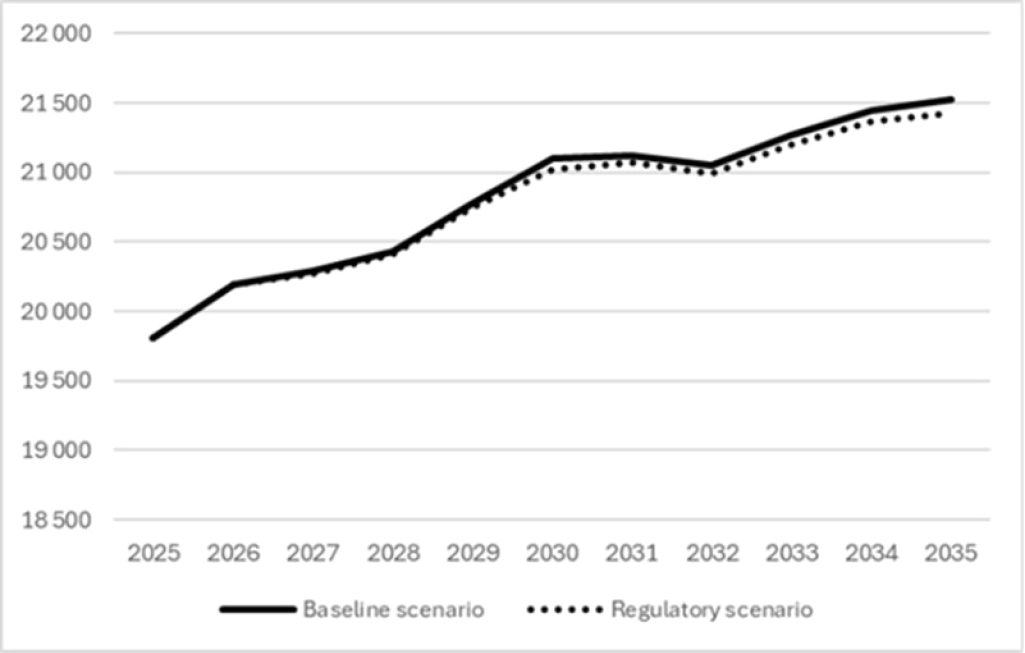
Figure 1: Oil and gas production over time (in PJ) - Text version
Figure 1 is a line graph that illustrates the annual quantity of oil and gas production in the baseline and regulatory scenarios. The y-axis represents petajoules (PJ) of energy produced, and ranges from 18 500 to 22 000. The x-axis represents the year, ranging from 2025 to 2035. There are two lines on this graph. The first line illustrates the expected trajectory of oil and gas production in the baseline scenario. The line begins just under 20 000 PJ in 2025 and increases until 2035, where it peaks at just over 21 500 PJ. The second lines represents the expected trajectory of oil and gas production in the regulatory scenario, and follows the baseline scenario for the first two years until it deviates in 2027. From there, it follows the trajectory of the baseline scenario, at a slighter lower level, ending at just under 21 500 PJ in 2035.
Over the 2025 to 2035 period of macroeconomic analysis, cumulative production in the regulatory scenario (228 500 PJ) is estimated to be 0.2% lower than the cumulative production in the baseline scenario (229 000 PJ), while the cumulative national GDP is estimated to be 0.01% lower than it otherwise would have been.
Household consumer and labour impacts
The ability for a firm to pass on costs to consumers depends on a variety of factors, including the market structure of the sector, the persistence of demand and the availability of substitutes. The prices of crude oil and natural gas commodities are generally determined in global or continental markets. In some instances, prices can be influenced by regional dynamics, which could result in some ability for oil and gas producers to affect downstream prices. In the context of the central case analysis, compliance costs passed through from the sector to domestic end users are expected to be low. As well, given that impacts on overall production are expected to be minimal, impacts on labour expenditures in the oil and gas sector are also expected to be small.
Gender-based analysis plus
Households are not expected to be significantly impacted by the compliance costs of the amendments, as the impacts on employment and end-use fuel prices are expected to be minimal.
The amendments are expected to reduce VOC emissions, which will improve air quality and improve the health outcomes of some people in Canada, especially for those who are at higher risk of being negatively impacted by poor air quality conditions, such as children, the elderly, and individuals with underlying health conditions (see the "Benefits" section).
The amendments are a key policy for reducing harmful GHG emissions and since the benefits of the associated GHG emission reductions are global in nature, they cannot be attributed to any specific region or group in Canada.
No other significant gender-based analysis plus impacts have been identified in association with the amendments.
Small business lens
The analysis concluded that the amendments would impact small businesses, and it is estimated that the amendments would affect approximately 728 companies, 482 of which are considered small businesses. These small businesses account for less than 10% of oil and gas production and processing facilities.
The amendments do not offer flexibilities that are unique to small businesses, instead offering compliance options for individual facilities. The performance-based option in the amendments provides industry with a choice to implement a simple compliance regime at any facility, incorporating modern monitoring systems with the flexibility to continue to adapt innovative technologies as they become available.
Small businesses are expected to bear compliance costs in response to the amendments. However, those costs are not assessed in this section. Compliance costs are calculated at a sector level and cannot be disaggregated by company.
The expected administrative costs to small businesses are shown in Table 26 below.
Small business lens summary
- Number of small businesses impacted: 482
- Number of years: 13 (2028 to 2040)
- Base year for costing: 2023
- Present value base year: 2025
- Discount rate: 2%
| Totals | Annualized value | Present value |
|---|---|---|
| Total administrative costs (all impacted small businesses) | $2,329,991 | $26,441,608 |
| Administrative costs per impacted small business | $4,834 | $54,858 |
One-for-one rule
The one-for-one rule applies, since there is an incremental increase in the administrative burden on businesses, and the proposal is considered "burden in" under the rule. No regulatory titles are repealed or introduced. The total annualized administrative costs for the regulatees to comply with the regulatory requirements over a 10-year time frame are estimated to be approximately $7.6 million for all stakeholders, or $10 441 per company.footnote 39 It is expected that equivalency agreements with provinces will reduce administrative costs imposed by the amendments.
The main driver (98%) of new administrative costs is increased record keeping (the amendments would require facilities to keep records of compliance). It is assumed that some of the data needed to comply with this requirement is already accessible and kept by the regulatees in British Columbia, Alberta and Saskatchewan due to existing provincial requirements. Consequently, the additional information that is required is primarily the record keeping of emissions of methane from the facility. The Department estimates that, on average, companies would require a natural or applied scientist to spend 798 hours annually to comply with record keeping requirements.
In addition to keeping records, regulatees would be expected to bear new administrative costs related to learning about the administrative requirements, conducting both an applicability assessment and an operator registration, and reporting on demand. In the first year, regulatees are assumed to require senior management to spend 4 hours familiarizing themselves with the requirements, and administrative staff to spend 25 minutes per facility to conduct an applicability assessment and operator registration. As companies often own many facilities, this is estimated to take about 26 hours per company, on average. In addition, each year the Department would request select facilities to report their records, which is estimated to take 3 hours per facility to prepare.
Regulatory cooperation and alignment
Provinces and territories
The Regulations and the amendments are made under CEPA, which authorizes the Minister of the Environment to enter into an equivalency agreement with a province, territory or Indigenous government if the Minister and the government of the other jurisdiction agree, in writing, that there are, in force under the laws applicable in that jurisdiction,
- provisions that are equivalent to a regulation made under CEPA;
- provisions similar to sections 17 to 20 of CEPA allowing for citizens to request investigation of alleged offences
Where such an agreement has been entered into with another government, the Governor in Council may make an order declaring that the provisions of the CEPA regulations that are the subject of the equivalency agreement do not apply in the jurisdiction of that government. The intent of equivalency agreements is to minimize the duplication of environmental regulations.
In 2020, the provinces of Alberta, British Columbia and Saskatchewan each adopted regulatory measures to specifically address methane emissions in the oil and gas sector to match the federal regulations.footnote 40,footnote 41,footnote 42 The federal government recognized those provincial regulations under five-year equivalency agreements, standing down the federal provisions in those jurisdictions.footnote 43
In 2024, Environment and Climate Change Canada initiated an annual meeting among regulators in the federal and provincial governments to foster ongoing cooperation in the implementation of methane regulations. Between late 2024 and 2025, the federal government entered into new equivalency agreements with the provinces of Saskatchewan, British Columbia and Alberta to continue to stand down the application of the Regulations.footnote 44,footnote 45 New equivalency processes would be required for the federal government to recognize updated regulations from any province proposing such measures. For example, British Columbia has recently strengthened its regulatory framework governing methane emissions from the oil and gas sector to support the province’s target of reducing methane emissions by 75% below 2014 levels by 2030.footnote 46 Amendments to the Drilling and Production Regulation, Processing Facility Regulation, and Pipeline Regulation came into force on January 1, 2025.footnote 47 As a result of the amendments, new equivalency agreements with provinces would be needed to stand down the amended Regulations.
International
Canada is working in partnership with the international community to implement the Paris Agreement, aiming to support the goal of limiting global temperature rise this century. At the 26th Conference of the Parties to the United Nations Framework Convention on Climate Change, Canada joined 110 countries in endorsing the GMP, under which countries committed to take economy-wide action to reduce global anthropogenic methane emissions by at least 30% from 2020 levels by 2030. In this context, Canada has specifically committed to build on existing initiatives to ensure that methane emissions from the oil and gas sector and the waste sector are reduced. In 2023, Canada joined the group of “GMP Champions,” and became a co-convenor as of June 2025. It comprises Germany, Japan, the Federated States of Micronesia, Nigeria and the United Kingdom and the GMP co-conveners, the EU and Canada. Each GMP Champion has designated high-level official(s) to advance the work of the GMP by
- Advocating for methane action (PDF) in relevant global and regional fora.
- Accelerating implementation of the GMP by playing a leading role on international methane efforts as appropriate and strengthening domestic methane mitigation efforts.
- Assembling on a regular basis to provide an update on the above and discuss key GMP next steps.
- Champions of the GMP advocate for accelerated methane action to achieve the Pledge and galvanize further progress by country participants and GMP supporters. The Champions continue to spur domestic action in their respective countries.
- In June 2025, Canada reinforced the strategic partnership between the European Union and Canada by joining the European Union as co-conveners of the GMP.
The Global Methane Initiative (GMI) is an international public-private partnership focused on reducing barriers to the recovery and use of methane as a valuable energy source. Canada joined the GMI in 2005, shortly after it was founded. GMI provides technical support to deploy methane-to-energy projects around the world that enable Partner Countries to launch methane recovery and use projects. GMI focuses on three key sectors: Oil and Gas, Biogas and Coal Mines. Over the past ten years, Canada has played various leadership roles in this organization, having served as co-chair and then chair of its Steering Committee from 2016 to 2023, and including current roles as delegate to the Steering Committee as well as chair of its technical subcommittee for the oil and gas sector. As of July 2025, Canada has also assumed the role of interim chair of the Steering Committee after the United States stepped down from this role.
The Arctic Council was one of the earliest international fora to focus on Short-lived Climate Pollutants (SLCP), developing recommendations to Arctic Ministers in 2011 and again in 2013 for key actions, including methane mitigation from the oil and gas sector. In 2015, the Arctic Council adopted the Framework for Action on Enhanced Black Carbon and Methane Emissions Reductions, developed during the last Canadian Chairmanship of the Arctic Council from 2013 to 2015. The Council’s Expert Group on Black Carbon and Methane tracks progress on the Framework’s implementation.
In 2012, in response to a growing number of studies showing that action on short-lived climate pollutants would slow the rate of global warming much faster than action on carbon dioxide alone, the governments of Bangladesh, Canada, Ghana, Mexico, Sweden and the United States formed the Climate & Clean Air Coalition (CCAC). Its Secretariat and Trust Fund are hosted by the United Nations Environmental Program. The CCAC works to support fast action and deliver benefits across the linked challenges of climate change and air pollution as well as public health, energy efficiency and food security. The CCAC is now a partnership of over 160 governments and organizations committed to reducing short-lived climate pollutants. It supports activities in 70 countries around the world. Canada pledged $23 million to the CCAC’s Trust Fund from 2012–2021, and, in 2022, pledged an additional $10 million over five years. Canada has previously served as co-chair of the CCAC and currently serves on its governing Board.
The International Energy Agency (IEA) maintains a Global Methane Tracker that reports on country-level actions. With the amendments, Canada is expected to continue to be seen and reported in the tracker as a leading jurisdiction regarding oil and gas methane emissions.footnote 46
United States
The United States Environmental Protection Agency (EPA) regulates its oil and gas industry using New Source Performance Standards (NSPS) and Emission Guidelines.footnote 48 The EPA issued its final rule in December 2023, including updated and strengthened standards for methane and other air pollutants, as well as the final Emission Guidelines to assist states in developing plans to limit methane emissions from existing sources. The EPA requirements are similar to the amendments, with requirements to restrict methane and VOC emissions venting from equipment, controls for flaring and a broad fugitive emission program. The requirements for leak inspections are based on the type and amount of equipment on site. The requirements set zero emissions from most pneumatic pumps and set limits for compressor seal emissions. The agency has estimated that the rule will result in an 80% reduction of projected methane emissions from the oil and gas sector. While the rule currently remains in place, on March 12, 2025, the EPA announced that it is reconsidering the rule. In July 2025, compliance dates for many of the standards’ provisions were delayed. Most provisions for new sources were delayed from May 2025 until either January or July 2027, while the deadline for states to submit state implementation plans for existing sources was extended from March 2026 to January 2027. The EPA estimates that these extensions will result in 106 Mt CO2e of additional methane emissions from 2028–2038 relative to the original timeline.
Many oil and gas-producing U.S. states have introduced specific rules to lower methane emissions from their oil and gas sector. Alaska, Colorado, North Dakota, Wyoming and other states require gas conservation, preventing routine venting of gas during production, and restrict the practice of flaring.
The European Union
On June 13, 2024, the European Parliament finalized regulations regarding methane emissions reduction in the energy sector, with strict rules for monitoring emissions, as well as leak detection and repair requirements.footnote 49 The EU Methane Regulations oblige the fossil gas, oil and coal industry in Europe to measure, monitor, report and verify their methane emissions according to the highest monitoring standards, and to take action to reduce them. It requires EU gas, oil and coal operators to stop avoidable and routine flaring and to reduce flaring and venting in situations such as emergencies, technical malfunctions or when it is necessary for safety reasons. The EU is expected to put in place a monitoring tool on global methane emitters to provide information, based on satellite data, on the magnitude, occurrence and location of high methane-emitting sources occurring within and outside the EU. The regulations will also reduce methane emissions from imported fossil fuels, as it will progressively introduce more stringent requirements to ensure that exporters to the EU apply the same monitoring, reporting and verification obligations as EU operators.
Canada engages with the EU through various fora, including as members of the United Nations Economic Commission for Europe (UNECE), where a Group of Experts on Gas supports member States in delivering on key political commitments, such as the 2030 Agenda for Sustainable Development and the Paris Agreement on climate change. Current priorities include methane abatement.
Effects on the Environment
The existing Regulations were developed under the Pan-Canadian Framework on Clean Growth and Climate Change. A strategic environmental assessment (SEA) was completed for the existing Regulations in 2016 and it concluded that they were in line with the 2016–2019 Federal Sustainable Development Strategy (FSDS) goal of effective action on climate change. A new SEA is not required for the amendments, since they continue to align with the updated 2022–2026 FSDSfootnote 50 to reduce emissions of methane from the oil and gas sector.
Right to a Healthy Environment
The Government of Canada has a duty, in the administration of CEPA, to protect the right to a healthy environment as provided for under CEPA, subject to reasonable limits. An Implementation Framework for the Right to a Healthy Environment (the Framework) sets out considerations to protect this right and uphold the principles described in the Framework.
Work to inform the amendments was completed before the Framework was published on July 19, 2025. Recognizing that CEPA decisions are informed by analyses and consultations that are often the result of years of work, the Framework establishes a transition period to allow ECCC and HC to support continued protection of the environment and human health. The objective of the transition period is to continue to advance timely CEPA decisions and actions, while consideration of the right to a healthy environment and relevant principles is being fully integrated into the administration of CEPA. The amendments are proceeding under the transition period referenced in the Framework.
The amendments contribute to a sustainable climate, and clean and healthy air, by contributing to the reduction of methane emissions in the upstream oil and gas sector. Due to its potency and short lifespan, reducing methane emissions around the world has the potential to bring significant near-term climate benefits, and the associated reduction in emissions of VOCs is expected to lead to improved air quality and health outcomes in Canada (see Costs and Benefits).
Although the Framework was not available to be applied from the beginning of the work undertaken to inform the amendments, many of the elements included in the Framework were considered. For example, the best available science and evidence were relied upon in making the amendments. The Department also conducted stakeholder and Indigenous consultations, beginning in 2022 (see Consultations) and considered vulnerable populations (see GBA+).
Implementation, compliance and enforcement, and service standards
Implementation
Minor administrative changes to the Regulations and the repeal of provisions that apply to facilities offshore come into force upon registration and do not create any new requirements. Compliance requirements come into force at later dates. The fugitive emissions program requirements come into force for all facilities from January 1, 2028. The other requirements in Part 1 of the amendments apply on January 1, 2028, for facilities that begin operation on or after that date, and on January 1, 2030, for facilities that begin operation before January 1, 2028. The alternative compliance option defined in Part 2 is available for all facilities beginning on January 1, 2028.
Compliance and enforcement
The amendments apply to operators that are subject to the current Regulations and also to operators that have not been subject to the Regulations. The compliance promotion approach for the amendments would target both new and existing operators and include developing and posting compliance promotion information and guidance on the Department’s website to explain provisions of the Regulations, as well as undertaking various outreach activities, such as workshops and informational sessions. Before the compliance obligations come into force in 2028, the Department is committed to developing, with stakeholder participation, a comprehensive regulatory guidance document. The Department will share consultation drafts of the comprehensive regulatory guidance document within six months of the making of the amendments.
The Department would enforce the amendments using the existing enforcement approach set out in the Compliance and Enforcement Policy for the Canadian Environmental Protection Act. The Policy sets out the range of possible enforcement responses to alleged violations. The enforcement officer would select the appropriate enforcement action for facilities that are not covered by an equivalency agreement, based on the Policy.
Contacts
Clare Demerse
Director
Oil, Gas and Alternative Energy Division
Environment and Climate Change Canada
351 Saint-Joseph Boulevard
Gatineau, Quebec
K1A 0H3
Email: methane-methane@ec.gc.ca
Matthew Watkinson
Executive Director
Regulatory Analysis and Valuation Division
Environment and Climate Change Canada
351 Saint-Joseph Boulevard
Gatineau, Quebec
K1A 0H3
Email: ravd.darv@ec.gc.ca