
Landfill Methane Regulations: SOR/2025-279
Canada Gazette, Part II, Volume 159, Number 27
Registration
SOR/2025-279 December 12, 2025
CANADIAN ENVIRONMENTAL PROTECTION ACT, 1999
P.C. 2025-937 December 12, 2025
Whereas, under subsection 332(1)footnote a of the Canadian Environmental Protection Act, 1999 footnote b, the Minister of the Environment published in the Canada Gazette, Part I, on June 29, 2024, a copy of the annexed Order, which was proposed to be made under the title Regulations Respecting the Reduction in the Release of Methane (Waste Sector), and persons were given an opportunity to file comments with respect to the proposed Regulations or to file a notice of objection requesting that a board of review be established and stating the reasons for the objection;
Whereas, in accordance with subsection 93(3) of that Act, the National Advisory Committee has been given an opportunity to provide its advice under section 6footnote c of that Act;
And whereas, in accordance with subsection 93(4) of that Act, the Governor in Council is of the opinion that the proposed Regulations do not regulate an aspect of a substance that is regulated by or under any other Act of Parliament in a manner that provides, in the opinion of the Governor in Council, sufficient protection to the environment and human health;
Therefore, Her Excellency the Governor General in Council, on the recommendation of the Minister of the Environment and the Minister of Health, makes the annexed Landfill Methane Regulations under subsection 93(1)footnote d and section 286.1footnote e of the Canadian Environmental Protection Act, 1999 footnote b.
TABLE OF PROVISIONS
Landfill Methane Regulations
Interpretation
1 Definitions
Purpose
2 Protection of environment
Application
3 Application
Methane Generation Assessment
4 Annual assessment
Conditional Requirements
- 5 Non-application
- 6 Deferral of date
Methane Control
- 7 Venting prohibited
- 8 Methane destruction
- 9 Records
Monitoring of Landfill Gas Recovery Wells
- 10 Monitoring — recovery wells
- 11 Follow-up — wells
- 12 Records
Methane Leaks
- 13 Monitoring — equipment components
- 14 Detection of methane leak
- 15 Records
Surface Methane Concentration Limits
- 16 Obligation
- 17 Monitoring — exceedances
- 18 Follow-up
- 19 Measuring methane concentrations
- 20 Zone-average calculation — ground-based measurements
- 21 Records
Annual Report
22 Annual report
Deferral of Time Limits
23 Deferral
Cessation of Application
24 Sections 7 to 21
General
- 25 Records — information
- 26 Record keeping
- 27 Electronic provision
Transitional Provision
28 Application — subsection 4(1)
Consequential Amendment to the Regulations Designating Regulatory Provisions for Purposes of Enforcement (Canadian Environmental Protection Act, 1999)
Coming into Force
30 Registration
Landfill Methane Regulations
Interpretation
Definitions
1 (1) The following definitions apply in these Regulations.
- active landfill gas recovery system
- means any system that employs landfill gas recovery wells, piping, blowers, fans, pumps or compressors to create a pressure gradient to actively extract landfill gas. (système de récupération active de gaz d’enfouissement)
- authorized official
- means
- (a) in respect of an owner or operator who is an individual, that individual or another individual who is authorized to act on their behalf;
- (b) in respect of an owner or operator that is a corporation, an officer of the corporation who is authorized to act on its behalf; and
- (c) in respect of an owner or operator that is an entity other than a corporation, an individual who is authorized to act on its behalf. (agent autorisé)
- biocover
- means a landfill cover that is designed to support microbial oxidation of methane via the aerobic pathway. (biocouverture)
- closed,
- in relation to a landfill, means that the landfill has permanently ceased to accept solid waste for disposal. (fermé)
- EPA Method 21
- means the method of the Environmental Protection Agency of the United States entitled Method 21 — Determination of Volatile Organic Compound Leaks, set out in Appendix A-7 to Part 60 of Title 40, chapter I of the Code of Federal Regulations of the United States. (méthode 21 de l’EPA)
- EPA OTM 51
- means the method of the Environmental Protection Agency of the United States entitled Other Test Method 51 (OTM-51) - UAS Application of Method 21 for Surface Emission Monitoring of Landfills. (autre méthode 51 de l’EPA)
- equipment component
- means any part of a landfill gas management system that contains landfill gas including wells, pipes, flanges, fittings, valves, flame arrestors, knock-out drums, sampling ports, blowers, compressors and connectors. (composant d’équipement)
- exceedance
- means, in relation to
- (a) a surface methane concentration, a concentration of 500 ppmv or more; and
- (b) a zone-average surface methane concentration, a concentration of 25 ppmv or more. (dépassement)
- final cover
- means a landfill cover that is placed on the portions of a landfill where acceptance of solid waste for disposal has permanently ceased. (couverture finale)
- landfill gas
- means a mixture of gases, including methane, generated by the decomposition of biodegradable waste in a landfill. (gaz d’enfouissement)
- landfill gas management system
- means a system used in a landfill to recover and combust or process landfill gas. (système de gestion de gaz d’enfouissement)
- location of concern
- in relation to a surface methane concentration, means a location with a concentration of at least 200 ppmv but less than 500 ppmv. (emplacement préoccupant)
- methane leak
- means a methane leak with a methane concentration of 500 ppmv or more. (fuite de méthane)
- methane modelling tool
- means the Landfill Methane Modelling Tool published by Environment and Climate Change Canada for the calculation of methane generation at Canadian landfills. (outil de modélisation du méthane)
- monitoring event
- means, as the case may be, each of the monitoring events in relation to
- (a) landfill gas recovery wells required under subsection 10(1);
- (b) equipment components required under subsection 13(1); or
- (c) surface methane concentrations and zone-average surface methane concentrations required under subsection 17(1). (activité de surveillance)
- municipal solid waste
- means waste that originates from residential, commercial, institutional, construction, renovation, demolition or land clearing sources. (déchet solide municipal)
- operator
- means a person that has the charge, management or control of a landfill or a landfill gas management system. (exploitant)
- ppmv
- means parts per million by volume. (ppmv)
- vent
- means to passively emit landfill gas to the atmosphere via vent pipes. (évacuation)
- zone-average surface methane concentration
- means the average of all methane concentrations recorded within a specified zone of 4500 m2. (concentration moyenne de méthane en surface par zone)
EPA Method 21 adaptations — paragraph 13(1)(a)
(2) For the purposes of paragraph 13(1)(a), with regards to EPA Method 21,
- (a) section 8.3.1 is to be read without regard to the fifth sentence of that section; and
- (b) the reference to “an increased meter reading” in that section is to be read as a reference to “a reading of 200 ppmv of methane or more”.
EPA Method 21 adaptations — paragraph 19(1)(a)
(3) For the purposes of paragraph 19(1)(a), with regards to EPA Method 21,
- (a) the instrument detector referred to in section 6.1 must respond to methane;
- (b) the instrument referred to in section 6.2 must be capable of measuring 500 ppmv of methane;
- (c) the scale of the instrument meter referred to in section 6.3 must be readable to ±2.5 % of 500 ppmv of methane;
- (d) the reference to “VOC” in section 7.1.1 is to be read as a reference to “methane”;
- (e) the references to “calibration gas” and “the applicable leak definition specified in the regulation” in section 7.1.2 are to be read as references to “500 ppmv of methane”;
- (f) in section 7.2, the requirement to have cylinder calibration gas mixtures analyzed and certified is to be read as a requirement to analyze and certify 500 ppmv of methane;
- (g) the reference to “calibration gases” in section 7.3 is to be read as a reference to “500 ppmv of methane”;
- (h) in section 8.1.1.1, the reference compound is methane and the references to the “the calibration gas mixture” and “the calibration gas” are to be read as references to “500 ppmv of methane”;
- (i) section 8.1.1.2 is to be read only with reference to the first sentence of that section and the instrument response factor referred to in that sentence must be in relation to 500 ppmv of methane and be less than 10;
- (j) the calibration precision test referred to in section 8.1.2 must be performed before the instrument is first used on any day;
- (k) the reference to “the specified calibration gas” in section 8.1.2.1 is to be read as a reference to “500 ppmv of methane”;
- (l) the reference to “the calibration gas value” in section 8.1.2.2 is to be read as a reference to “500 ppmv of methane”;
- (m) the response time test referred to in section 8.1.3 must be performed before the instrument is first used on any day;
- (n) the reference to “the specified calibration gas” in section 8.1.3.1 is to be read as a reference to “500 ppmv of methane”; and
- (o) the references to “the calibration gas” and “the calibration gas value” in section 10.1 are to be read as reference to “500 ppmv of methane”.
EPA OTM 51 adaptations — paragraph 19(1)(b)
(4) For the purposes of paragraph 19(1)(b), with regards to EPA OTM 51,
- (a) the reference in Section 6.1.2 to “the operational limit of 500 ppm specified in the regulation” is to be read as a reference to “500 ppmv of methane”; and
- (b) the reference in Section 7.1.2 to “the 500 ppm above background operational limit specified in the regulation” is to be read as a reference to “500 ppmv of methane”.
Purpose
Protection of environment
2 For the purpose of protecting the environment and of reducing the immediate or long-term harmful effects of the emission of methane on the environment or its biological diversity, these Regulations
- (a) establish requirements to limit methane emissions from certain landfills; and
- (b) designate the contravention of certain of its provisions as serious offences by adding them to the schedule to the Regulations Designating Regulatory Provisions for Purposes of Enforcement (Canadian Environmental Protection Act, 1999).
Application
Application
3 (1) Subject to subsections (2) and (3), these Regulations apply to
- (a) any landfill in which any quantity of municipal solid waste was disposed of after January 1, 2010 and that has more than 450 000 tonnes of municipal solid waste in place; and
- (b) any landfill in which more than 20 000 tonnes of municipal solid waste was disposed of in 2025 or is disposed of in any subsequent calendar year and that has more than 200 000 tonnes of municipal solid waste in place.
Non-application — waste types
(2) These Regulations do not apply to a landfill into which only the following types of waste have been disposed of:
- (a) hazardous waste;
- (b) non-biodegradable waste, such as soil, rock, asphalt, concrete, brick, glass, ceramics, clay products, inert slag, asbestos-containing waste and metals;
- (c) waste produced by forest products operations; or
- (d) construction and demolition waste.
Non-application — non-contiguous portions
(3) These Regulations do not apply to any portion of a landfill
- (a) that is not contiguous with any other portion of the landfill;
- (b) in which no municipal solid waste was disposed of after January 1, 2010; and
- (c) that is under final cover.
Methane Generation Assessment
Annual assessment
4 (1) By June 1 of a calendar year, an owner or operator of a landfill shall
- (a) calculate the quantity of methane generated at the landfill in the previous calendar year, in tonnes, using the methane modelling tool; and
- (b) submit to the Minister
- (i) the name of the landfill and any identification numbers used for reporting to federal and provincial authorities,
- (ii) the landfill’s civic address and latitude and longitude coordinates expressed in decimal degrees to five decimal places,
- (iii) the name and civic address of the owner and the operator of the landfill,
- (iv) the name, title, civic and postal addresses, telephone number and email address of the landfill owner’s or operator’s authorized official,
- (v) the name and civic address of the owner and the operator of any landfill gas management system located at the landfill,
- (vi) the civic address of the place where records required to be made under these Regulations are kept,
- (vii) an indication as to whether the landfill is open or closed,
- (viii) the date on which the landfill opened,
- (ix) the date on which the landfill was closed or is expected to be closed,
- (x) the quantity of municipal solid waste disposed of in the previous calendar year, in tonnes, and the method used to calculate that quantity,
- (xi) the quantity of municipal solid waste in place at the landfill at the end of the previous calendar year, in tonnes,
- (xii) the quantity of waste of each of the following types disposed of at the landfill in the previous calendar year, in tonnes:
- (A) residential waste,
- (B) industrial, commercial and institutional waste,
- (C) construction, renovation and demolition waste,
- (D) sludge and biosolids,
- (E) fill and soil, and
- (F) any other waste types specified by the owner or operator,
- (xiii) for any portion of the landfill that meets the conditions set out in subsection 3(3),
- (A) the date on which waste was last disposed of in the portion,
- (B) the quantity of municipal solid waste that was in place in the portion, in tonnes, and
- (C) a map showing its location in relation to the rest of the landfill,
- (xiv) the quantity of methane calculated under paragraph (a) and a copy of the completed methane modelling tool,
- (xv) any waste characterization data used to calculate methane generation under paragraph (a),
- (xvi) a description of any active landfill gas recovery system, biocover or other methane control system that was in place or in operation at the landfill at the end of the previous calendar year,
- (xvii) a map showing the location of any landfill gas recovery wells that were in operation at the end of the previous calendar year, and
- (xviii) the date on which, in the opinion of the owner or operator, sections 7 to 24 apply in respect of the landfill.
Cessation of application
(2) Subsection (1) ceases to apply in respect of a landfill if the owner or operator complies with paragraph (1)(b) and
- (a) the quantity of methane calculated under paragraph (1)(a) in respect of the previous calendar year is 664 tonnes or more and the landfill was open at the end of that year; or
- (b) the landfill was closed at the end of the previous calendar year.
Definition of open
(3) In this section, open, in relation to a landfill, means that the landfill accepts solid waste for disposal.
Conditional Requirements
Non-application
5 (1) Sections 7 to 24 do not apply in respect of a landfill if the quantity of methane calculated under paragraph 4(1)(a) in respect of a calendar year for the landfill is less than 1 000 tonnes, the landfill is closed at the end of that year and the owner or operator complies with paragraph 4(1)(b) for that year.
Application — 1 000 tonnes or more
(2) Sections 7 to 24 apply in respect of a landfill for which the quantity of methane calculated under paragraph 4(1)(a) in respect of a calendar year is 1 000 tonnes or more
- (a) for any portion of the landfill to which a registered offset project does not apply on the day on which these Regulations come into force,
- (i) as of January 1, 2028, for any portion of the landfill with an active landfill gas recovery system that is in operation on the day on which these Regulations come into force, and
- (ii) as of January 1, 2029 or January 1 of the fourth year after the year for which that quantity of methane is calculated, whichever is later, for any other portion of the landfill; and
- (b) for any portion of a landfill to which a registered offset project applies on the day on which these Regulations come into force, on the later of
- (i) the applicable date referred to in subparagraph (a)(i) or (ii), as the case may be, and
- (ii) January 1 of the year following the year in which offset credits are last generated with respect to the crediting period that applies for the project on the day on which these Regulations come into force.
Application — 664 to 1 000 tonnes
(3) Sections 7 to 24 apply in respect of a landfill for which the quantity of methane calculated under paragraph 4(1)(a) in respect of a calendar year is 664 tonnes or more but less than 1 000 tonnes as of January 1, 2035 or January 1 of the fourth year after the year for which that quantity is calculated, whichever is later. However, those sections do not apply if
- (a) the landfill is closed in any calendar year before that date and the quantity of methane generated at the landfill in that calendar year is less than 1 000 tonnes as calculated using the methane modelling tool; and
- (b) the owner or operator submits to the Minister the information and documents referred to in paragraph 4(1)(b) for that calendar year.
Registered offset project
(4) For the purposes of subsection (2), a registered offset project is an offset project that is registered under the
- (a) Canadian Greenhouse Gas Offset Credit System Regulations and to which the Federal offset protocol : landfill methane recovery and destruction, published by Environment and Climate Change Canada, applies;
- (b) Greenhouse Gas Emission Control Regulation, B.C. Reg. 250/2015, and to which the British Columbia Greenhouse Gas Offset Protocol: Methane from Organic Waste, published by the Government of British Columbia, applies;
- (c) Regulation respecting landfill methane reclamation and destruction projects eligible for the issuance of offset credits, CQLR, c. Q-2, r. 35.5, and the Regulation respecting the cap-and-trade system for greenhouse gas emission allowances, CQLR c. Q-2, r. 46.1; or
- (d) Technology Innovation and Emissions Reduction Regulation, Alta. Reg. 133/2019, and to which the Quantification Protocol for Landfill Gas Capture and Combustion, published by the Government of Alberta, applies.
Deferral of date
6 (1) The Minister may, on the application of an owner or operator of a landfill, defer the applicable date referred to in subparagraph 5(2)(a)(ii) by no more than two years.
Application for deferral
(2) The application must be submitted to the Minister at least 180 days before the day on which sections 7 to 24 would apply under subparagraph 5(2)(a)(ii). The application must include
- (a) the name, title, civic and postal addresses, telephone number and email address of the owner or operator, the owner or operator’s authorized official and a contact person, if different from the authorized official;
- (b) the name of the landfill and any identification numbers used for reporting to federal and provincial authorities;
- (c) the landfill’s civic address and latitude and longitude coordinates, expressed in decimal degrees to five decimal places;
- (d) the reasons for their request;
- (e) a description of the measures required to comply with sections 7 to 24;
- (f) the expected date for completion of the measures and the reasons why it is the earliest feasible date to do so; and
- (g) a description of what will be done to minimize methane emissions until the measures are completed.
Decision
(3) A deferral shall be granted if the Minister is satisfied that the owner or operator’s inability to meet the requirements of sections 7 to 24 is due to circumstances that are beyond the owner or operator’s control and that arise from
- (a) an outstanding provincial or territorial regulatory permit or approval; or
- (b) the delayed procurement, delivery or installation of necessary equipment.
Revocation
(4) The Minister shall revoke a deferral if the Minister has reasonable grounds to believe that the owner or operator has submitted false or misleading information to the Minister.
Procedure
(5) Before revoking a deferral, the Minister shall provide the owner or operator with written reasons for the proposed revocation and an opportunity to make written representations in respect of it.
Methane Control
Venting prohibited
7 (1) Subject to subsection (2), an owner or operator of a landfill shall not vent landfill gas from a portion of the landfill where waste has been disposed of.
Exceptions
(2) Landfill gas may be vented
- (a) when it is necessary to do so to conduct repairs, equipment maintenance or active landfill gas recovery system expansions;
- (b) when it is necessary to do so to avoid serious risk to human health or safety or to prevent the subsurface migration of landfill gas offsite; or
- (c) in portions of the landfill that are under final cover, if the methane concentration in landfill gas in the venting location is below 25% by volume in four consecutive quarterly measurements taken using an instrument documented by the manufacturer to be capable of measuring the methane concentration in landfill gas and that is calibrated and operated in accordance with the manufacturer’s specifications.
Methane destruction
8 (1) To destroy methane, an owner or operator of a landfill shall convey all landfill gas recovered by an active landfill gas recovery system to one or more of the following devices or systems:
- (a) an enclosed flare;
- (b) an open flare;
- (c) an energy recovery device, including gas turbines, internal combustion engines, boilers and steam turbine systems;
- (d) a treatment system that processes recovered landfill gas for subsequent sale or use;
- (e) if the methane concentration in the recovered landfill gas is below 25% by volume, a biofilter; or
- (f) any other device or system that has a methane destruction efficiency of at least 98%.
Treatment system — emissions
(2) If recovered landfill gas is conveyed to a treatment system referred to in paragraph (1)(d), the owner or operator of the treatment system shall convey to an enclosed or open flare or to a thermal oxidizer
- (a) treatment process emissions that contain methane; and
- (b) any processed landfill gas that is not sold or used.
Submission to Minister
(3) If recovered landfill gas is conveyed to a device or system referred to in paragraph (1)(f), the owner or operator of the landfill shall submit the following information to the Minister by June 1 of the year following the calendar year in which the device or system becomes operational:
- (a) the name, title, civic and postal addresses, telephone number and email address of the owner or operator, the owner or operator’s authorized official and a contact person, if different from the authorized official;
- (b) the name of the landfill and any identification numbers used for reporting to federal and provincial authorities;
- (c) the landfill’s civic address and latitude and longitude coordinates, expressed in decimal degrees to five decimal places; and
- (d) a description of the device or system, including the make and manufacturer of any equipment, the calculated or estimated methane destruction efficiency, in percentage, and supporting measurements, calculations and documents, as well as a description of annual or periodic tests to measure destruction efficiency and the estimated days of operation during a calendar year.
Monitoring — methane destruction
(4) The owner or operator of the landfill shall measure
- (a) at least on a monthly basis, the methane concentration in recovered landfill gas that is conveyed to each of the devices or systems referred to in subsection (1), at a location that is either specific to each device or system or common to every device or system; and
- (b) at least every 15 minutes, the volumetric flowrate of that recovered landfill gas at a location specific to each device or system.
Records
9 An owner or operator of a landfill shall make a record of
- (a) when venting of landfill gas occurs, the location of the venting, the dates on which it took place and the reasons why it took place;
- (b) any measurements taken that demonstrate that the condition set out in paragraph 7(2)(c) has been met;
- (c) the measurements taken under paragraph 8(4)(a) or the monthly average of them;
- (d) the volume of landfill gas that is conveyed each day to each of the devices or systems referred to in subsection 8(1); and
- (e) the dates on which the active landfill gas recovery system and the devices or systems referred to in subsection 8(1) were shut down and the reasons for each shutdown.
Monitoring of Landfill Gas Recovery Wells
Monitoring — recovery wells
10 (1) An owner or operator of a landfill shall, on a monthly basis,
- (a) monitor each landfill gas recovery well to determine
- (i) whether the gauge pressure is more than 0.5 inches of water,
- (ii) whether the oxygen concentration in recovered landfill gas is more than 5% by volume, and
- (iii) unless freezing conditions prevent necessary measurements, whether the volumetric flow rate of landfill gas is zero; and
- (b) inspect each wellhead to identify damaged equipment components.
Method
(2) The monitoring shall be conducted using instruments that are documented by the manufacturer to be capable of taking the required measurements and that are calibrated and operated in accordance with the manufacturer’s specifications.
Compliance not required
(3) The owner or operator need not comply
- (a) with paragraph (1)(a) or (b), for a landfill gas recovery well that
- (i) is not in operation due to construction activities including repairs or modifications to it, the active landfill gas recovery system, the leachate collection system or the landfill cover,
- (ii) is not in operation due to measures taken to extinguish or prevent a fire at the landfill,
- (iii) has been decommissioned or has not operated in the previous 30 days,
- (iv) has no accessible location for measurements to be taken, or
- (v) is located in a portion of the landfill that is under final cover, if the methane concentration in landfill gas in the well is below 25% by volume in six consecutive monthly measurements taken using an instrument documented by the manufacturer to be capable of measuring the methane concentration in landfill gas and that is calibrated and operated in accordance with the manufacturer’s specifications; and
- (b) with paragraph (1)(a), for a wellhead in which equipment is operating that continuously monitors the gauge pressure, oxygen concentration and volumetric flow rate and adjusts pressure in the well.
Follow-up — wells
11 (1) If an owner or operator identifies the existence of any of the conditions described in paragraph 10(1)(a), the owner or operator shall, before the completion of the next scheduled monitoring event,
- (a) demonstrate that none of the conditions still exist; or
- (b) determine
- (i) whether there are methane leaks in any equipment components at the wellhead, based on measurements taken using an instrument and method referred to in paragraph 13(1)(a) or (b), and
- (ii) whether there are exceedances in any landfill cover penetrations associated with the wellhead, based on measurements taken using an instrument and method referred to in paragraph 19(1)(a) or (c).
Follow-up — damaged equipment
(2) If the owner or operator identifies a damaged equipment component, the owner or operator shall, before the completion of the next scheduled monitoring event, determine
- (a) whether there are methane leaks in any equipment components at the wellhead based on measurements taken using an instrument and method referred to in paragraph 13(1)(a) or (b); and
- (b) whether there are exceedances in any landfill cover penetrations associated with the wellhead based on measurements taken using an instrument and method referred to in paragraph 19(1)(a) or (c).
Records
12 An owner or operator of a landfill shall make a record of
- (a) for each monitoring event,
- (i) the latitude and longitude coordinates, expressed in decimal degrees to five decimal places, of each landfill gas recovery well and the corresponding measurements taken,
- (ii) the identifier of each well,
- (iii) the date of the monitoring event, and
- (iv) if the owner or operator did not comply with subsection 10(1), the reason for the non-compliance;
- (b) the measurements taken for the purposes of subparagraph 10(3)(a)(v), along with the dates and locations of those measurements and the instruments and calibrations used; and
- (c) any measurement taken for the purposes of subsection 11(1) or (2) and
- (i) the date on which the measurement was taken,
- (ii) the latitude and longitude coordinates, expressed in decimal degrees to five decimal places, of the landfill gas recovery well, and
- (iii) the well identifier.
Methane Leaks
Monitoring — equipment components
13 (1) An owner or operator of an equipment component that is part of a landfill gas management system in operation at a landfill shall, to detect methane leaks in that equipment component, monitor the equipment component three times per calendar year separated by an interval of at least 60 days, using
- (a) an instrument referred to in paragraph 19(1)(a) in accordance with section 8.3.1 of EPA Method 21, with the probe inlet of the instrument held no more than 2 cm from the equipment component or no more than 5 cm from the surface of a vault containing equipment components; or
- (b) any methane leak detection instrument and method approved by the Minister under subsection (2).
Approval of instrument and method
(2) The Minister may approve a methane leak detection instrument and method that
- (a) is capable of detecting the same methane leaks as could be detected if the equipment component were monitored in accordance with paragraph (1)(a); and
- (b) includes
- (i) a description of the detection instrument and its specifications,
- (ii) instructions for the operation and calibration of the instrument, the manner in which measurements are to be taken and the means by which methane leaks are to be detected,
- (iii) instructions for the appropriate use of the instrument under various conditions, and
- (iv) if units other than ppmv are used to measure methane concentrations, instructions as to how those units are to be interpreted for the purpose of determining compliance with these Regulations.
Exception
(3) Subsection (1) does not apply in respect of an equipment component the monitoring of which poses a serious risk to human health or safety.
Detection of methane leak
14 (1) If a methane leak is detected, whether during a monitoring event or at any other time, in an equipment component, the owner or operator of the component shall, within 30 days after the day on which it is detected,
- (a) repair the equipment component and confirm that the leak has been eliminated by measuring the methane concentration at the location of the leak using an instrument and method referred to in paragraph 13(1)(a) or (b); or
- (b) prepare a plan that includes
- (i) the cause of the leak and a description of the measures required to eliminate it,
- (ii) the expected date for the completion of the measures and the reasons why it is the earliest feasible date to do so, and
- (iii) a description of what will be done to minimize methane emissions from the equipment component until the measures are completed.
When leak to be eliminated
(2) If elimination of the methane leak is not confirmed in accordance with paragraph (1)(a), the owner or operator shall eliminate it
- (a) within 90 days after the day on which it is first detected, if it can be eliminated while the equipment component is still operating; or
- (b) during the next planned shutdown of the landfill gas management system, if that shutdown is for the purpose of inspecting and maintaining the landfill gas management system.
When leak considered eliminated
(3) A methane leak is considered to be eliminated if the methane concentration at the location of the methane leak is less than 500 ppmv.
Records
15 An owner or operator of a equipment component referred to in subsection 13(1) shall make a record of, for each monitoring event,
- (a) the date of the monitoring event and the name of the individual who conducted it;
- (b) the type of each monitoring instrument used, including its make and model and the results of each calibration;
- (c) any equipment component that is not monitored due to the application of subsection 13(3); and
- (d) for each methane leak detected,
- (i) the day on which it was detected,
- (ii) the location of the methane leak, including its latitude and longitude coordinates, expressed in decimal degrees to five decimal places, the equipment component on which it was detected and the corresponding methane concentration measured,
- (iii) the cause of the methane leak and a description of the measures required to eliminate it,
- (iv) the methane concentration that demonstrates that the leak has been eliminated and the day on which the concentration was measured, and
- (v) any plan prepared under paragraph 14(1)(b).
Surface Methane Concentration Limits
Obligation
16 (1) An owner or operator of a landfill shall ensure that there is no exceedance in relation to the surface methane concentration and the zone-average surface methane concentration in portions of the landfill where waste disposal has not taken place in the previous 12 months.
Exception
(2) Subsection (1) does not apply in respect of any portion of the landfill where
- (a) a landfill cover or an active landfill gas recovery system is under construction; or
- (b) an active landfill gas recovery system is not operating due to measures taken to extinguish or prevent a fire at the landfill or due to normal servicing or repairs.
Monitoring — exceedances
17 (1) An owner or operator of a landfill shall, for the purpose of detecting exceedances, monitor the landfill three times per calendar year by measuring the surface methane concentrations in accordance with section 19 and calculating the zone-average surface methane concentrations in accordance with section 20. The monitoring events must be separated by an interval of at least 60 days and occur
- (a) in the case of the first monitoring event, during the period beginning on January 1 and ending on May 31;
- (b) in the case of the second monitoring event, during the period beginning on June 1 and ending on August 31; and
- (c) in the case of the third monitoring event, during the period beginning on September 1 and ending on December 31.
Non-application
(2) Subsection (1) does not apply in respect of any portion of a landfill where waste disposal has taken place in the 12-month period prior to a monitoring event.
Exception — portion under final cover
(3) If an exceedance is not detected during a calendar year in the portion of a landfill that is under final cover, the owner or operator need only take the measurements referred to in paragraph 19(5)(b) once in the following calendar year in that portion.
Exception — closed landfill
(4) If an exceedance is not detected during a calendar year in a closed landfill that is under final cover, the owner or operator need only take the measurements referred to in subsection 19(5) once in the following calendar year.
Follow-up
18 (1) If an exceedance is detected, whether during a monitoring event or at any other time, the owner or operator of the landfill shall, within 30 days after the day on which the exceedance was first detected,
- (a) confirm that the exceedance has been eliminated by measuring the methane concentration at the location of the exceedance using an instrument and method referred to paragraph 19(1)(a) or (c); or
- (b) prepare a plan that includes
- (i) the cause of the exceedance and a description of the measures required to eliminate it,
- (ii) the expected date for the completion of the measures and the reasons why it is the earliest feasible date to do so, and
- (iii) a description of what will be done to minimize methane emissions until the measures are completed.
When exceedance to be eliminated
(2) If the elimination of the exceedance is not confirmed in accordance with paragraph (1)(a), the owner or operator shall eliminate the exceedance within six months after the day on which it is first detected.
When exceedance considered eliminated
(3) An exceedance is considered to be eliminated
- (a) in relation to a surface methane concentration, if the surface methane concentration where the exceedance was detected is less than 500 ppmv; and
- (b) in relation to a zone-average surface methane concentration, if the zone-average surface methane concentration in the zone where the exceedance was detected is less than 25 ppmv.
Measuring methane concentrations
19 (1) Surface methane concentrations are to be measured using
- (a) a portable methane monitoring instrument that
- (i) meets the specifications set out in sections 6.1 to 6.5 of EPA Method 21,
- (ii) has been calibrated in accordance with sections 7, 8.1 to 8.1.3.2 and 10 of EPA Method 21, and
- (iii) is maintained in accordance with the manufacturer’s recommendations, if any;
- (b) a methane monitoring instrument that
- (i) meets the specifications set out in Sections 6.1 and 6.2 of EPA OTM 51,
- (ii) is mounted on a drone that meets the specifications of Section 6.3 of EPA OTM 51, and
- (iii) is calibrated and tested in accordance with Sections 7, 8.1 to 8.1.5 and 10 of EPA OTM 51, before the instrument is first used on any day; or
- (c) any methane monitoring instrument and method approved by the Minister under subsection (2).
Approval of instrument and method
(2) The Minister may approve a methane monitoring instrument and method that
- (a) are capable of detecting the same exceedances as could be detected if the landfill were monitored in accordance with paragraph (1)(a) and subsections (3) and (5);
- (b) in the case of the instrument, is capable of taking surface methane concentration measurements in accordance with subsection (5); and
- (c) includes
- (i) a description of the instrument and its specifications,
- (ii) instructions for the operation and calibration of the instrument, the manner in which measurements are to be taken and the means by which exceedances are to be detected,
- (iii) instructions for the appropriate use of the instrument under various conditions,
- (iv) instructions for the calculation of the zone-average surface methane concentration, and
- (v) if units other than ppmv are used to measure methane concentrations, instructions as to how those units are to be interpreted for the purpose of determining compliance with these Regulations.
Method — paragraph (1)(a) instrument
(3) When using a portable methane monitoring instrument referred to in paragraph (1)(a), surface methane concentrations are to be measured with the probe inlet placed no more than 5 cm above the landfill surface. If a measurement above 200 ppmv is taken
- (a) surface methane concentrations must be measured within 5 m of the location of that measurement to identify the maximum surface methane concentration within that radius; and
- (b) at the location of the maximum surface methane concentration, the probe must be maintained in a stationary position for twice the instrument response time before a measurement is taken.
Method — paragraph (1)(b) instrument
(4) When using an instrument referred to in paragraph (1)(b), surface methane concentrations are to be measured as follows:
- (a) the drone must be flown at a constant height above ground level and at a speed such that the instrument-only response time multiplied by the forward flight speed does not exceed 4 m;
- (b) during flight, using the drone’s gimballed camera, geo-referenced pictures must be taken of features that indicate elevated concentrations of landfill gas, such as distressed vegetation and cracks or seeps in the landfill cover;
- (c) if a measurement above 200 ppmv is taken, within 48 hours after it is taken, surface methane concentrations must be measured within 15 m of the location of that measurement in a spiral or serpentine pattern at intervals of 3 m using an instrument referred to in paragraph (1)(a); and
- (d) if a measurement above 200 ppmv is taken under paragraph (c), the surface methane concentration measurements described in paragraphs (3)(a) and (b) must be taken.
Measurement locations
(5) Measurements are to be taken
- (a) at intervals of no more than 2 m along the entire perimeter of the portions of the landfill where municipal solid waste is in place;
- (b) at intervals of no more than 2 m along a pattern that traverses the landfill, at intervals of no more than 30 m that are offset by 10 m for each successive monitoring event;
- (c) at all landfill cover penetrations and where indications of elevated concentrations of landfill gas are present, such as distressed vegetation and cracks or seeps in the landfill cover, using an instrument referred to in paragraph (1)(a) or (c), and
- (d) if a location of concern is detected during a monitoring event, at that location as part of the next monitoring event.
Excluded locations
(6) Measurements need not be taken
- (a) in any portion of a landfill where a landfill cover or an active landfill gas recovery system is under construction; or
- (b) where doing so poses a serious risk to human health or safety.
Excluded circumstances
(7) Measurements are not to be taken if
- (a) there is standing water on the landfill surface at the measurement location; or
- (b) the average wind speed measured during a 15-minute interval using an anemometer equipped with a continuous recorder and data logger exceeds 30 km per hour.
Zone-average calculation — ground-based measurements
20 (1) If surface methane concentrations are measured in a zone using an instrument referred to in paragraph 19(1)(a), the calculation of the zone-average surface methane concentration is to be based on those measurements and include only those measurements referred to in paragraph 19(5)(b).
Zone-average calculation — drone-based measurements
(2) If surface methane concentrations are measured in a zone using an instrument referred to in paragraph 19(1)(b), the calculation of the zone-average surface methane concentration is to be based on those measurements.
Records
21 An owner or operator of a landfill shall, for each monitoring event, make a record of
- (a) the date of the monitoring event and the name of the individual who conducted it;
- (b) the dimensions of each zone and maps showing each zone and its zone identifier, the surface methane measurement locations, the portions of the landfill that are under final cover and those portions where waste disposal has not taken place in the previous 12 months;
- (c) for any portion of the landfill that was excluded under subsection 19(6), the reason for the exclusion and the zone identifier or a description of the portion;
- (d) the type of each monitoring instrument used, including its make and model and the results of each calibration;
- (e) the time-stamped methane concentrations, with the latitude and longitude coordinates of their locations, expressed in decimal degrees to five decimal places, and any zone-average surface methane concentrations;
- (f) the weather conditions, including
- (i) the hourly rate of change of barometric pressure during the monitoring event and the 24-hour period before it, and
- (ii) the average wind speed measured for every 15-minute interval during the monitoring event using an anemometer equipped with a continuous recorder and data logger;
- (g) for each exceedance detected,
- (i) the day on which the exceedance was detected and the corresponding surface methane concentration or zone-average surface methane concentration, as the case may be, in ppmv,
- (ii) the location of the exceedance, specifying its latitude and longitude coordinates, expressed in decimal degrees to five decimal places, or the zone or well identifier, as the case may be,
- (iii) the cause of the exceedance, the measures taken to eliminate it and the dates on which the measures were taken,
- (iv) the methane concentration that demonstrates that the exceedance has been eliminated and the day on which that concentration was measured, and
- (v) any plan prepared under paragraph 18(1)(b);
- (h) for each location of concern detected, its location, specifying its latitude and longitude coordinates, expressed in decimal degrees to five decimal places, the day on which it was detected and the corresponding surface methane concentration measured, in ppmv.
Annual Report
Annual report
22 An owner or operator of a landfill shall, by June 1 of each calendar year, submit to the Minister a report that includes, for the previous calendar year,
- (a) the name, title, civic and postal addresses, telephone number and email address of the owner and operator, the owner and operator’s authorized official and a contact person, if different from the authorized official;
- (b) the name, title, civic and postal addresses, telephone number and email address of the owner and operator of the equipment components that are part of any landfill gas management system in operation at the landfill, the owner or operator’s authorized official and a contact person, if different from the authorized official;
- (c) the name of the landfill and any identification numbers used for reporting to federal and provincial authorities;
- (d) the landfill’s civic address and latitude and longitude coordinates, expressed in decimal degrees to five decimal places;
- (e) the operational status of the landfill, including the date on which it was closed or is expected to be closed, the quantity of municipal solid waste disposed of at the landfill, in tonnes, and the quantity of municipal solid waste that was in place at the landfill at the end of that year, in kilotonnes;
- (f) a description of any active landfill gas recovery system, biocover or other methane control system that was in place or in operation at the landfill, including the first day on which it was in place or commenced operation;
- (g) a description of any device or system referred to in subsection 8(1) that was in operation at the landfill, including its type, manufacturer, model, year of installation, location and capacity, and the methane destruction efficiency cited by the manufacturer, if any;
- (h) the type of each daily, intermediate and final cover in place at the landfill at the end that year, the area of the landfill under each type of landfill cover and the area of the landfill where landfill gas was being recovered;
- (i) the average of the methane concentration measurements taken under paragraph 8(4)(a), in percentage;
- (j) the quantity of methane, in tonnes, conveyed to each of the devices or systems referred to in subsection 8(1);
- (k) the number of hours during which an active landfill gas recovery system was in operation, the dates on which it was shut down and the reasons for each shutdown;
- (l) the information referred to in paragraph 9(a);
- (m) a map showing
- (i) the portions of the landfill that were under daily, intermediate and final cover at the end of that year, the portions in which waste was disposed of during that year and the portions excluded from the application of all or part of these Regulations under subsection 3(3) or 24(1),
- (ii) the locations and well identifiers of landfill gas recovery wells, and
- (iii) the locations of zones including zone identifiers;
- (n) the information referred to in paragraph 21(c);
- (o) for each monitoring event, the date of the monitoring event and the type of monitoring instrument used;
- (p) if an owner or operator identified the existence of any of the conditions described in paragraph 10(1)(a) or (b),
- (i) any measurements taken for the purpose of paragraph 11(1)(a) and the dates on which they are taken or the results of the determination made under paragraph 11(1)(b) and subsection 11(2), and
- (ii) the information referred to in paragraph 12(a) for the monitoring event in which those conditions were identified;
- (q) for each methane leak identified or eliminated, the information referred to in paragraph 15(d);
- (r) for each exceedance identified or eliminated, the information referred to in paragraph 21(g);
- (s) for each location of concern identified in the calendar year, the information referred to in paragraph 21(h); and
- (t) a map showing the location of each methane leak and exceedance identified or eliminated.
Deferral of Time Limits
Deferral
23 (1) The Minister may, on the application of an owner or operator referred to in subsection 13(1) or an owner or operator of a landfill, as the case may be, defer a time limit set out in subsection 14(2) or 18(2) by no more than six months.
Application for deferral
(2) The application must be submitted to the Minister at least 45 days before the applicable time limit expires. It must include the reasons for the application and
- (a) in the case of the time limit set out in subsection 14(2),
- (i) the information referred to in subparagraphs 15(d)(i) to (iii),
- (ii) the expected date for the completion of the measures required to eliminate the methane leak and the reasons why it is the earliest feasible date to do so, and
- (iii) a description of what will be done to minimize methane emissions from the equipment component until the measures are completed; and
- (b) in the case of a time limit set out in subsection 18(2),
- (i) the information referred to in subparagraphs 21(g)(i) to (iii),
- (ii) the expected date for the completion of the measures required to eliminate the exceedance and the reasons why it is the earliest feasible date to do so, and
- (iii) a description of what will be done to minimize methane emissions until the measures are completed.
Decision
(3) A deferral shall be granted if the Minister is satisfied that
- (a) the owner or operator’s inability to meet the applicable time limit is due to circumstances that are beyond the owner or operator’s control and that arise from
- (i) an outstanding provincial or territorial regulatory permit or approval,
- (ii) the delayed procurement, delivery or installation of necessary equipment, or
- (iii) conditions that pose a serious risk to human health or safety; and
- (b) the proposed measures to minimize methane emissions before expiration of the deferred time limit are adequate.
Revocation
(4) The Minister must revoke a deferral if the Minister has reasonable grounds to believe that the owner or operator has submitted false or misleading information to the Minister.
Procedure
(5) Before revoking a deferral, the Minister shall provide the owner or operator with written reasons for the proposed revocation and an opportunity to make written representations in respect of it.
Cessation of Application
Sections 7 to 21
24 (1) Subject to subsection (4), sections 7 to 21 cease to apply in respect of
- (a) a portion of a landfill at which
- (i) no waste has been disposed of for at least 15 years and final cover is in place, and
- (ii) no exceedance has been detected for six consecutive monitoring events referred to in paragraph (c) of the definition monitoring event in subsection 1(1) and no active landfill gas recovery took place in the five days prior to each of the monitoring events; and
- (b) a portion of a landfill that is not contiguous with any other portion of the landfill and at which
- (i) only waste referred to in paragraph 3(2)(b) or (d) has been disposed of,
- (ii) no active landfill gas recovery system is in place, and
- (iii) no exceedance has been detected for six consecutive monitoring events referred to in paragraph (c) of the definition monitoring event in subsection 1(1).
Sections 7 to 22
(2) Subject to subsection (4), sections 7 to 22 cease to apply in respect of any landfill at which
- (a) the quantity of methane
- (i) conveyed to all of the devices or systems referred to in subsection 8(1) in the previous calendar year was less than 500 tonnes, or
- (ii) generated by all municipal solid waste in place at the landfill in the previous calendar year, as calculated using the methane modelling tool, was less than 500 tonnes; and
- (b) no exceedance has been detected for six consecutive monitoring events referred to in paragraph (c) of the definition monitoring event in subsection 1(1) and no active landfill gas recovery took place in the five days prior to each of the monitoring events.
Subsection 17(3) or (4)
(3) For the purposes of subparagraph (1)(a)(ii), (1)(b)(iii) or paragraph (2)(b), an owner or operator may not take advantage of an exception referred to in subsection 17(3) or (4).
Submission to Minister
(4) Before any cessation becomes effective, the owner or operator must submit the following information and documents to the Minister:
- (a) the name, title, civic and postal addresses, telephone number and email address of the owner or operator, the owner or operator’s authorized official and a contact person, if different from the authorized official;
- (b) the name of the landfill and any identification numbers used for reporting to federal and provincial authorities;
- (c) the landfill’s civic address and latitude and longitude coordinates, expressed in decimal degrees to five decimal places;
- (d) an attestation that the landfill meets the requirements set out in subparagraph (1)(a)(i) or (b)(i), as the case may be;
- (e) if applicable, the measurements, calculations and supporting documents that demonstrate that the landfill meets the requirements set out in paragraph (2)(a); and
- (f) for the monitoring events that demonstrate that there were no exceedances referred to in subparagraph (1)(a)(ii) or (b)(iii) or paragraph (2)(b), the records referred to in paragraphs 21(a) to (e).
Decision
(5) The Minister shall, within 60 days after receiving the information and documents, decide whether the owner or operator is entitled to a cessation under this section and advise the owner or operator in writing of that decision and, if applicable, the effective date of any cessation.
General
Records — information
25 An owner or operator of a landfill and an owner or operator referred to in subsection 13(1) shall keep a record of any information submitted to the Minister under these Regulations.
Record keeping
26 An owner or operator of a landfill shall, for any record that is required to be made under these Regulations,
- (a) make it no later than 30 days after the day on which the information to be recorded becomes available;
- (b) keep it for at least five years after the day on which it is made;
- (c) keep it at the landfill or, with written notice to the Minister, at any other place in Canada where it can be inspected;
- (d) if the record is moved, notify the Minister, in writing, of the civic address of its new location within 30 days after the day on which it is moved;
- (e) provide it to the Minister within 60 days after the Minister requests it;
- (f) retain it in an electronically readable format if it is made electronically; and
- (g) if it is a record of a calculation, retain supporting documents and information that are used to make the calculation.
Electronic provision
27 (1) Information or a report, notice or record that is required to be provided to the Minister under these Regulations is to be provided electronically in the form specified by the Minister and must bear the electronic signature of the owner or operator that is required to provide it or of the owner’s or operator’s authorized official.
Exception
(2) If the Minister has not specified an electronic form or if it is impractical to provide the report, notice, record or information electronically because of circumstances beyond the control of the owner or operator, the report, notice, record or information is to be provided on paper, signed by the owner or operator or the owner’s or operator’s authorized official, in the form specified by the Minister. If no form has been so specified, it may be provided in any form.
Transitional Provision
Application — subsection 4(1)
28 An owner or operator of a landfill shall comply with subsection 4(1) in relation to the 2025 calendar year within 180 days after the day on which that subsection comes into force.
Consequential Amendment to the Regulations Designating Regulatory Provisions for Purposes of Enforcement (Canadian Environmental Protection Act, 1999)
| Item | Column 1 Regulations |
Column 2 Provisions |
|---|---|---|
| 41 | Landfill Methane Regulations |
|
Coming into Force
Registration
30 These Regulations come into force on the day on which they are registered.
REGULATORY IMPACT ANALYSIS STATEMENT
(This statement is not part of the Regulations.)
Executive summary
Issues: Greenhouse gases (GHGs) are a major contributor to climate change. According to Canada’s Methane Strategy, methane is a powerful GHG responsible for roughly 30% of global warming. In 2023, emissions from Canadian landfills accounted for 17% of national methane emissions and 2.7% of national GHG emissions. Despite voluntary and regulatory actions implemented in Canada over the past decades, further methane reductions from the sector are not expected to be significant and additional methane emission reductions from landfills are possible. A consistent and more stringent regulatory approach is needed to reduce landfill methane emissions across the country in order to contribute both to domestic efforts and to Canada’s international commitments, including the Global Methane Pledge, and to broader efforts to reach net-zero emissions by 2050.
Description: The Landfill Methane Regulations (hereinafter referred to as the Regulations) are made under the Canadian Environmental Protection Act, 1999 (CEPA) and will reduce methane emissions from landfills receiving municipal solid waste through a performance-based approach that sets surface methane concentration limits and requires regular monitoring to confirm these limits are being met, to identify methane leaks and to ensure methane recovery is optimized. The Regulations apply to certain privately and municipally owned landfills that have received municipal solid waste.
Rationale: In March 2022, the Government published Canada’s 2030 Emissions Reduction Plan (PDF) (ERP), providing a roadmap to reach its climate commitments, including achieving net-zero emissions by 2050. Also in 2022, Canada’s Methane Strategy outlined the Government’s plan to reduce methane by 35% below 2020 levels by 2030 in support of Canada’s contribution to the Global Methane Pledge. The Regulations are expected to reduce methane emissions from Canadian landfills by about 50% below 2019 levels by 2035. There is an opportunity to reduce methane emissions from Canadian landfills through the implementation of a consistent, nationwide regulatory approach.
Cost-benefit statement: From 2026 to 2040, the Regulations are estimated to have total present value costs of $808 million, while the cumulative GHG emission reductions are estimated to be 100 megatonnes (Mt) of carbon dioxide equivalent (CO2e), valued at $9.5 billion in terms of the estimated social benefit of avoided global damages from climate change. The monetized net benefits of the Regulations are thus estimated to be $8.7 billion and are estimated to be achieved at an average cost of $8 per tonne of CO2e over the time frame of the analysis.
Issues
Greenhouse gases (GHGs) are a major contributor to climate change. Methane is a powerful GHG responsible for roughly 30% of global warming since pre-industrial times.footnote 2 In 2023, emissions from Canadian landfills accounted for 17% of national methane emissions and 2.7% of national GHG emissions.footnote 3 Despite voluntary and regulatory actions implemented in Canada over the past decades, additional methane emission reductions from landfills are possible. Canada has committed to reducing methane emissions in support of its contribution to the Global Methane Pledge. In order to secure these reductions in this time frame, a consistent and more stringent regulatory approach is needed to reduce landfill methane emissions across the country.
Background
Methane is listed as a toxic substance (item No. 66) under Part 2 of Schedule 1 to the Canadian Environmental Protection Act, 1999 (CEPA). It is a potent GHG with at least 28 times more global warming potential than carbon dioxide over a 100-year period.footnote 3 Methane has a relatively short lifespan in the atmosphere compared to other longer-lived GHGs, such as carbon dioxide. Atmospheric levels of methane thus respond relatively quickly to changes in emissions since they are removed quickly from the atmosphere. As a result of the potency and short lifespan of methane, reducing methane emissions has the potential to bring significant near-term climate benefits.
Landfill gas, which is composed of methane (between 40% and 60%), carbon dioxide and other non-methane organic compounds, is generated in landfills following the disposal of biodegradable waste. The generation process occurs over many years, which means that the methane generated and emitted at landfills today is the result of decades of disposal of biodegradable waste. Methane generated from this anaerobic degradation process is not considered to be part of the natural carbon cycle; therefore, it contributes to national GHG emissions estimates. Methane emissions from landfills include fugitive emissions through the landfill cover, from the active disposal area and from component leaks in landfill gas control systems. The carbon dioxide generated and emitted as landfill gas is considered biogenic and is carbon neutral.footnote 4 Therefore, it is not included in national GHG emission estimates.
Reducing landfill methane emissions can most effectively be achieved by preventing the generation of methane through diverting biodegradable waste to beneficial uses, like composting, anaerobic digestion and recycling. Where elimination of methane generation through diversion of biodegradable waste is not possible and to address the legacy methane emissions related to historical waste disposal, equipment can be installed at landfills to recover landfill gas and reduce methane emissions through combustion. This combustion can take place on site, for example, in a flare, an electricity-generating engine or some other gas-fired equipment. The combustion can also take place off-site, for example, through direct use in a gas-fired boiler at an industrial facility or, after processing to remove impurities, as renewable natural gas (where it is ultimately combusted in natural gas-fired appliances or vehicles). Combustion of landfill gas converts methane into carbon dioxide, thus lowering the global warming potential of the emissions. Carbon dioxide emissions produced from the combustion of biogenic methane (such as the methane portion of landfill gas) are also considered biogenic and not included in national GHG emission estimates. Biosystems like biocovers, biowindows and biofilters are emerging technologies that reduce methane emissions by conveying landfill gas through engineered systems that allow microorganisms to break down methane into carbon dioxide.
The Government of Canada is committed to acting on climate change. As such, it has committed to achieving net-zero GHG emissions by 2050. The Government’s strengthened climate plan: A Healthy Environment and a Healthy Economy, published in December 2020, reiterated the commitment to reducing waste sector methane emissions by developing new federal regulations to increase the number of landfills that collect and treat their methane and ensure that landfills already operating these systems make improvements to collect all they can. In October 2021, Canada announced support for the Global Methane Pledge, which aims to reduce global methane emissions by 30% below 2020 levels by 2030. In March 2022, the Government published the 2030 Emissions Reduction Plan (ERP), describing actions that are already driving significant emission reductions as well as proposed measures that will deliver the economy-wide emission reductions needed to meet Canada’s international commitments on climate action. The ERP outlined the intention to establish new regulations under CEPA which would reduce methane emissions from municipal solid waste landfills. In September 2022, the Government of Canada’s Faster and Further: Canada’s Methane Strategy underscored the commitment to taking comprehensive domestic actions to reduce methane emissions by 35% below 2020 levels by 2030, including reductions in the waste sector that would reduce methane emissions from landfills by about 50% below 2019 levels by 2030.
Some provinces have either specific regulations in place to reduce methane emissions from certain landfills (British Columbia) or have incorporated landfill methane control requirements into general waste management regulations (Ontario and Quebec). However, there are currently no federal regulations in place related to the control of methane emissions from landfills. Federal market-based policies, such as the Clean Fuel Regulations (CFR) and the Canadian Greenhouse Gas Offset Credit System Regulations, encourage the development of new and expanded landfill methane recovery systems by providing opportunities to generate and sell GHG offset credits generated under the federal Landfill Methane Recovery and Destruction Offset Protocol or compliance credits generated under the CFR. These credits can be sold to regulated parties under the Output-Based Pricing System Regulations and the CFR or, in the case of GHG offset credits, to any organization interested in purchasing credits for other purposes.
Objective
The objective of the Regulations is to reduce methane emissions from Canadian landfills by about 50% below 2019 levels by 2035, contributing to reducing Canadian GHG emissions and to meeting Canada’s international commitments to combat climate change. In particular, as methane is a short-lived climate pollutant with significant near-term climate impacts, these reductions would contribute to slowing the rate of near-term global warming.
Description
The Regulations are made under CEPA and build on existing approaches to reduce landfill methane emissions. The Regulations set applicability thresholds and performance standards in line with the most stringent in North America. Regulated landfills will be subject to requirements, including
- a prohibition on venting landfill gas, with limited exceptions;
- requirements for destroying methane in recovered landfill gas;
- compliance with surface methane concentration limits and requirements for monitoring and corrective action if measurements identify an exceedance of specified limits;
- detecting and repairing methane leaks in the landfill gas management system; and
- monitoring well fields to identify potential methane leaks that must be repaired.
The Regulations will require an assessment of methane generation within 180 days of the coming into force, but the main monitoring and compliance requirements come into effect between 2028 and 2035 in order to provide adequate time for the design and installation of the landfill methane control infrastructure needed for compliance.
Further to comments received in response to the publication of proposed Regulations Respecting the Reduction in the Release of Methane (Waste Sector) in the Canada Gazette, Part I, on June 29, 2024, several changes were made to reduce compliance costs, provide more flexibility and introduce exceptions and exemptions that lower or eliminate regulatory requirements in cases where lower methane emissions are anticipated or can be demonstrated. Details on changes made are provided in the “Consultation” section.
Applicability
The Regulations apply to landfills
- that disposed of any quantity of municipal solid waste after January 1, 2010, and have more than 450 000 tonnes of municipal solid waste in place; or
- that disposed of more than 20 000 tonnes of municipal solid waste in 2025 or any subsequent calendar year and have more than 200 000 tonnes of municipal solid waste in place.
The Regulations do not apply to distinct portions of a landfill that are under final cover and ceased to accept waste before January 1, 2010, or to landfills that have received only the following types of waste:
- hazardous waste;
- non-biodegradable waste;
- waste produced from forest products operations; and
- construction and demolition waste.
Methane generation assessment
Landfills that meet the applicability criteria described above are required to calculate annual methane generation using the Landfill Methane Modelling Tool published by the Department of the Environment (the Department) and report the results to the Minister. This assessment will calculate the quantity of annual methane generated from all waste disposed in the landfill (with the exception of waste disposed in any distinct portions of the landfill where waste disposal had ceased by January 1, 2010).
An initial assessment will be required for all landfills that meet the applicability criteria on the date of the coming into force of the Regulations. The initial assessment calculates the methane generation for the year 2025.
Open landfills that exceed the annual methane generation threshold of 664 tonnes and closed landfills that exceed 1 000 tonnes of methane generation will have further compliance obligations under the Regulations.
Open landfills with a modelled annual methane generation below 664 tonnes will be required to perform an assessment of methane generation once per year until either the annual methane generation exceeds 664 tonnes (at which point further compliance obligations apply) or the landfill closes. There are no further requirements under the Regulations for closed landfills with modelled annual methane generation below 1 000 tonnes.
Application of compliance obligations
The timeline for the application of compliance obligations set out in the Regulations will depend on the results of the methane generation assessment and whether or not a landfill has an existing landfill gas recovery system installed. The following timelines would apply, based on the results of the initial assessment conducted under the Regulations.
January 1, 2028
Compliance obligations will apply beginning on January 1, 2028, in portions of open and closed landfills where landfill gas recovery wells were in operation as of the coming-into-force of the Regulations and annual methane generation for the entire landfill is calculated to be 1 000 tonnes or more.
January 1, 2029
Compliance obligations would apply beginning on January 1, 2029, in all landfilled areas of open and closed landfills where annual methane generation for the entire landfill is calculated to be 1 000 tonnes or more.
January 1, 2035
Compliance obligations would apply beginning on January 1, 2035, in all landfilled areas of open landfills where annual methane generation for the entire landfill is calculated to be 664 tonnes or more but less than 1 000 tonnes. If a landfill with this compliance timeline closes before 2035 and methane generation is less than 1 000 tonnes in the year the landfill closes, there will be no further compliance obligations under the Regulations.
Three years after the annual methane generation is exceeded
In the case of a landfill that exceeds the methane generation threshold after the initial assessment, compliance obligations begin to apply in all landfilled areas where the annual methane generation for the entire landfill exceeds 664 tonnes on January 1 of the fourth year after the year in which the annual methane generation exceeds 664 tonnes. A landfill that generates less than 1 000 tonnes of methane annually would not be subject to compliance obligations before January 1, 2035.
At the end of an offset crediting period
For landfills with a methane generation of 1 000 tonnes or more and with an offset credit project for active landfill gas recovery in a portion of the landfill that is registered at the coming into force of the regulations, compliance obligations begin to apply in that portion as of the year following the last year the project generates offset credits under the crediting period in place when the Regulations come into force. Any portion of a landfill that does not have an offset credit project registered will be required to comply with the Regulations on January 1, 2028, or 2029, as applicable.
Compliance obligations (described in the next section) apply until criteria described in the “cessation of obligations” section are met.
Request for deferral
A request to defer the application of compliance obligations for up to two years can be submitted to the Minister if delays related to obtaining the necessary provincial or territorial permits or equipment procurement, delivery or installation will prevent the landfill owner or operator from complying with subsequent obligations on the applicable timeline.
Compliance obligations
Methane emission controls
The Regulations prohibit venting of landfill gas, with limited exceptions. Venting is limited to instances when it is necessary to avoid serious risk to human health or safety; to avoid off-site subsurface migration of landfill gas; when necessary to conduct maintenance or repairs and in locations where the landfill gas has a methane content of less than 25% (and verified through four consecutive quarterly measurements).
All landfill gas that is recovered from a landfill must be conveyed to one or more methane destruction devices or energy recovery systems described in the Regulations. Alternative approaches to methane destruction are allowed under the Regulations, provided the approach is capable of achieving at least a 98% methane destruction efficiency. A biofilter may be used for the purpose of destroying recovered methane, provided the methane content in recovered landfill gas is less than 25%.
Monitoring landfill gas recovery wells
To monitor the effectiveness of an active landfill gas recovery system and detect issues with recovery wells, the Regulations will require monitoring of vacuum pressure, oxygen content and flow rate in recovery wells on a monthly basis. The monitoring would not be required during periods when the landfill gas recovery system is not operational (i.e. has not been placed under vacuum) due to construction or maintenance activities or when a well is not in operation due to measures taken to extinguish or prevent a fire at the landfill, when the well is equipped with continuous monitoring equipment or when the well is located in a portion of the landfill with final cover and where the methane concentration has been measured to be below 25% over a six-month period. A visual inspection is also required as part of these monthly monitoring events to identify damaged wellhead equipment.
If any measurements of positive pressure, oxygen content of 5% or more or an absence of flow are detected or a damaged wellhead component is identified, before the end of the subsequent monthly monitoring event, the landfill owner or operator will be required to complete one of the following:
- Confirm that the pressure in the wellhead has been returned to negative pressure, the oxygen content is below 5% and the flowrate is positive; or
- Take measurements to detect any methane leaks in any equipment components at the wellhead or exceedances of surface methane concentration limits at the well. Any methane leaks or surface methane exceedances must be repaired within the timelines specified for repair of a methane leak or surface methane exceedance (described below).
Methane leak detection and repair
The Regulations will require monitoring three times per year to identify methane leaks in landfill gas recovery system equipment components. A methane leak is defined as a leak from an equipment component with a methane concentration of 500 parts per million volume (ppmv) or higher.
Monitoring to detect methane leaks is not required for equipment components that would pose a serious risk to human health or safety or in portions of the landfill where the Regulations have ceased to apply.
Within 30 days following the detection of a methane leak, one of the following must take place:
- the leak is eliminated and the location re-monitored to confirm that the leak has been eliminated; or
- the owner or operator must document the cause of the leak, a description of measures required to eliminate the leak, the expected date for completion of repairs, the reasons why it is the earliest feasible date, and a description of actions that will be taken to minimize methane emissions until the leak is repaired.
The leak must be repaired within 90 days after it was first detected if the repair can be made while equipment is operating. If the repair cannot be made while the equipment is operating, the leak must be eliminated during the next planned shutdown of the landfill gas management system, where that shutdown is for the purpose of inspecting and maintaining the gas recovery system. A request may be submitted to the Minister to extend the time limit by up to six months where provincial or territorial permitting or equipment procurement, delivery or installation delays or conditions that pose a serious risk to human health or safety prevent compliance with the time limit.
The method to identify methane leaks specified in the Regulations is based on Method 21 (determination of volatile organic compound leaks) of the United States (U.S.) Environmental Protection Agency. However, the Minister may publish alternative methods that can be used for the purpose of identifying methane leaks in landfill gas equipment components. These alternative methods would be published in the Department’s Technical Guidance Document for Estimating, Measuring and Monitoring Landfill Methane.
Surface methane concentration limits
The Regulations define an “exceedance” as a surface methane concentration above
- 500 ppmv at any single location; and
- 25 ppmv average concentration in a zone of 4 500 m2.
To identify if an exceedance is present, the Regulations will require monitoring of surface methane concentrations to be conducted three times per year in that portion of the landfill where waste has not been disposed in the previous 12 months. Where an exceedance is identified, one of the following must take place within 30 days:
- The exceedance must be eliminated and the surface methane concentration at the location of the exceedance re-monitored to confirm the exceedance is eliminated; or
- The owner or operator must document the cause of the exceedance and a description of the measures required to eliminate it, the expected date of completion, the reasons why this is the earliest feasible date and a description of what will be done to minimize methane emissions until the exceedance is eliminated.
The exceedance must be eliminated within six months of the initial detection. A request may be submitted to the Minister to extend the time limit by up to six months where provincial or territorial permitting or equipment procurement, delivery or installation delays or conditions that pose a serious risk to human health or safety prevent compliance with the initial time limit.
Monitoring to measure surface methane concentrations would be required in all portions of the landfill where waste has not been disposed in the previous 12 months except
- where the landfill cover or the landfill gas recovery system is under construction;
- where conditions pose a serious risk to human health or safety; or
- in portions of the landfill where the Regulations have ceased to apply.
Measurements may be recorded using one of two types of methane detection methods described in the Regulations. Measurements must be recorded on a pattern that traverses the landfill on 30 metre intervals but offset by 10 metres in each subsequent monitoring event. A drone-based method can be used that includes a scan of the monitoring area to identify areas of elevated methane concentration, followed by ground-based verification of surface methane concentration. Requirements for ground-based methods included in the Regulations are consistent with typical surface methane concentration monitoring conducted under the Quebec and U.S. federal and state regulations and incorporate by reference the U.S. Environmental Protection Agency test methods for measuring surface methane concentration limits including Method 21 Volatile Organic Compound Leaks and Other Test Method 51 (OTM-51) Unmanned Aerial Systems Application (UAS) of Method 21 for Surface Emission Monitoring of Landfills.footnote 5 However, the Minister may publish alternative methods that can be used for the purpose of identifying exceedances. These alternative methods would be published in the Department’s Technical Guidance Document for Estimating, Measuring and Monitoring Landfill Methane.
Records and annual reporting
The Regulations require the making and retention of records related to
- waste disposal quantities and locations;
- landfill cover status;
- the methane generation assessment;
- monitoring activities and results;
- any subsequent actions taken in response to the detection of a surface methane concentration exceedance, positive pressure, oxygen concentration greater than 5% or zero landfill gas flow in a landfill gas recovery well or detection of a methane leak; and
- demonstrations of the operational status of any landfill gas recovery systems.
The Regulations include provisions for an initial notification report that contains information relevant to the methane generation assessment. Subsequent reporting would include submission of data and information on an annual basis, beginning the year after monitoring requirements first apply. Information to be reported annually includes
- operational status;
- waste disposal quantities;
- the extent of landfill cover types;
- venting locations;
- quantities of methane conveyed to destruction devices and systems; and
- the locations and monitoring dates for exceedances of surface methane concentrations, positive pressure, oxygen concentration greater than 5% or no flow in landfill gas recovery wells and detections of methane leaks.
Cessation of obligations
Monitoring and follow-up requirements, as well as the prohibition on venting and other requirements, cease to apply in a portion of a landfill, if it is demonstrated that there have been no exceedances of surface methane concentration thresholds during a two-year period and that the portion of the landfill meets the following criteria:
- No waste has been disposed for at least 15 years and final cover is in place; or
- Only non-biodegradable waste has been disposed and no active landfill gas recovery system is in place.
The Regulations would no longer apply to a landfill that meets the following criteria:
- The quantity of methane recovered or generated by all municipal solid waste in place is less than 500 tonnes in the previous year; and
- There have been no exceedances of surface methane concentration thresholds during a two-year period.
Measurement of surface methane concentrations to demonstrate that there are no exceedances cannot be conducted if any active landfill gas recovery system has operated in the landfill within the previous five days.
Other related amendments
The Regulations would also make amendments to the Regulations Designating Regulatory Provisions for Purposes of Enforcement (Canadian Environmental Protection Act, 1999) [the Designation Regulations]. The Designation Regulations designate provisions of regulations made under CEPA that involve harm or risk of harm to the environment or obstruction of authority and are therefore subject to increased penalties upon conviction. Any such provisions of the Regulations will be listed in the Designation Regulations through the consequential amendments made in the Regulations.
Consultation
Consultations prior to publication in the Canada Gazette, Part I
Throughout the development of the Regulations, the Department consulted with provincial and territorial governments, Indigenous partners, representatives from waste sector organizations, municipal and private sector landfill owners, academics, international partners and the public to seek views on the design of the proposed Regulations. In January 2022, the Department published a discussion paper titled Reducing methane emissions from Canada’s municipal solid waste landfills to seek input on proposed objectives for new regulations under CEPA. A What We Heard report was published that summarized the input that the Department received from interested parties. Between September 2022 and March 2023, meetings with a Technical Working Group (TWG) were held to solicit technical perspectives on potential elements of federal regulations. The TWG, which included technical and waste sector experts, landfill owners and operators, provincial/territorial and municipal governments, provided technical and economic considerations for approaches to reducing methane emissions at landfills and input on potential requirements for new federal regulations. A Proposed Regulatory Framework was published in April 2023. In response to feedback, the Department made changes to several elements of the regulatory requirements, including the applicability, implementation timelines and monitoring requirements. A summary of that feedback and how it was considered can be found in the Canada Gazette, Part I.
Comments following prepublication in the Canada Gazette, Part I
The proposed Regulations were published in the Canada Gazette, Part I, on June 29, 2024, for a 60-day public comment period. During this time, the Department actively engaged interested parties, inviting them to submit written comments. To ensure broad awareness, the proposed Regulations were made available on the Department’s CEPA Environmental Registry website and the Canada Gazette website. The public was also encouraged to participate, with outreach efforts leveraging social media platforms to invite comments on the proposal. The Department hosted an informational webinar on July 10, 2024, to provide stakeholders with an overview of the proposed regulatory requirements. In accordance with subsection 93(3) of CEPA, the Department informed provincial and territorial governments of the publication of the proposed Regulations through the CEPA National Advisory Committee.
The Department received 83 written submissions from a diverse range of stakeholders. These included individuals, industry associations, such as the Solid Waste Association of North America, Waste to Resource Ontario, and the Conseil des entreprises en technologies environnementales du Québec, as well as municipal associations including the Federation of Canadian Municipalities, Saskatchewan Urban Municipalities Association, Saskatchewan Association of Rural Municipalities, and the Association of Municipalities of Ontario. Feedback was also received from provincial governments and environmental non-governmental organizations (ENGOs). A significant number of comments were provided by landfill owners, including individual private sector companies and both large and small municipalities. Following a review of comments, the Department held meetings with landfill owners, industry associations and provinces to better understand the feedback and discuss options for finalizing certain elements of the Regulations. Comments received in response to the Canada Gazette, Part I, publication were wide-ranging and did not necessarily align within particular stakeholder groups.
General
Landfill owners, industry and municipal associations and ENGOs continued to express support for the environmental objective of reducing methane emissions from Canadian landfills, but most noted challenges to achieve compliance, as described below. Stakeholders acknowledged and supported changes made to the proposed Regulations from feedback received on the Proposed Regulatory Framework, including the adjusted applicability thresholds, addressing technical comments and reducing burden.
The majority of submissions voiced concern related to the financial burden on landfill owners required to comply with the Regulations. This was particularly salient for smaller municipalities and those who are not yet operating active landfill gas recovery systems. The absence of dedicated federal funding and limited technical capacity were noted as particular barriers for compliance, especially for municipalities. Some provinces remained concerned about the overlap between the federal and provincial regulations, echoing the need for federal funding and some expressing interest in potential equivalency agreements.
Feedback was also received regarding the assumptions and cost estimates in the Costs and Benefits section of the Regulatory Impact Analysis Statement. In response to this feedback, the Department consulted with stakeholders to update cost benchmarks to reflect recent project costs. Updates and clarifications on compliance and monitoring costs are included in the version of the cost-benefit analysis that follows.
Overview of modifications made to the Regulations
The key applicability thresholds for annual methane generation remain unchanged, meaning that the Regulations apply to the same subset of Canadian landfills that were considered in the proposed Regulations. Changes to the Regulations primarily consist of modifications to specific requirements rather than broad changes to the regulatory framework. In general, most changes were made to address stakeholder concerns related to technical, logistical and cost impacts of certain proposed regulatory requirements. Changes were made to reduce compliance burden, provide more flexibility and introduce exemptions and exceptions to eliminate regulatory oversight where lower methane emissions are anticipated or demonstrated. Key changes to the Regulations include the following:
- The annual waste disposal (applicability) threshold has been increased from 10 000 tonnes to 20 000 tonnes per year and the waste-in-place threshold from 100 000 tonnes to 200 000 tonnes per year.
- The 2027 implementation year was changed to 2028 to reflect delays in the publication of the Regulations.
- Methane destruction options have been expanded by adding biofilters and thermal oxidizers as approved methane destruction devices in certain circumstances.
- The requirement to return a landfill gas recovery well to negative pressure has been removed where it can be demonstrated that there are no methane leaks or surface methane concentration exceedances in the vicinity of the well.
- Transect spacing for surface methane concentration monitoring has been increased from 7.5 m to 30 m, with an added requirement to offset transects by 10 m at each monitoring event, and the minimum time between monitoring events has been reduced from 90 days to 60 days.
- The requirement to notify the Minister of the Environment (the Minister) when surface methane exceedances or methane leaks cannot be eliminated within 30 days has been removed.
- Options to request deferral or extension of implementation and follow-up timelines, as well as provisions for the use of alternative measurement methods have been introduced.
- Cessation criteria for a whole landfill were adjusted to be based on a methane generation threshold or methane recovery quantity, and criteria were added to enable older portions of landfills with final cover to qualify for cessation of monitoring and repair requirements in those portions.
The Department conducted an analysis of stakeholder feedback and, in several cases, elements of the Regulations have been adjusted. This analysis is presented below along with a description of the changes that were incorporated into the Regulations.
Applicability thresholds and exemptions
Some landfill owners and one province suggested that the annual waste disposal criteria should be increased to lessen the administrative impact on smaller landfills. In response, the applicability criteria were adjusted by increasing the annual waste disposal threshold from 10 000 tonnes to 20 000 tonnes and the 100 000 tonnes of waste in place threshold to 200 000 tonnes. The intent of the annual waste disposal threshold is to require landfills that would be expected to reach the 664-tonne methane generation threshold before they reach the waste-in-place criteria of 450 000 tonnes, to conduct a methane generation assessment in advance of exceeding the methane generation threshold. The threshold is expected to be sufficient to capture landfills that will reach the 664-tonne methane generation threshold.
Landfill owners, industry associations and provinces asked for clarity on whether the Regulations would apply evenly to all portions of landfilled areas on the same landfill site. In some locations, an older, closed landfilled area is adjacent to newer portions or cells. The older portions of landfills may not produce significant quantities of methane, and some stakeholders indicated they should not be regulated. Similarly, some stakeholders suggested that landfills that have received only certain types of waste (e.g. construction and demolition waste) should be exempted from the Regulations, as they do not emit methane in significant quantities. Other stakeholders requested adjustments to clarify that the Regulations do not apply to specific types of landfills that have not received municipal solid waste. Exemptions were added to the application section of the Regulations to exclude landfills that have received only specified types of waste — hazardous waste, waste produced by forest product operations, non-biodegradable waste and waste from construction and demolition activities. These clarifications explicitly exclude landfills, which are not significant sources of methane.
The changes to the applicability requirements will reduce administrative burden on five landfill owners who would have had to conduct a methane generation assessment but who are not anticipated to exceed the methane generation thresholds.
Methane generation assessment and thresholds
Landfill owners, industry associations and two provinces indicated that a methane generation threshold of 664 tonnes would implicate small landfills and were concerned about the significant financial burdens that could lead to closures and a reduction in waste management capacity in these regions. Industry associations and one province suggested that the threshold be increased from 664 tonnes to 1 000 tonnes to align with British Columbia’s regulation (the most stringent methane generation threshold in Canada). ENGOs supported the 664-tonne threshold and noted that it is consistent with the leading United States (U.S.) state regulations. The 664-tonne methane generation threshold was maintained in the Regulations because it remains the most stringent North American threshold above which landfills are required to operate a landfill gas collection and control system. The threshold is also referenced in regulations in place in U.S. jurisdictions, such as California and Oregon.
Implementation timelines
Landfill owners, industry and municipal associations had concerns regarding the implementation timelines, noting potential for delays in construction of active landfill gas recovery systems due to procurement, limited availability of specialized engineers and contractors and regulatory permitting. Rural and small landfill owners may be more impacted due to limited financial resources and logistical challenges.
The Regulations now include an option for landfill owners or operators to apply for a two-year deferral of their applicable implementation timeline to accommodate delays related to obtaining necessary provincial or territorial permits or procuring, delivering or installing necessary equipment. This would prevent a landfill owner from being out of compliance based on factors outside of their control.
Methane emission controls
Consultants and owners and operators of landfill gas management systems identified technical limitations to achieving the prohibition on venting of landfill gas from leachate control system components. It was also noted that this limitation could introduce explosion and fire risks and compromise the integrity of the leachate control system. Researchers indicated that these can be significant sources of methane emissions and should be controlled. The prohibition of venting from leachate components was removed given the technical feasibility identified. Further information on the significance of these emissions and technical solutions will be sought from landfill owners to inform the identification of best practices for limiting these emissions or for potential future amendments to the Regulations.
In response to stakeholder comments on the number of measurements required to demonstrate the methane content of landfill gas being vented, the requirement was reduced from eight to four consecutive quarterly measurements.
Landfill owners and industry associations requested that biofilters and thermal oxidizers be considered as acceptable methane control approaches, as they are capable of effectively destroying methane in recovered landfill gas (biofilters) or process emissions from landfill gas upgrading systems (thermal oxidizers). The Regulations now permit biofilters and thermal oxidizers as accepted methane destruction devices, as these devices can be used to destroy landfill gas at low levels of methane concentration and could be used once active landfill gas recovery and destruction are no longer viable. ENGOs recommended that open flares be phased out, whereas an industry association supported their use. Open flares were maintained as acceptable methane destruction devices, as open flares are able to achieve a high level of destruction (potential of 98%) at a lower cost.
Stakeholders, including landfill owners and industry associations, indicated that the measurement interval for methane concentration in landfill gas, every 15 minutes, is too onerous and would increase costs due to the need for specialized equipment while indicating that methane content does not significantly vary over time. The monitoring interval in the Regulations was adjusted to monthly to reduce administrative burden, while providing sufficient data needed to calculate the annual quantity of methane recovered.
Monitoring of landfill gas recovery wells
Landfill owners and operators of landfill gas recovery systems indicated that some landfill gas recovery wells may be purposefully under positive or neutral pressure to maintain a high quality of landfill gas for beneficial use or to minimize air intrusion. Some requested flexibility in monthly monitoring, allowing for a reduction in monitoring for wells with consistently negative pressure. One service provider and some ENGOs suggested more frequent monitoring to allow for the potential to improve collection efficiency.
The Regulations retain monthly monitoring of pressure and added landfill gas flow monitoring to detect instances where recovery wells are not collecting landfill gas and where methane leaks may be occurring at the wellhead or at the surface of the landfill in the vicinity of the well. This frequency has been established in existing provincial regulations and guidelines as a best practice. The Regulations allow for wells to be maintained under positive pressure as long as monitoring is completed to confirm no methane leaks or surface methane exceedances are present in the vicinity of the well.
Methane leak detection
In response to stakeholder questions related to which components would be subject to monitoring and repair requirements, a definition of “equipment component” has been added to clarify the common components that should be monitored. These components are a part of the landfill gas management system and contain landfill gas that has a potential to leak. Several landfill owners and waste associations indicated that the frequency of methane leak detection is burdensome and costly. The Regulations maintain the frequency of methane leak detection and follow-up requirements to ensure methane leaks are being detected and repaired in a timely manner. The ability to request an extension to the 90-day timeline to resolve a methane leak has been added to provide additional time, where delays exist due to permitting or procurement challenges.
Surface methane concentration monitoring
Many landfill owners and waste associations commented that the proposed transect spacing for monitoring surface methane concentrations of 7.5 m is too dense and will result in monitoring events at large landfills that require multiple days and long walking distances to complete. This requirement was considered to be onerous and too costly to implement. It was recommended that the transect spacing align with the U.S. federal transect spacing requirement of 30 m. In response to these concerns, the transect spacing was increased from 7.5 m to 30 m but requires that transects be offset by 10 m in each subsequent monitoring event. This will result in collecting surface methane concentration measurements on a 10 m grid over the landfill surface over the course of one year but reduce the level of effort required to complete monitoring events. The 30 m transect spacing aligns with current requirements in Quebec and the U.S. federal requirements. Given that the adjustments to transect spacing will result in less frequent monitoring in any location on the landfill, the Regulations require that any location where a surface methane concentration of 200 ppmv or more is identified (a “location of concern”) would need to be re-monitored in the subsequent monitoring event. This provision ensures that locations that are potential locations of surface methane exceedance will be monitored sooner than would otherwise take place under the regular monitoring frequency and transect spacing.
Landfill owners asked the Department to eliminate the 25-ppmv zone-average limit, as weather conditions could impact the ability to meet this threshold, also noting that the zone-average requirement also adds burden and cost. The zone-average surface methane concentration limit was retained, as the zone-average methane concentration is an appropriate indication of whether the landfill gas recovery system is operating effectively and avoiding emissions through the cover. This threshold is used in leading U.S. state-level regulations in locations that experience weather conditions similar to those in Canada.
Landfill owners and industry associations noted that the requirement that surface methane concentration monitoring not take place within 72 hours of precipitation was both poorly defined (lacking definition on the quantity of precipitation that would trigger this limitation) and would be very challenging in rainy areas in Canada. Some stakeholders suggested a wind speed restriction be added, as methane concentration data can be diluted if the wind speed is too high. To address these concerns, the Regulations will require that no standing water be present on the surface of the landfill during a monitoring event, and that the 15-minute average wind speed be below 30 km/h when collecting measurements.
It was noted that site constraints such as established vegetation and bird nests could impede monitoring efforts and that removal of vegetation would be costly and may impact wildlife. The Department confirmed that vegetation control would be required to effectively conduct surface methane concentration monitoring and has included an annual cost for this work in the cost-benefit analysis. It is anticipated that this vegetation control would be required at most once per year, noting that there is flexibility in timelines for monitoring to be conducted during parts of the year when vegetation is less likely to interfere with monitoring requirements.
In response to concern expressed by landfill owners and operators that the 90-day interval between surface methane concentration monitoring events could result in monitoring work being conducted under weather conditions that would limit the effectiveness of monitoring (i.e. at landfills with significant snow cover), the Department reduced the minimum interval between monitoring events from 90 days to 60 days for both methane leak detection and surface methane concentration monitoring. This would allow for greater flexibility in scheduling and reduce the likelihood that monitoring would need to be conducted in conditions that will limit the effectiveness of monitoring. The Regulations outline additional restrictions on the timing for monitoring events to ensure monitoring is conducted within the following specified time periods:
- January 1 and May 31;
- June 1 and August 30; and
- September 1 and December 31.
Follow-up timelines
Landfill owners and operators of landfill gas recovery systems indicated that the timelines to return a well to negative pressure, repair a methane leak or surface methane concentration exceedance may not be sufficient. Some repairs require procurement of specialized parts, consultant support, and budget changes, which would require additional time. Stakeholders requested the ability to request an extension. As a result, the Regulations include the ability to request an extension for follow-up timelines if there are delays obtaining provincial or territorial permits or in procuring, delivering or installing equipment.
Alternative measurement methods
Non-governmental organizations, technology service providers and landfill owners supported the use of alternative methods for methane leak detection; noting, however, that requiring landfill owners to validate these methods would be onerous and complex. Stakeholders supported the use of drone-based technology, including the use of OTM-51, to scan the area of landfills to detect elevated methane concentrations and asked that the Department expedite validation of new drone methods for use in the Regulations. Stakeholders also requested that alternative methods for surface methane concentration monitoring be permitted, as new monitoring approaches are under development that may offer benefits to those allowed in the Regulations.
The obligation for landfills to demonstrate the equivalency of an alternative method has been removed. Instead, the Regulations allow that where the Minister has approved an alternative method, it may be used to satisfy the measurement requirements. This provision will allow the use of new methods approved by the Minister. These alternative methods will be incorporated into the Department’s Technical Guidance Document on Estimating, Measuring and Monitoring Landfill Methane through periodic amendments. The Department will continue work to assess and standardize methods in collaboration with technology providers, researchers and other government agencies.
Cessation of obligations
Landfill owners and operators of landfill gas recovery systems noted concern with the proposed criteria that described when regulatory obligations would cease to apply. These stakeholders indicated that the proposed methane recovery threshold is too low to sustain the operation of existing destruction devices without using supplemental fuel and would be challenging to operate. Stakeholders also suggested alignment with the U.S. federal criteria that allow for removal of an active landfill gas recovery system after 15 years of operation. In addition, stakeholders also noted a benefit to ceasing regulatory requirements in portions of the landfill that have been closed for long periods and where methane emissions are likely to be too low to warrant the required monitoring under the Regulations.
The Department reviewed the cessation criteria and the methane recovery threshold has been increased and aligns with an added methane generation threshold that applies to all closed landfills seeking to demonstrate cessation (rather than at only landfills where no active landfill gas recovery system is in place). The methane recovery or generation criteria in the Regulations of 500 tonnes aligns with a similar methane generation criterion used in British Columbia’s regulation. The cessation criteria still require demonstration that surface methane concentrations are below specified limits for six consecutive monitoring events. Criteria to allow cessation of application of the Regulations in portions of the landfill are included in the Regulations. Cessation of requirements is allowed in those portions of a landfill where waste has not been disposed for 15 years and where demonstration of no surface methane exceedances can be made in six consecutive monitoring events.
Record keeping and annual reporting
Certain provinces, landfill owners and municipal associations indicated that annual reporting requirements should align with provincial regulations to avoid duplication. Stakeholders indicated that record keeping and reporting may place a significant administrative burden on landfill operators and the requirements should be streamlined to prioritize essential data and incorporate flexibility.
To reduce administrative burden, the notifications to the Minister that were proposed to be required in instances where elimination of a methane leak or surface methane exceedance would take more than 30 days were removed. Instead, the Regulations will require that records be made with the same information, and information on these instances will be included in annual reports.
The Department will continue to work with provinces and territories to streamline reporting. A new mandatory on-line reporting platform is being developed to modernize the submission of regulatory data to the Department. Data sharing between federal, provincial and territorial governments is possible under administrative agreements.
Impacts on costs, revenue and capacity building
Many stakeholders, including landfill owners, provinces, municipal and waste associations, were concerned with losing revenue opportunities for offset credit projects and reduced compliance credits under the CFR. This was a primary concern, especially for landfill owners in Quebec and Alberta, where several existing offset credit projects would become ineligible to generate offset credits once regulated.
In response, the Regulations now provide for an implementation timeline that requires landfill owners with existing offset projects (in place as of the coming into force of the Regulations) to comply with the Regulations only once they cease to generate credits under the crediting period that was in place at the coming into force of the Regulations. This provision will reduce the financial impact of the Regulations on investments that were made assuming eligibility for the offset project. The 2033 implementation timeline was extended to 2035 to provide additional eligibility to generate offset credits for landfills with a methane generation of 664 tonnes or more, but less than 1000 tonnes. Stakeholders noted a 10-year eligibility period is typically required to make an offset credit project financially viable.
Many submissions cited the financial burden in implementing the Regulations, including infrastructure costs and ongoing monitoring, and increased administrative burden. Stakeholders expressed the need for a dedicated federal funding program to support compliance. It was noted that other funding programs, such as the Canada Community-Building Fund and the Green Municipal Fund (GMF), are insufficient to meet the current needs and many municipalities have needed to dedicate funding from these programs to other priorities. All provinces that submitted comments cited concerns about financial impacts of the Regulations on municipalities with limited financial resources, especially for smaller communities, and underscored the need for federal funding to support compliance. Landfill gas management infrastructure projects at regulated landfills may be eligible for funding through programs such as the Canada Community-Building Fund, the GMF and the Canada Housing Infrastructure Fund. In addition to available funding programs and the ability to sell low-carbon fuel and energy to support compliance, the Regulations now defer implementation of methane control requirements where offset projects are registered at the coming into force of the Regulations to enable continued generation and sale of offset credits until the end of the existing crediting period.
Stakeholders also expressed the need for technical capacity to implement the Regulations, as this is lacking at many landfills. Landfill owners should have access to guidance documents, training, knowledge sharing, peer networks and best practices. The Department will share compliance promotion materials to assist landfill owners in understanding regulatory obligations, including guidance on reporting and measurement methods. The Department will work with industry and municipal associations, such as the Federation of Canadian Municipalities, to identify opportunities to support landfill owners through technical capacity-building initiatives.
Compliance costs estimates
Several stakeholders, primarily landfill owners, indicated that the Department underestimated compliance costs and costs per tonne of carbon dioxide equivalent (CO2e) attributable to the proposed Regulations. These compliance costs include costs for the installation of an active landfill gas monitoring system and for required monitoring, especially for surface methane concentration monitoring given the tight transect spacing. Stakeholders highlighted that some costs were not factored into the Department’s costing estimates such as vegetation removal and training for drone-based surveys.
The Department completed a review of the cost assumptions used in the analysis of the proposed Regulations and sought input from industry stakeholders on recent project costs, which has led to a revision of cost estimates. Adjustments to cost benchmarks are discussed in the cost-benefit analysis below.
Federal and provincial overlap and concerns
One province did not support the federal regulations, noting concern with federal oversight in an area that also falls under provincial jurisdiction. Some provinces expressed interest in alignment with the federal regulations and potential for equivalency agreements. Landfill owners stressed the need for alignment with provincial regulations to avoid duplication.
Several adjustments to the Regulations increase alignment with existing provincial regulations. Under section 10 of CEPA, provinces and territories with regulatory provisions for landfill methane control that are determined to be equivalent in outcome to the federal regulations may seek equivalency agreements. In a province or territory where an equivalency agreement is in place, the federal regulations would not apply. Provinces and territories can also play an important role in the implementation of the federal regulations through administrative agreements with the Department. In the absence of equivalency agreements, provincial, territorial and federal regulations and requirements will apply.
Organic waste diversion
Landfill owners, industry and municipal associations and ENGOs recommended that the federal government put forward policies towards the diversion of organic waste from landfills to reduce future methane emissions. They indicated that the focus of regulations should not be limited to landfill gas capture but should include operational requirements to reduce disposal of organic waste in landfills. Some suggested targeting the industrial, commercial and institutional sectors by supporting promotion and education, reallocation of surplus food to food rescue organizations and the establishment of progressive source separation requirements. Mechanisms should be created to support expanding organics processing infrastructure.
The Department agrees that diversion of organic waste from landfills is needed to reduce methane emissions in the long term. At this time, the Department will not be proposing measures within the Regulations targeting organic waste disposal activities. The Department is supporting organic waste diversion through a Waste to Resource Collaboration Capacity Building Grant and Contribution Fund, by developing guidance resources based on waste sector input, and by supporting the development of the Canada Housing Infrastructure Fund, which includes funding for solid waste management infrastructure. The Department intends to publish reports in early 2026 assessing progress and opportunities for reducing the quantity of organic waste people in Canada send to landfill every year.
Indigenous communities
Indigenous communities stressed the importance of enhancing existing waste management infrastructure. They highlighted the challenges their smaller landfills would confront in adhering to federal requirements due to financial constraints, a shortage of technical expertise, absence of waste sorting services, and deficiencies in the current infrastructure.
Given the applicability thresholds included in the Regulations, it is not anticipated that any landfills owned or operated by Indigenous communities would be regulated. However, funding assistance is accessible through Indigenous Services Canada’s First Nation Infrastructure Fund program to facilitate infrastructure development at landfills serving First Nations communities.
Indigenous engagement, consultation and modern treaty obligations
As required by the Cabinet Directive on the Federal Approach to Modern Treaty Implementation, an assessment of modern treaty implications was conducted. The assessment concluded that it is unlikely any landfills owned and operated by Indigenous communities would exceed the applicability thresholds included in the Regulations. Landfills owned and operated by Indigenous communities are too small to be addressed through the Regulations. The assessment did not identify any modern treaty implications or obligations beyond a requirement to engage three modern treaty signatories where municipally owned landfills that may have regulatory obligations are located within treaty boundaries.footnote 6
Throughout the consultation process, the Department engaged with Indigenous peoples in various ways:
- In January 2022, approximately 60 Indigenous provincial, territorial and national organizations were sent personalized emails to seek feedback on the discussion paper. Five organizations responded with written feedback;
- Meetings with four Indigenous organizations were held following the discussion paper publication to share information on the initiative and seek input on their perspectives;
- The public webinar organized to provide an overview of the discussion paper was attended by representatives from ten Indigenous organizations;
- Indigenous organizations were invited to nominate themselves to the Technical Working Group;
- The Proposed Regulatory Framework and the proposed Regulations were emailed directly to the Indigenous organizations to seek their views; and
- Advisory Councils for the three modern treaty agreements were invited to participate in the engagement process held with stakeholders throughout the development of the Regulations to seek feedback on consultation documents, including the discussion paper, the Proposed Regulatory Framework and proposed Regulations.
Efforts were made to directly contact representatives from provincial, territorial, regional and national Indigenous groups to understand views on whether the proposed actions would result in particular challenges or concerns from an Indigenous perspective. General views from Indigenous representatives on the Discussion Paper were included in a published What We Heard report. While Indigenous peoples raised some concerns about the inadequacy of current waste management infrastructure serving First Nations and Inuit communities, overall, they were generally supportive of the Regulations.
The United Nations Declaration on the Rights of Indigenous Peoples (UN Declaration) is an international human rights instrument that sets out minimum standards for the survival, dignity and well-being of Indigenous peoples. The Government of Canada is committed to taking effective measures, including legislative and policy measures, in consultation and cooperation with Indigenous peoples, to achieve the objectives of the UN Declaration. The Regulations will help advance this commitment by enhancing environmental protections through the reduction of methane emissions from Canadian landfills.
Instrument choice
With the objective of securing methane emission reductions from Canadian landfills by 2030, the Department considered four policy options: maintaining the status quo, using voluntary instruments, implementing a market-based approach, and implementing both a market-based approach and a regulatory approach. The following considerations were evaluated and ultimately led to the regulatory approach being developed.
Status quo approach
While several provinces have regulatory measures in place to control landfill methane emissions, there are no federal requirements to reduce these emissions. The provinces of British Columbia, Ontario and Quebec have implemented regulations requiring larger landfills to install landfill gas capture and control systems emissions. Although the regulatory approach in place in Alberta targeting large industrial GHG emitters applies to landfills, these regulations have not, to date, applied emission reduction requirements to any landfills (landfills have demonstrated they do not emit more than the 100 000 tonnes CO2e threshold requiring compliance). New Brunswick has signalled the intent to update performance standards for landfill methane control under provincial landfill operating permit requirements. Quebec has indicated that its provincial regulations will be updated by 2029.
The regulatory approach across Canada is uneven and additional emissions reductions are not expected to be significant under the status quo approach. For these reasons, current provincial measures would not alone significantly reduce methane emissions from Canadian landfills and may compromise Canada’s ability to meet its domestic and international commitments. Therefore, maintaining the status quo is not an acceptable option.
Voluntary approach
Voluntary instruments under CEPA, such as pollution prevention plans, were considered as a policy approach for reducing landfill methane emissions. Voluntary instruments can provide greater flexibility in achieving similar outcomes to regulations. However, they do not guarantee that the environmental objectives will be achieved. In order to secure the emission reductions needed to meet Canada’s methane reduction targets by 2030, a regulatory approach was selected over a voluntary approach.
Market-based approach
There are market-based policy measures in place that are expected to contribute to landfill methane emission reductions, including the federal CFR and the Canadian Greenhouse Gas Offset Credit System Regulations, which provide opportunities to generate and sell credits for reducing landfill methane emissions through either landfill gas recovery and destruction projects or through projects that utilize recovered landfill gas to produce low-carbon fuels and energy. The Department published an offset protocol titled Landfill Methane Recovery and Destruction in June 2022 under the Canadian Greenhouse Gas Offset Credit System Regulations to enable the generation of offset credits from projects that reduce methane emissions from landfills. Similar offset protocols exist under the Alberta, British Columbia and Quebec offset systems.
Although the market-based measures in place would support certain landfill methane reduction projects, they do not encourage the more stringent monitoring requirements that are included in the Regulations. Given their voluntary nature, market-based measures alone are not anticipated to secure sufficient emission reductions by 2030.
Market-based approach and regulatory approach
Current policies are not expected to secure sufficient emission reductions by 2030, requiring action by the federal government. The implementation of a regulation made under CEPA is considered a primary instrument to achieve this goal, as it is very likely to ensure that methane emission reductions are achieved. This regulatory measure will result in a consistent and more stringent approach that will secure emission reductions at the largest landfills across Canada.
Although the market-based measures described above will continue to support certain regulated landfills, some projects will no longer be eligible to generate credits for voluntary action once regulated. Landfills where low-carbon energy and fuels are produced will continue to benefit from the growing market for this energy and fuel. The Regulations will not significantly affect the number of credits that landfills can create under the CFR, since the 1 000-tonne methane generation threshold in the CFR, which is used to limit the creation of compliance credits for landfill methane emission reductions, aligns with the 1 000-tonne methane generation threshold in the Regulations. Regulated landfills generating less than 1 000 tonnes could seek to create compliance credits for landfill methane emission reductions until 2035 (when regulatory controls on methane emissions mean that this activity would no longer be eligible to create credits). The compliance credits that can be generated under the CFR for the supply of low-carbon fuel and energy are not affected by the Regulations. Once a landfill is regulated under the Regulations, an offset project under the Canadian Greenhouse Gas Offset Credit System Regulations involving the recovery and destruction of landfill methane would be considered ineligible. As a result of the Regulations, as of January 1, 2029, most regulated landfills will not be eligible to generate federal offset credits (or register new offset credit projects) for new or expanded landfill gas recovery systems. The remainder of regulated landfills would become ineligible on January 1, 2035. These market-based measures would act to encourage and reward early action taken to install and operate methane control systems at certain landfills. The Regulations are intended to secure the needed emission reductions in time to meet Canada’s 2030 commitments.
Regulatory analysis
The estimated total present value cost for the Regulations during the period of 2026 to 2040 amounts to $808 million, while the cumulative GHG reductions over the same timeframe are estimated to be 100 Mt CO2 equivalent (CO2e). Overall, from 2026 to 2040, the Regulations are expected to generate a total benefit of $9.5 billion and a net benefit of $8.7 billion. On average, the cost per tonne of GHG reduction is projected to be approximately $8 per tonne of CO2e.
As shown in Figure 1, the most significant costs will be incurred in 2028, 2029 and 2035 due to significant regulatory milestones. Compliance with the venting prohibition, the requirement to destroy recovered methane, surface methane concentration limits and monitoring requirements begins in 2028 for landfills that already have landfill gas recovery systems in place as of the coming into force of the Regulations. In 2029 additional compliance obligations begin, particularly for landfills installing new landfill gas recovery systems. Another notable cost increase is seen in 2035 as more landfills begin the installation of new landfill gas recovery systems. The compliance costs in other years reflect the incremental operations, maintenance (O&M) and monitoring costs needed once new capital investments are made. Figures 1 and 2 provide the annual incremental compliance costs (in 2023 dollars) and the annual net GHG reductions (in CO2e) associated with the Regulations.
Figure 1: Undiscounted incremental costs
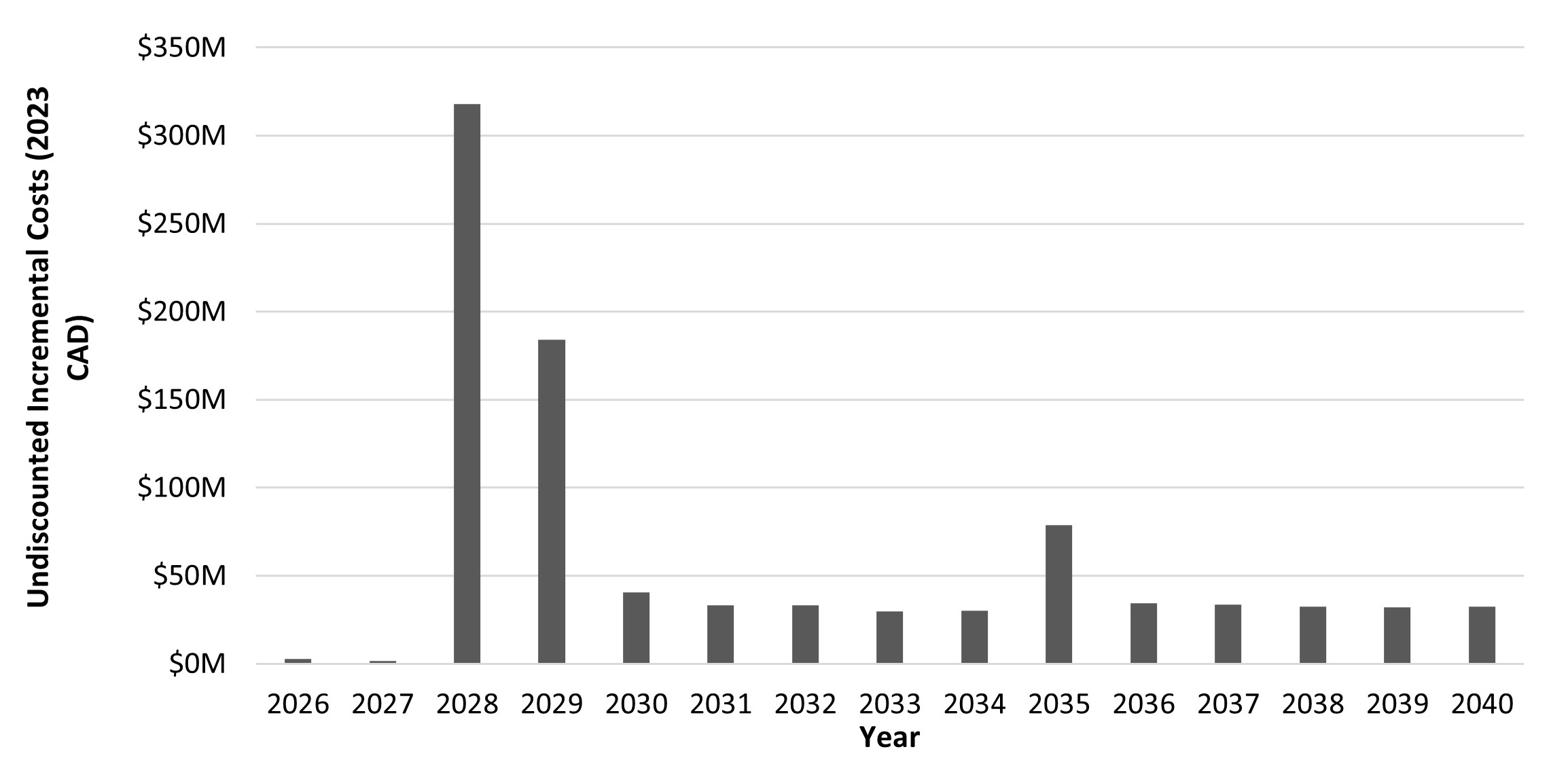
Figure 1: Undiscounted incremental costs - Text version
Figure 1 illustrates the annual incremental costs (in 2023 dollars) associated with complying with the Regulations. The breakdown of expected costs for regulated landfills is as follows: About $2.7 million in 2026, $2 million in 2027, $318 million in 2028, $184 million in 2029, $40 million in 2030, $33 million in 2031, $33 million in 2032, $30 million in 2033, $30 million in 2034, $79 million in 2035, $34 million in 2036, $34 million in 2037, $32 million in 2038, $32 million in 2039, and $32 million in 2040
As shown in Figure 2, from 2026 to 2040, it is expected that emissions of methane (CH4) will be reduced by more than 5 Mt CO2e annually as of 2028, more than 7 Mt CO2e annually as of 2029, and more than 8 Mt CO2e annually as of 2035, primarily as a result of the capital investments made in 2028, 2029 and 2035.
Figure 2: Annual net GHG emission reductions
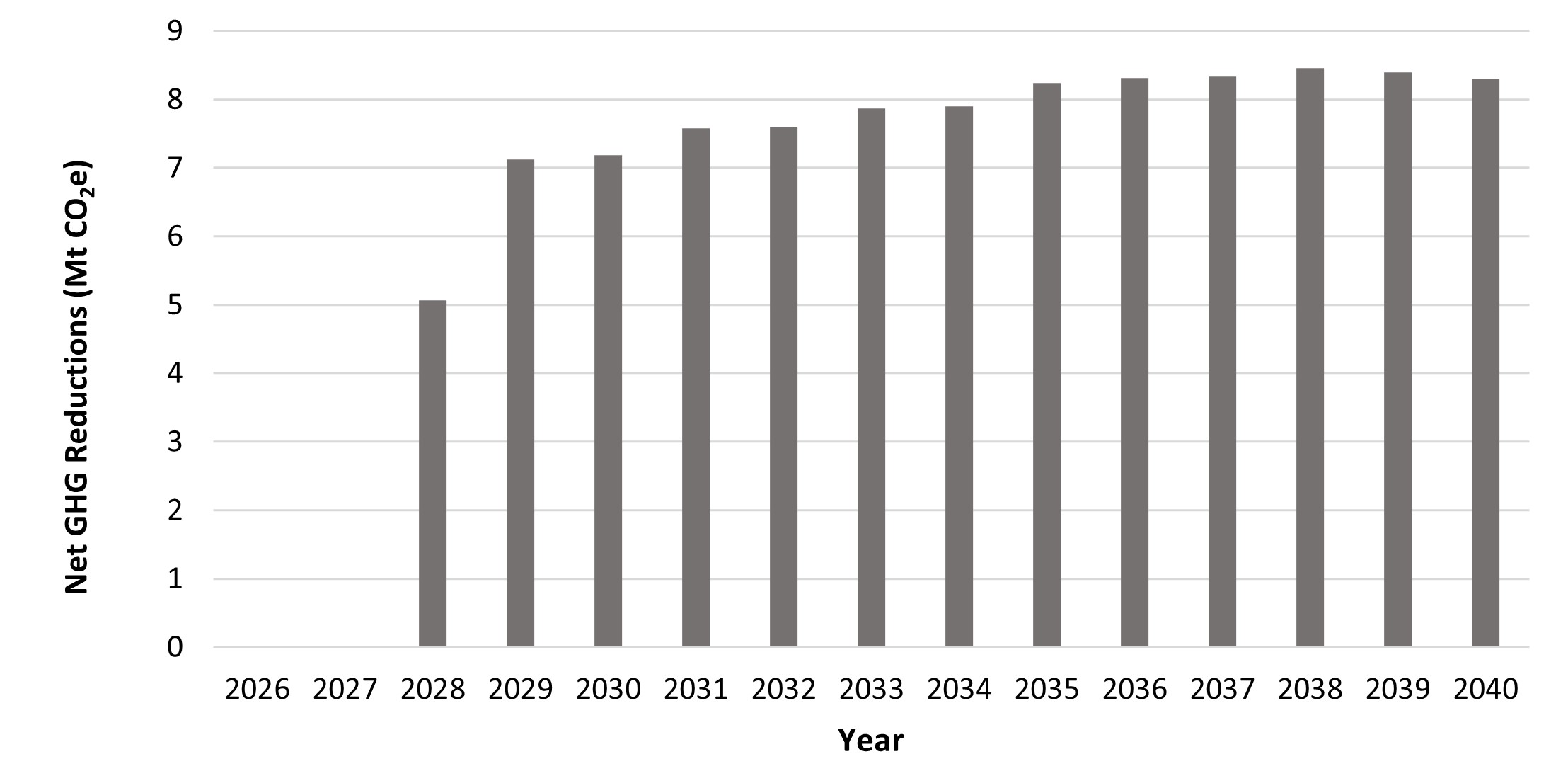
Figure 2: Annual net GHG emission reductions - Text version
Figure 2 illustrates the estimated annual net greenhouse gas reductions (in CO2 equivalent) achieved by landfills through their compliance efforts under the Regulations: 5.1 Mt in 2028, 7.1 Mt in 2029, 7.2 Mt in 2030, 7.6 Mt in 2031, 7.6 Mt in 2032, 7.9 Mt in 2033, 7.9 Mt in 2034, 8.2 Mt in 2035, 8.3 Mt in 2036, 8.3 Mt in 2037, 8.5 Mt in 2038, 8.4 Mt in 2039, and 8.3 Mt in 2040.
Analytical framework
To estimate the impact of the Regulations, an analysis was conducted to quantify the incremental benefits of GHG (CH4) emission reductions and considering associated GHG (CO2) emission increases. The analysis then monetized two main categories of incremental impacts: the costs of compliance (including administration) and the benefits of GHG emission reductions. Impacts attributable to the Regulations are analyzed over 15 years (2026 to 2040), which covers the period after the Regulations come into force, then apply fully across the sector (2035) and then extends to 2040 to illustrate the costs and benefits that would accrue over time as a result of the Regulations. Existing provincial regulatory requirements were assumed to remain unchanged in the baseline, and no additional methane emission reductions above the current collection efficiency were modelled.
Updates to the analysis following prepublication of the proposed Regulations in the Canada Gazette, Part I
Analytical updates
Comments received following the publication of the proposed Regulations included feedback from stakeholders regarding the Regulatory Impact Analysis Statement. In addition, following prepublication in the Canada Gazette, Part I (CGI), the Department leveraged scientific consensus and sought input from industry stakeholders and service providers on cost benchmarks used in the analysis of the proposed Regulations. In response, the following substantive changes have been made to the analysis:
- The global warming potential for methane has increased from 25 to 28 tonnes CO2e per tonne of methane.footnote 7
- Cost benchmarks for the installation of landfill gas recovery wells and for enclosed flares were increased to reflect information on actual project costs incurred for similar construction and equipment in recent years.
- Costs for surface emissions monitoring have been improved through information from landfill owners, operators and measurement service providers, who shared cost benchmarks and information on the time typically required to conduct these monitoring programs.
- Methane generation estimates and waste disposal quantities have been adjusted for certain landfills based on information provided to the Department subsequent to the previous analysis, including through a survey of landfill owners implemented in summer 2025.
In addition, price levels have been updated to align with the most up-to-date information, and the base year to discount costs and benefits to present value has been updated to 2025. In total, these analytical changes have led to an increase to $808 million in estimated total costs between 2026 and 2040, from $581 million estimated in the CGI prepublication. Emission reductions attributable to the Regulations have decreased from 107 Mt of CO2e to 100 Mt of CO2e.
Department’s landfill gas inventory
To support the cost-benefit analysis, the Department created an inventory of landfills anticipated to be affected by the Regulations. Information in the inventory includes
- opening/closure year;
- annual quantity of waste disposal;
- quantity of waste-in-place;
- annual quantity of methane recovered and flared or utilized to create energy;
- surface area of the landfill with and without existing landfill gas recovery wells; and
- number of existing wells and capacity of existing landfill gas flares.
Data in this landfill inventory has been provided to the Department by landfill owners and operators through voluntary surveys, with the most recent survey being conducted in 2025. This inventory forms the basis for the calculations and estimates described in this analysis.
Modelling methane generation
The Department estimated future annual methane generation at potentially regulated landfills using an international model, adapted for Canada, which calculates the quantity of annual methane generated through the decay of all disposed biodegradable waste. The key input to this model is the quantity of municipal solid waste disposed from the landfill’s first year of operation until its closure, as described above. The model calculates the quantity of methane generated from waste deposited in any given year, which decays over several decades at an initially high rate that decreases over time. The model and model parameters used, including waste decay rates and material specific degradable organic content parameters (that describe how much degradable material is in waste disposed), align with the 2019 Refinement to the 2006 Intergovernmental Panel on Climate Change (IPCC) Guidelines for National Greenhouse Gas Inventories and those used in the National Inventory Report on Greenhouse Gas Sources and Sinks (NIR) [PDF] (PDF). This is a common model used by governments and the industry to estimate methane generation. The model parameters used are specific to each province and territory, accounting for regional differences in waste composition and moisture conditions that influence methane generation rates at a landfill. The results of this model show that methane generation increases over time as waste accumulates in landfills. A significant portion of methane generation occurs within the first few years of waste disposal. If operated for long enough, methane generation eventually reaches a steady state until the landfill closes. Once closed, the rate of methane generation declines over several decades.
In this analysis, future waste disposal for landfills in the inventory was assumed constant from 2024 (the most recent reported year) until the landfill reaches the reported or estimated closure year. Based on the current estimated landfill closure years, the total capacity of waste disposal at landfills in the inventory does decline during the timeframe of the analysis. To account for future waste disposal, for which there is currently no planned capacity, a quantity of additional future annual waste disposal at regulated landfills was estimated, on a provincial and territorial basis, to account for the impact of population growth and waste diversion trends, consistent with assumptions used in the Department’s most recent GHG projections analysisfootnote 8and assuming that the proportion of total waste disposed at regulated landfills remains constant in the future. The analysis assumes that the incremental waste would be disposed of through expansions of existing landfill capacity and not in new landfills.
Figure 3 shows the total annual waste disposed and methane generated at regulated landfills for the years 2026 to 2040. The estimated annual waste disposal at regulated landfills is anticipated to remain relatively steady, as increased waste diversion in certain provinces balances additional waste generation attributed to population growth. The modelled methane generation shows a relatively constant level over the timeframe of the analysis, increasing slightly as waste continues to be disposed at a constant rate until after 2029, when a decrease is observed in response to temporal changes in the projected quantity of annual waste disposed.
Figure 3: Annual waste disposed and annual methane generated (2026 to 2040)
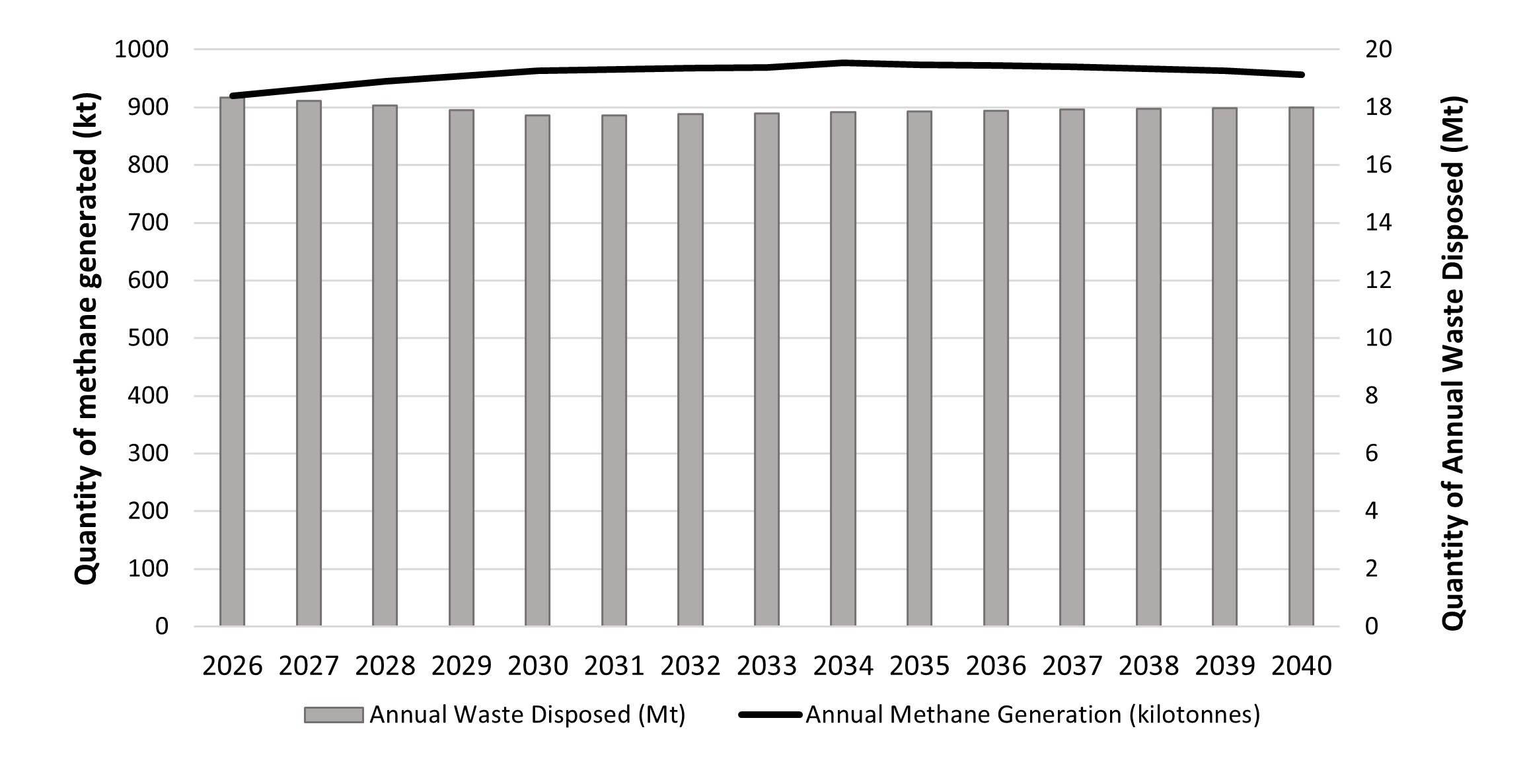
Figure 3: Annual waste disposed and annual methane generated (2026 to 2040) - Text version
Figure 3 illustrates the quantity of annual municipal solid waste disposed in landfills subject to the Regulations. The breakdown of expected annual waste disposal in affected landfills is as follows: About 18 Mt in 2026, 18 Mt in 2027, 18 Mt in 2028, 18 Mt in 2029, 18 Mt in 2030, 18 Mt in 2031, 18 Mt in 2032, 18 Mt in 2033, 18 Mt in 2034, 18 Mt in 2035, 18 Mt in 2036, 18 Mt in 2037, 18 Mt in 2038, 18 Mt in 2039, and 18 Mt in 2040.
Additionally, Figure 3 illustrates the quantity of annual methane generated at landfills subject to the Regulations. The breakdown of expected annual methane generation at affected landfills is as follows: About 919 kt in 2026, 932 kt in 2027, 945 kt in 2028, 954 kt in 2029, 964 kt in 2030, 966 kt in 2031, 968 kt in 2032, 969 kt in 2033, 977 kt in 2034, 974 kt in 2035, 973 kt in 2036, 971 kt in 2037, 966 kt in 2038, 963 kt in 2039, and 957 kt in 2040.
Estimating methane recovery in the baseline scenario and in the regulatory scenario
The methodology for evaluating incremental impacts involves the comparison of the baseline scenario and the regulatory scenario. The typical approach to reducing landfill methane emissions involves the installation of equipment to recover and combust landfill gas, which results in the conversion of methane to CO2. The baseline and regulatory scenarios quantify methane emission reductions (equivalent to the quantity of methane recovered and combusted) as well as the CO2 emissions associated with combustion of the recovered methane. The difference between the regulatory and baseline quantities of methane recovery represents the potential methane emission reductions achievable through the implementation of the Regulations. The additional recovered methane (the difference between the regulatory and baseline quantities) is adjusted to reflect that 0.3% of the methane delivered to a destruction device is emitted without being destroyed via combustion.
Baseline scenario
The baseline scenario assumes a status quo in which the Regulations are not implemented and reflects current provincial and municipal measures in place as of mid-2025. For landfills with no landfill gas recovery systems in place (as of mid-2025), future baseline methane recovery was assumed to be zero.
For landfills with existing landfill gas recovery systems in place, future baseline methane recovery was calculated by assuming that, in future years, landfills would collect the same proportion of generated methane as in 2022. This proportion is termed “collection efficiency” and is equal to the quantity of recovered methane divided by the quantity of generated methane (on an annual basis). Collection efficiency for the year 2022 was calculated using the reported or extrapolated (from previous year reports) quantity of methane recovered and a modelled estimate of annual methane generation calculated by the Department. Baseline collection efficiencies estimated for landfills with existing landfill gas recovery systems ranged from less than 10% to 98%. The 2022 average collection efficiency (by province/territory) was used as the baseline collection efficiency to estimate baseline methane recovery associated with the methane generated from the “additional waste” modelled in the analysis. To calculate annual baseline methane recovery in future years, modelled annual methane generation for the future year was multiplied by the 2022 collection efficiency.
Regulatory scenario
The regulatory scenario assumed that full implementation of the Regulations would result in 75% collection efficiency at all open, regulated landfills and 90% at closed, regulated landfills. These values represent the highest technically achievable collection efficiencies for landfill gas recovery systems. Future annual methane generation was multiplied by either 75% or 90% to calculate the regulatory scenario annual methane recovery through the timeframe of the analysis. The key assumption in this analysis is that landfills subject to the Regulations would be achieving the highest industry standard collection efficiencies that are typically referenced as achievable performance standards.
Monetary values
All undiscounted dollar figures are presented in 2023 Canadian dollars (CAD). Present value terms have been discounted at 2% annually, which is the near-term Ramsey discount rate now utilized by the Government of Canada when monetizing GHG reductions. The same discount rate has been applied across both costs and benefits to provide analytical consistency, and 2025 was selected as the “present” year for discounting, as this is the year the Regulations are registered.
Analysis of regulatory coverage and compliance
To estimate the incremental benefits and costs of the Regulations, the analysis considered who would be affected (regulatory coverage) and how they would most likely respond (their compliance strategies), as described below.
Regulatory coverage
The Regulations will reduce landfill methane emissions by implementing facility and equipment-level requirements. Facility-level requirements include compliance with surface methane concentration limits and a prohibition on venting that could require the installation of a methane mitigation system, such as a recovery and flaring system to prevent fugitive emissions of landfill methane into the atmosphere. Depending on the quantity of methane being generated, landfill owners or operators may be able to comply with the Regulations through the installation of alternative cover systems (e.g. biocovers) or through improving or repairing cover systems. Equipment-level requirements include the implementation of monitoring programs to identify methane leaks and identify and avoid methane leaks through regular recovery well monitoring and adjustments.
Landfills that exceed the waste disposal and methane generation thresholds will be required to take incremental action to comply with the Regulations. The Department estimates that 180 landfills (147 publicly owned and 33 privately owned) will initially be subject to the Regulations and be required to conduct a methane generation assessment. Of these, 147 (117 publicly owned and 30 privately owned) are anticipated to be required to comply with surface methane concentration limits, methane destruction and monitoring requirements. There are over 3 000 landfills in Canada that are below the waste disposal applicability threshold and are not expected to have obligations under the Regulations within the period of analysis.
Regulatory compliance
The Regulations will prohibit the venting of landfill gas (except in certain situations) and set surface methane concentration limits for areas of the landfill that have not received waste for one year. Although there are several existing approaches in use for controlling surface methane emissions, for modelling purposes, it is assumed that landfills required to reduce their methane emissions would install a new, or expand an existing, active landfill gas recovery and flaring system. Although no “new” landfills were included in the inventory analysis, compliance costs were estimated for the management of methane generated from future waste that would be disposed in each province and territory, above the quantity already accounted for in the inventory.
The Regulations include specific monitoring requirements for surface methane concentration monitoring, methane leak detection and landfill gas recovery well monitoring. Costs for compliance with these requirements are assumed to be incurred at all regulated landfills.
Compliance costs
Scope of compliance costs
The scope of these costs includes capital, operating and maintenance costs for new or expanded active landfill gas recovery and flaring systems. These systems are assumed to be installed for the landfill to meet the requirements. The scope also includes specific monitoring and administrative costs associated with requirements in the Regulations.
Costs of compliance
Landfills affected by the Regulations are expected to incur incremental capital and operating costs associated with the installation and operation of new or expanded active landfill gas recovery and flaring systems. The Regulations include a phased approach that depends on the status of landfill gas recovery at the coming into force of the Regulations and the modelled annual methane generation at the landfill.
The Regulations introduce initial compliance obligations in 2026 that are limited to an assessment of methane generation. Compliance with methane control and monitoring requirements would begin in 2028 at a subset of regulated landfills (those with landfill gas recovery systems in place as of the coming into force of the Regulations). Other compliance requirements would be pertinent to landfills that install new methane control systems, starting in 2029 or 2035 (depending on the annual methane generation assessment).
It is assumed that capital costs associated with the installation of new or expanded landfill gas recovery systems are incurred in the first year when the requirements apply. Operating costs are assumed to begin in the year when capital costs are incurred. These operating costs continue to be incurred annually until the end of the analytical period.
The approach to calculating capital and operating costs is based on methodologies and cost benchmarks developed for the Department through two key studies: GHD Study of Municipal Solid Waste Landfill Gas Capture and Use in Canada (2018) and Comcor Economic Analysis of Canadian Landfill Gas Recovery and Utilization Projects Summary Report (2021). GHD developed benchmarks for capital (equipment and construction), operating and maintenance costs related to the installation or expansion of landfill gas recovery and flaring systems at the largest landfills in Canada. As well, Comcor Environmental Limited also conducted a study aimed at reviewing, refining and updating these costing benchmarks as well as the overall costing approach. In addition, costing information has been provided to the Department by landfill owners in response to information requests. Information on waste disposal, landfilled surface area, the number of existing landfill gas recovery wells and the capacity of existing flares in the Department’s Landfill Gas Inventory was used as part of the cost analysis.
Some regulated landfills would be able to offset compliance costs through potential additional revenue sources, including
- the creation and sale of compliance credits and/or offset credits;
- the sale of landfill gas to energy project developers or sale of generated energy or fuels to suppliers; and
- direct government or other funding programs.
Given the complexity of assessing which landfills would be able to take advantage of these opportunities and the actual revenues associated with these opportunities, revenue associated with the infrastructure that could be required to comply with the Regulations was not quantitatively assessed.
Capital costs
The costing methodology estimated costs for components of landfill gas recovery and flaring systems, including landfill gas collection wellfield infrastructure, blowers, and flares. Engineering design, oversight, permitting, and administration costs were assumed to be 15% of the total infrastructure capital costs. Based on the Departmental 2024 Landfill Gas Inventory, out of the 147 landfills expected to be required to comply with the Regulations, 15 landfills were determined to have landfill gas recovery and destruction systems that already achieve the target collection efficiencies. Therefore, the Department estimated capital costs for 132 landfills.
Landfill gas collection wellfield
A significant component of the costs for an active landfill gas recovery system is the installation of the gas recovery wellfield. The wellfield is an interconnected network of wells and underground piping that is installed progressively at a landfill, following waste disposal. The methodology used to estimate the number of new wells required at landfills with existing landfill gas recovery systems assumes additional wells would be needed to recover the quantity of landfill gas that would not be recovered in the baseline scenario and would otherwise be emitted.
To estimate the number of wells included in the analysis:
- For the applicable implementation year for new landfill gas recovery systems and for both the applicable implementation and future years for existing landfill gas recovery systems, one well was costed for each additional 50 m3/hr of landfill gas not recovered in the baseline scenariofootnote 9.
- For future year well installations at new landfill gas recovery systems, the estimated number of wells was based on the annual surface area of the landfill that will be used for waste disposal. A well density (the number of wells per acre of landfill surface area) of one well per acre was applied in the analysis.footnote 10
The cost to install a landfill gas collection well, including components, such as vertical well drilling, wellhead installation, underground piping network, and a condensate removal system, was estimated at $130,000 per well. The average cost of the installation of landfill gas collection wells for landfills included in this analysis between 2028 and 2040 is estimated to be $4.0 million per landfill. This cost represents an investment made over the timeframe of the analysis.
An estimated 71 landfills would install 1 964 additional wells at existing systems by 2028, 37 landfills would install 1 150 wells at new systems by 2029, and an additional 24 landfills would install 206 wells at existing and new systems by 2035. The estimated total number of additional wells per landfill included in the costing analysis, between 2026 and 2040, ranged from 6 to 277 for new systems and 2 to 261 for system expansions.
Landfill gas recovery and destruction
Blowers
Active landfill gas recovery systems include equipment to move gas out of the landfill to flares or energy recovery systems, such as reciprocating engines to produce electricity, or upgrading systems that produce renewable natural gas. However, compliance with the Regulations does not require the use of energy recovery systems.
The blowers create vacuum pressure in collection wells to draw landfill gas into the flaring system. The estimated capacity of the blowers costed in this analysis is based on the maximum estimated additional annual landfill gas recovery over the system’s operational lifespan. The costs associated with the blower are one-time expenses incurred over the operational lifetime of the system. The Department estimated that the cost for additional blower capacity at regulated landfills ranges from $876,000 to $1.9 million. The average cost of blowers for landfills included in this analysis is $1.1 million per landfill. This cost represents a one-time investment over the operational lifetime of the system.
An estimated 33 landfills would increase blower capacity at existing systems by 2028, 37 landfills would install blowers at new systems by 2029, and an additional 23 landfills would increase blower capacity at existing and new systems by 2035.
Enclosed flares
Regulated landfills would either add new or additional flaring capacity by installing an enclosed flare, sized to accommodate the maximum future landfill gas flowrate. Costing benchmarks provided flare costs based on capacity ranges. Where no information on current flare capacity was available, capacity was assumed to be the most recent landfill gas recovery flowrate. The estimated costs for installing new enclosed flares ranged from $286,000 to $1.2 million. The average cost of new flares for landfills included in this analysis is $584,000 per landfill, representing a one-time investment over the operational lifetime of the system.
An estimated 32 landfills would increase flaring capacity at existing systems by 2028, 37 landfills would install flaring systems at new facilities by 2029, and an additional 23 landfills would increase flaring capacity at existing and new systems by 2035.
Table 1 summarizes the compliance costs for the installation or expansion of landfill gas collection wellfield, the installation of blowers and the installation of enclosed flares.
Table 1. Capital compliance costs (millions of dollars) from 2026 to 2040
- Number of years: 15 (2026 to 2040)
- Price year: 2023
- Present value base year: 2025
- Discount rate: 2% per year
| Compliance action | Average undiscounted | Number of landfills | Total undiscounted | Total present value |
|---|---|---|---|---|
| Installation of landfill gas collection wellfield | 4.0 | 132 | 527 | 474 |
| Installation of blowers | 1.1 | 93 | 98 | 89 |
| Installation of enclosed flares | 0.6 | 92 | 55 | 51 |
| Total CAPEX compliance costs | Not applicable | Not applicable | 680 | 614 |
As shown in Table 1, from 2026 to 2040, the average undiscounted capital expenditure (CAPEX) for:
- The average cost for the installation or expansion of landfill gas collection wellfields at 132 landfills is $4.0 million. The total undiscounted CAPEX associated with wellfield installation during this period is $527 million, and the total present value is $474 million.
- The average cost for the installation of blowers at 93 landfills is $1.1 million. The total undiscounted CAPEX associated with blowers during this period is $98 million, and the total present value is $89 million.
- The average cost for the installation of enclosed flares at 92 landfills is $0.6 million. The total undiscounted CAPEX for flares during this period is $55 million, and the total present value is $51 million.
- The total undiscounted CAPEX during this period is $680 million, and the total present value is $614 million.
Operation and maintenance costs
The annual O&M costs include those related to the regular monitoringfootnote 11 and adjustment of landfill gas recovery wells, maintenance of system components, and costs associated with the annual amount of electricity used, primarily for operating the blowers. Provincial and territorial electricity pricesfootnote 12 for the year 2023 were utilized to calculate the electricity costs associated with running the landfill gas recovery system, with average electricity rate increases of 9% between 2026 and 2050 cumulatively.footnote 13
The Regulations include requirements for monthly monitoring of active landfill gas recovery wells to measure the vacuum pressure on individual wells. There is variability in the current (baseline) frequency of wellfield monitoring across Canadian landfills, depending on provincial regulatory requirements, the existence of energy recovery systems and the site-specific variability in the landfill gas generation. Monthly monitoring costs are estimated for all additional wells installed in this analysis. Where an existing system with energy generation projects is in place, monthly baseline monitoring is assumed to take place at existing wells, so no incremental increased costs associated with this activity were included. For landfills with existing systems where there are no energy recovery systems in operation, the analysis assumes that, in the baseline, monitoring occurs quarterly. Therefore, additional monitoring costs for existing recovery wells at these landfills are included in the estimated operational costs to account for the monthly monitoring included in the Regulations.
Operating costs are assumed to begin in the first year that they are required by the Regulations and to continue to the end year of the analysis. Annual estimated incremental O&M costs range from $4,000 to $255,000 per landfill. The average annual O&M compliance costs per landfill are $62,000 for the 85 landfills expected to begin incurring them in 2028, $115,000 for the 37 landfills expected to begin incurring them in 2029, and $87,000 for the 25 landfills expected to begin incurring them in 2035. Table 2 summarizes the O&M compliance costs over this period.
Table 2. O&M compliance costs (millions of dollars) from 2026 to 2040
- Number of years: 15 (2026 to 2040)
- Price year: 2023
- Present value base year: 2025
- Discount rate: 2% per year
| Compliance action | Average undiscounted | Number of years of compliance | Number of affected landfills | Total undiscounted | Total present value |
|---|---|---|---|---|---|
| Annual OPEX compliance costs (landfills with compliance obligations beginning in 2028) | 0.05 | 13 | 85 | 62 | 54 |
| Annual OPEX compliance costs (landfills with compliance obligations beginning in 2029) | 0.10 | 12 | 37 | 47 | 43 |
| Annual OPEX compliance costs (landfills with compliance obligations beginning in 2035) | 0.07 | 6 | 25 | 11 | 10 |
| Total OPEX compliance costs | - | - | 147 | 120 | 107 |
O&M: Operation and Maintenance; OPEX: Operating expenditure
As shown in Table 2, from 2026 to 2040:
- The average annual OPEX compliance cost for landfills with compliance obligations beginning in 2028 is $0.05 million for the 85 landfills expected to begin incurring them in 2028 (for a compliance period of 13 years). The total undiscounted OPEX for those landfills during this period is estimated to be $62 million, and the total present value is estimated to be $54 million.
- The average annual OPEX compliance cost for landfills with compliance obligations beginning in 2029 is $0.10 million for the 37 landfills expected to begin incurring them in 2029 (for a compliance period of 12 years). The total undiscounted OPEX for those landfills during this period is estimated to be $47 million, and the total present value is estimated to be $43 million.
- The average annual OPEX compliance cost for landfills with compliance obligations beginning in 2035 is $0.07 million for the 25 landfills expected to begin incurring them in 2035 (for a compliance period of 6 years). The total undiscounted OPEX for those landfills during this period is estimated to be $11 million, and the total present value is estimated to be $10 million.
- The total undiscounted OPEX during this period is estimated to be $120 million, and the total present value is estimated to be $107 million.
Monitoring surface methane concentrations and methane leaks
The Regulations require regular monitoring to assess surface methane concentrations and to identify the location of methane leaks. This monitoring includes the monitoring of methane emissions across the surface of the landfill using methane monitoring devices (including drone-based or ground-based methane detectors) to evaluate compliance with the limits and identify methane leaks. Follow-up actions to the detection of leaks or exceedances could involve making repairs or system adjustments.
Compliance costs related to monitoring include annual costs for surface methane concentration monitoring and methane leak detection, both of which will be required at regulated landfills three times per year. Monitoring of surface methane concentrations was costed assuming the use of drone-based methane detectors (and ground-based validation measurements) for surface methane concentrations, as this approach is estimated to result in the highest monitoring related compliance cost. Costs for each monitoring event were estimated to be $80 per acre for field work, data analysis and reporting and a worst-case travel cost per event of $4,500.
The primary driver for the cost per survey is the time to conduct the survey, with monitoring effort proportional to the surface area of the landfill. Some landfills may elect to conduct surface methane concentration monitoring using on-site staff, reducing compliance costs, while others may rely on consultants to perform monitoring work. To avoid underestimation, cost estimates assume this monitoring work would be completed by a consultant or methane monitoring service provider. Costs for travel to/from the landfill were also included in the analysis.
Landfills located in Quebec that are regulated under the Regulation respecting the landfilling and incineration of residual materials are required to conduct monitoring of surface methane concentrations three times per year, which aligns with the requirements for surface methane concentration monitoring under the Regulations. Therefore, compliance costs related to monitoring at these landfills include only monitoring for equipment methane leaks.
Monitoring of equipment components to identify methane leaks involves the use of handheld methane detectors and is assumed to be conducted by operators of the landfill gas recovery system. The purchase cost of a monitoring instrument to complete this work was assumed to be incurred by each regulated landfill. This type of monitoring is not required by any provincial regulations, so the cost for monitoring equipment components is applied to all regulated landfills.
Monitoring costs are assumed to begin in the first year that they are required by the Regulations and to continue to the end year of the analysis. Annual estimated incremental monitoring costs range from $6,000 to $260,000 per landfill. The average annual monitoring compliance cost per landfill is $55,000 for the 85 landfills expected to begin incurring them in 2028, $26,000 for the 37 landfills expected to begin incurring them in 2029, and $17,000 for the 25 landfills expected to begin incurring them in 2035. Table 3 summarizes the monitoring compliance costs over this period.
Table 3: Monitoring compliance costs (millions of dollars) from 2026 to 2040
- Number of years: 15 (2026 to 2040)
- Price year: 2023
- Present value base year: 2025
- Discount rate: 2% per year
| Compliance action | Average annual undiscounted monitoring costs | Number of years of compliance | Number of affected landfills | Total undiscounted monitoring costs | Total present value monitoring costs |
|---|---|---|---|---|---|
| Annual monitoring compliance costs for landfills complying with 2028 timeline | 0.055 | 13 | 85 | 61 | 51 |
| Annual monitoring compliance costs for landfills complying with 2029 timeline | 0.026 | 12 | 37 | 12 | 10 |
| Annual monitoring compliance costs for landfills complying with 2035 timeline | 0.017 | 6 | 25 | 3 | 2 |
| Total monitoring compliance costs | - | - | 147 | 76 | 63 |
As shown in Table 3, from 2026 to 2040:
- The average annual monitoring costs per landfill are $0.055 million for the 85 landfills expected to begin incurring them in 2028 (for a compliance period of 13 years). The total undiscounted monitoring costs for those landfills during this period is estimated to be $61 million, and the total present value is estimated to be $51 million.
- The average annual monitoring costs per landfill are $0.026 million for the 37 landfills expected to begin incurring them in 2029 (for a compliance period of 12 years). The total undiscounted monitoring costs for those landfills during this period is estimated to be $12 million, and the total present value is estimated to be $10 million.
- The average annual monitoring costs per landfill are $0.017 million for the 25 landfills expected to begin incurring them in 2035 (for a compliance period of 6 years). The total undiscounted monitoring costs for those landfills during this period is estimated to be $3 million, and the total present value is estimated to be $2 million.
- The total undiscounted monitoring costs during this period is estimated to be $76 million, and the total present value is estimated to be $63 million.
Industry administrative costs
The Regulations would impose incremental administrative costs to industry attributable to learning about the new requirements, assessing applicability, increased record-keeping requirements and reporting. From 2026 to 2040, the total administrative cost for public and private sector landfill owners and operators is $10 million or $70,000 per landfill, as shown in Table 4. Additional information on administrative costs is provided in the one-for-one rule section.
Government administrative costs
Government costs for the administration of the Regulations are based on resources required to support regulatory reporting, compliance promotion and enforcement. This includes activities such as implementing electronic reporting systems, reviewing information submitted in regulatory reports and assessing the performance of the Regulations. Promoting compliance with the Regulations would involve conducting awareness campaigns, developing guidance and training materials, and engaging in outreach activities to disseminate information about the Regulations.
Enforcement costs would include activities related to monitoring and verifying compliance with the Regulations. This would involve conducting inspections to assess compliance levels, investigations of alleged offences, and taking appropriate actions against non-compliant entities. These enforcement efforts require dedicated resources, trained personnel and technology to effectively carry out compliance monitoring and enforcement activities.
From 2026 to 2040, the estimated cost to the Government of Canada associated with the administration, compliance promotion and enforcement of the Regulations is valued at $14 million.
Summary of costs
Table 4 provides the summary of all costs pertinent to the Regulations. However, the costs of completing a methane generation assessment in 2026 are not included for ease of presentation. These costs are, however, included in the discounted total and annualized cost estimates.
Table 4: Summary of compliance and administrative costs (millions of dollars) for all 147 landfills from 2026 to 2040
- Number of years: 15 (2026 to 2040)
- Price Year: 2023
- Present value base year: 2025
- Discount rate: 2%
| Source | Undiscounted 2028 | Undiscounted 2035 | Undiscounted 2040 | Discounted Total 2026–2040 | Annualized |
|---|---|---|---|---|---|
| Capital costs | 305 | 59 | 12 | 614 | 48 |
| Operation and maintenance (O&M) costs | 4.6 | 12 | 12 | 107 | 8.3 |
| Monitoring costs | 6.9 | 6.6 | 6.1 | 63 | 4.9 |
| Industry administrative costs | 0.06 | 0.9 | 1.0 | 10 | 0.8 |
| Total cost to industry | 317 | 78 | 31 | 794 | 62 |
| Government administrative costs | 1.5 | 0.9 | 0.9 | 14 | 1.1 |
| Total cost to industry and government | 318 | 79 | 32 | 808 | 63 |
As shown in Table 4, from 2028 to 2040, the total present value for:
- Capital costs are estimated to be $614 million, with undiscounted costs of $305 million in 2028, $59 million in 2035, and $12 million in 2040. On an annualized basis, the average present value capital cost is $48 million.
- Operation and maintenance (O&M) costs are estimated to be $107 million, with undiscounted costs of $4.6 million in 2028, $12 million in 2035, and $12 million in 2040. On an annualized basis, the average present value O&M cost is $8.3 million.
- Monitoring costs are estimated to be $63 million, with undiscounted costs of $6.9 million in 2028, $6.6 million in 2035, and $6.1 million in 2040. On an annualized basis, the average present value monitoring cost is $4.9 million.
- Industry administrative costs are estimated to be $10 million, with undiscounted costs of $0.06 million in 2028, $0.9 million in 2035, and $1.0 million in 2040. On an annualized basis, the average present value industry administrative cost is $0.8 million.
- Costs to industry are estimated to be $794 million, with undiscounted costs of $317 million in 2028, $78 million in 2035, and $31 million in 2040. On an annualized basis, the average present value cost is $62 million.
- Government administrative costs are estimated to be $14 million, with undiscounted costs of $1.5 million in 2028, and $0.9 million in 2035 and 2040. On an annualized basis, the average present value cost is $1.1 million.
- Costs to industry and government are estimated to be $808 million, with undiscounted costs of $318 million in 2028, $79 million in 2035, and $32 million in 2040. On an annualized basis, the average present value cost is $63 million.
Once required to control methane emissions under the new federal regulations, eligibility to register new offset credit projects or to renew existing offset credit projects will be eliminated. The impact of the Regulations on eligibility to create and sell offset credits represents a lost opportunity to create revenue at certain regulated landfills. These costs were not estimated as part of this analysis.
Benefits
The Regulations would reduce GHG emissions by increasing the number of landfills that recover methane and increase the quantity of methane recovered at landfills with existing landfill gas recovery systems or destroyed in biocovers.
While the Regulations are expected to lead to an increase in methane combustion, resulting in CO2 emissions, this impact is more than offset by the benefits of reducing methane emissions. Similarly, the combustion process also produces emissions of air contaminants like particulate matter, nitrogen oxides, sulfur oxides and carbon monoxide, but these are expected to be offset by the reductions in volatile organic compounds (VOC) emissions that result from methane combustion. The estimated change in air pollutant emissions and their contribution to the overall national emission levels are expected to be small (see Table 6).
Quantification of benefits
The quantification of benefits involves estimating the reduction in methane emissions attributable to the Regulations, which encompasses two key scenarios: the baseline scenario and the regulatory scenario. For this estimation, the reduction in methane emissions is equivalent to the increased recovery of landfill methane that is associated with the implementation of the Regulations. The baseline and regulatory scenarios describe the future quantity of annual methane recovery and destruction. The methane emission reductions attributed to the Regulations are the difference between the annual quantity of methane recovery calculated for the baseline and regulatory scenarios. The approach to estimating baseline and regulatory scenario methane recovery is described in the section on the analytical framework.
There are emissions of CO2 and nitrous oxide (N2O) associated with the destruction of methane through combustion in devices such as flares and engines. Although the increase in CO2 emissions is included in the analysis, these emissions are considered biogenic under IPCC approaches to GHG accounting. N2O emissions are negligible and do not appear as a distinct emission quantified in this analysis for which a global warming potential (GWP) of 28 was employed to convert methane estimates to CO2e. Table 5 outlines the GHG impact of the Regulations for selected years.
| GHG Impact | 2028 | 2030 | 2035 | 2040 | Total 2026 – 2040 |
|---|---|---|---|---|---|
| Reduction in methane emissions | 5.7 | 8.0 | 9.2 | 9.3 | 112 |
| Increase in CO2 emissions from the combustion of methane in destruction devices | 0.6 | 0.9 | 1.0 | 1.0 | 12.0 |
| Net GHG reduction | 5.1 | 7.1 | 8.2 | 8.3 | 100 |
As shown in Table 5, the total reduction in methane emissions (Mt CO2e) from 2026 to 2040 is estimated to be 100.0 Mt, with 5.7 Mt in 2028, 8.0 Mt in 2030, 9.2 Mt in 2035, and 9.3 Mt in 2040. The total increase in CO2 emissions (Mt CO2) from the combustion of methane in destruction devices from 2028 to 2040 is estimated to be 12.0 Mt, with 0.6 Mt in 2028, 0.9 Mt in 2030, 1.0 Mt in 2035, and 1.0 Mt in 2040. The net reduction in GHG emissions (Mt CO2e), calculated as the difference between reduction and increase, is estimated to be 100.0 Mt from 2028 to 2040, with 5.1 Mt in 2028, 7.1 Mt in 2030, 8.2 Mt in 2035, and 8.3 Mt in 2040. For national accounting purposes, the reduction in GHG emissions does not consider CO2 emissions due to the combustion of biogenic methane and is 100.0 Mt CO2 over the timeframe of the analysis.
The Regulations are estimated to result in a 42% reduction in methane emissions from municipal solid waste landfills in 2030 (relative to 2019 levels) and a 50% reduction by 2035, when the Regulations are fully implemented. Thus, the Regulations are expected to contribute towards meeting the 2030 methane reduction objective set out in the 2022 Methane Strategy.
Monetized benefits
Monetized benefits have been derived from 2026 to 2040. To monetize the benefits of GHG emission reductions, the quantity of avoided GHG emissions each year was multiplied by the Department’s schedule of the value of the social cost of methane (SCM) and the social cost of carbon (SCC).footnote 14 In April 2023, the Department published the Social Cost of Greenhouse Gas Estimates – Interim Updated Guidance for the Government of Canada. The value of SCM employed in this analysis and expressed in constant 2023 dollars is $3,042 per tonne of CH4 in 2028 and increases to $5,251 per tonne of CH4 in 2040. The value of SCC employed in this analysis and expressed in constant 2023 dollars is $306 per tonne of CO2 in 2028 and increases to $401 per tonne of CO2 in 2040. The increase in CO2 emissions was also monetized to evaluate the net value of emissions reductions of the Regulations. Table 6 outlines the GHG reductions achieved in selected years.
| Monetized benefits | Undiscounted 2028 | Undiscounted 2035 | Undiscounted 2040 | Discounted total 2026–2040 | Annualized |
|---|---|---|---|---|---|
| Value of CH4 (using SCM) | $637 | $1,308 | $1,521 | $12,915 | $1,005 |
| Value of CO2 (using SCC) | ($189) | ($342) | ($370) | ($3,425) | ($267) |
| Net value | $448 | $966 | $1,151 | $9,490 | $738 |
As shown in Table 6, the monetized benefits, denoted as the value of CH4 using the social cost of methane (SCM), are estimated as follows: undiscounted values are $637 million in 2028, $1,308 million in 2035, and $1,521 million in 2040. The total discounted value from 2026 to 2040 is $12,915 million, and, on an annualized basis, the average discounted value is $1,005 million. The reduction in benefits due to the increases in CO2 emissions, expressed as the value of CO2 using the SCC, are as follows: undiscounted values are $189 million in 2028, $342 million in 2035, and $370 million in 2040. The total discounted value from 2026 to 2040 is $3,425 million, and, on an annualized basis, the average discounted value is $267 million. The monetized benefits, represented as the net value, are as follows: undiscounted values are $448 million in 2028, $966 million in 2035, and $1,151 million in 2040. The total discounted value from 2026 to 2040 is $9,490 million, and, on an annualized basis, the average discounted value is $738 million.
Air pollution emissions and impacts
Volatile organic compounds (VOCs) are emitted through fugitive emissions of landfill gas and in non-combusted landfill gas. When landfill gas is recovered and combusted, either in a landfill gas flare or engine, VOCs are destroyed.
The increase in methane combustion at landfills is expected to increase emissions of other air pollutants, including nitrogen oxides (NOx), sulphur dioxide (SOx), and particulate matter (PM). Landfill gas makes up a very small percentage (less than 0.1%) of national level VOC emissions (6 200 tonnes of VOCs were reported from landfillsfootnote 15 in 2021). Estimates of the changes in landfill gas emissions of VOCs and other air pollutants attributable to the Regulations are presented in Table 7.
| Impact on Emissions | 2028 | 2035 | 2040 | Total 2026–2040 |
|---|---|---|---|---|
| Reduction in VOC emissions due to the combustion of landfill gas in destruction devices (tonnes) | (1 784) | (2 905) | (2 926) | (35 384) |
| Increase in NOx emissions from the combustion of methane in destruction devices (tonnes) | 212 | 346 | 348 | 4 213 |
| Increase in SOx emissions from the combustion of methane in destruction devices (tonnes) | 495 | 806 | 812 | 9 821 |
| Increase in CO emissions from the combustion of methane in destruction devices (tonnes) | 248 | 404 | 407 | 4 921 |
| Increase in PM emissions from the combustion of methane in destruction devices (tonnes) | 80 | 130 | 131 | 1 589 |
As shown above, the Regulations are expected to decrease harmful VOCs emissions from landfills by roughly 2 500 tonnes annually from 2028 to 2040. These reductions would be offset by small increases in other harmful air pollutants (less than 1 000 tonnes annually for individual gaseous pollutant emissions and less than 200 tonnes annually for particulate emissions). Owing to the relatively small changes in overall air pollutant emissions associated with the Regulations, air quality modelling to estimate the impacts on air pollutant concentrations and modelling of the associated environmental and human health impacts were not conducted. In the current context, relatively small changes should be interpreted as changes detectable by standard air quality scenario modelling, but with low signal (changes in air pollutant concentrations slightly over the sensitivity of the scenario methodology).
Health impacts
Changes in emissions of air pollutants may influence ambient concentrations of health-relevant air pollutants for communities near landfills, including fine particulate matter, nitrogen dioxide and ground-level ozone. These air pollutants are associated with a broad range of adverse health effects. However, the health benefits of reductions in VOC emissions and the health impacts from exposure to increases in other air pollutants associated with the Regulations are expected to be small.
Estimated cost effectiveness of the Regulations
To evaluate the cost effectiveness of the Regulations, the cost per tonne of CO2e reduced for each landfill was calculated. This metric offers a standardized approach, enabling comparison with other GHG mitigation alternatives. The estimation involves dividing the total compliance cost by the total amount of methane reductions achieved over the analysis timeframe. On average, the cost per tonne of GHG reduction is projected to be approximately $8/t CO2e over the timeframe of the analysis.
Cost-benefit statement
The monetized net benefit of the Regulations is estimated to be $8.7 billion dollars over the timeframe of the analysis.
Table 8: Summary of monetized benefits, costs and net benefits (millions of dollars) from 2026 to 2040
- Number of years: 15 (2026 to 2040)
- Price year: 2023
- Present value base year: 2025
- Discount rate: 2% per year
| Net benefits (Costs) | Undiscounted 2028 | Undiscounted 2035 | Undiscounted 2040 | Discounted total 2026–2040 | Annualized |
|---|---|---|---|---|---|
| Monetized GHG benefits | 448 | 966 | 1,151 | 9,490 | 738 |
| Total costs | 318 | 79 | 32 | 808 | 63 |
| Total net benefits | 130 | 887 | 1,119 | 8,682 | 675 |
As shown in Table 8, the monetized GHG benefits are outlined as follows: undiscounted values are $448 million in 2028, $966 million in 2035, and $1,151 million in 2040. The total discounted value amounts to $9,490 million. On an annualized basis, the average discounted value is $738 million. The total compliance costs are detailed as follows: undiscounted values are $318 million in 2028, $79 million in 2035, and $32 million in 2040. The total discounted value amounts to $808 million. On an annualized basis, the average discounted value is $63 million. The total net benefits are outlined as follows: undiscounted values are $130 million in 2028, $887 million in 2035, and $1,119 million in 2040. The total discounted value amounts to $8,682 million. On an annualized basis, the average discounted value is $675 million.
Analytical uncertainty
The methane emission reduction and compliance cost estimates are subject to uncertainty, primarily due to the modelling of landfill methane generation. The methane generation model is a simplified approach to estimating what is a heterogeneous, site-specific process impacted by variations in landfill design, waste disposal practices and rates, the biodegradable content of waste disposed and moisture conditions in waste disposed.
There is also uncertainty related to estimating the quantity of additional methane that would be recovered in the regulatory scenario. The estimation reflects the best available information regarding current landfill gas recovery, which, for some landfills, has not been reported to the Department for several years and could be out of date. However, this approach is the current best available means to estimate potential methane generation and emissions at landfills.
The cost estimates take into account expenses related to construction activities involved in setting up landfill gas recovery and flaring infrastructure to achieve the emission limits in the Regulations. Construction costs can fluctuate due to changes in material prices, labour rates, and technological advancements, affecting the cost benchmarks for collection wells, blowers, and flares.
The recovery of landfill gas (which is expected to be the primary approach that would be used for compliance with the Regulations) has the potential to generate revenue for landfill owners and operators. These revenues include the sale of compliance credits (under the CFR), offset credits (generated under federal and provincial offset protocols and systems) and the sale of low-carbon energy or fuel. Although this revenue has the potential to significantly reduce the compliance costs of the Regulations, due to challenges in assessing which landfills would take advantage of these opportunities and the resulting revenue generated, revenue was not monetized in the analysis. The Regulations will impact the eligibility for offset credits and the number of compliance credits that may be generated under the CFR. There are emerging technologies for low-carbon energy or fuel, including on-site electricity and compressed natural gas distribution systems that do not involve pipelines (e.g. on-site vehicle fuelling stations or centralized bulk storage and distribution networks). This means that, in the future, a larger proportion of regulated landfills may be able to generate revenue as the price of and demand for low-carbon energy or fuel increases.
These types of uncertainty are assessed in the sensitivity analysis below.
Sensitivity analysis
The results of the cost-benefit analysis described above are based on key parameter estimates; however, the true values may be higher or lower than those projected. To account for this uncertainty, sensitivity analyses were conducted to assess the effect of higher or lower estimates on the overall impact of the Regulations. Benefits and costs may be lower or higher than estimated, so the net benefit conclusion has been tested by assuming 50% lower benefits, 50% higher compliance costs, a lower (0%) or higher (7%) discount rate, and a ‘combined case’ comprising 25% lower benefits, 25% higher compliance costs, and a 7% discount rate, as shown below in table 9.
| Variable(s) | Sensitivity Case | Benefits | Costs (2026 - 2040) | Net Benefits |
|---|---|---|---|---|
| Central case (from table 8 ) | N/A | 9,490 | 808 | 8,682 |
| Benefits valuation | 50% Lower | 4,745 | 808 | 3,937 |
| Compliance costs | 50% Higher | 9,490 | 1,217 | 8,273 |
| Discount rate | 0% | 11,503 | 916 | 10,587 |
| Discount rate | 7% | 6,091 | 618 | 5,473 |
|
|
3,046 | 927 | 2,119 |
As shown in table 9 (above), in the central case, benefits amount to $9,490 million, costs stand at $808 million, and net benefits total at $8,682 million. In the sensitivity case, with
- 50% lower benefits, benefits are $4,745 million, costs are $808 million, and net benefits are $3,937 million;
- 50% higher compliance costs, benefits are $9,490 million, costs are $1,217 million, and net benefits are $8,273 million;
- a 0% discount rate, benefits are $11,503 million, costs are $916 million, and net benefits are $10,587 million;
- a 7% discount rate, benefits are $6,091 million, costs are $618 million, and net benefits are $5,473 million; and
- 50% lower benefits, 50% higher compliance costs, and a 7% discount rate, benefits are $3,046 million, costs are $927 million, and net benefits are $2,119 million.
In all scenarios presented, the Regulations yield an estimated net benefit. The Department thus concludes that it is expected that the Regulations would result in net benefits for Canadians.
Distributional analysis
The Regulations are expected to result in benefits that exceed costs for Canadian society, but the benefits and costs may not be equally distributed. The distribution of impacts is discussed below in terms of impacts by region and the potential for cost pass-through considerations. An analysis of household and gender-based analysis plus (GBA+) impacts is then considered.
Impacts by region
The emission reductions and compliance costs associated with the Regulations would vary by region. Various factors, including landfill characteristics, waste composition, and meteorological conditions, contribute to this regional variability.
The cost per tonne of CO2e reduced was assessed to identify potential distributional impacts. Due to the small size of landfills and lack of existing landfill gas recovery systems, the cost per tonne of CO2e reduced was highest in Yukon, the Northwest Territories and Prince Edward Island. In general, the cost per tonne of CO2e reduced is lower, where only expansions of existing landfill gas recovery systems were cost. The analysis showed slightly higher costs per tonne of CO2e reduced in Quebec, British Columbia, Saskatchewan, Nova Scotia and the Northwest Territories compared to the remainder of the provinces – potentially a result of a higher proportion of new systems that were cost for smaller landfills. The cost per tonne at the landfill in the Yukon Territory is higher than in other provinces and territories, since compliance at this landfill begins in 2035 and the analysis extends only to 2040 – this shorter time frame does not consider the full impact of methane mitigation over the lifetime of the system, typically a 20-year time frame. Table 10 below provides the cost per tonne of GHG reductions by region.
| Cost effectiveness | BC | AB | SK | MB | ON | QC | NB | NS | PE | NL | YT | NT | Canada |
|---|---|---|---|---|---|---|---|---|---|---|---|---|---|
| Discounted cost per tonne of GHG reductions | $11 | $9 | $10 | $7 | $6 | $10 | $7 | $11 | $14 | $6 | $29 | $17 | $8 |
As shown in the above table 10, the cost effectiveness across provinces and territories, measured by the discounted cost per tonne of GHG reductions ($/t CO2e), is as follows: British Columbia (BC): $11, Alberta (AB): $9, Saskatchewan (SK): $10, Manitoba (MB): $7, Ontario (ON): $6, Quebec (QC): $10, New Brunswick (NB): $7, Nova Scotia (NS): $11, Prince Edward Island (PE): $14, Newfoundland and Labrador (NL): $6, Yukon (YT): $29, Northwest Territories (NT): $17. The national average is $8.
There are also regional differences in the number of new systems installed to comply with the Regulations. Table 11 shows that Prince Edward Island, Alberta, Saskatchewan and Manitoba have a larger proportion of total regulated landfills that need to implement new landfill gas recovery systems by 2029 — although there is potential for other mitigation approaches, such as biocovers, to be an effective methane mitigation approach in these dry regions.
| Number of regulated landfills | BC | AB | SK | MB | ON | QC | NB | NS | PE | NL | YT | NT | Canada |
|---|---|---|---|---|---|---|---|---|---|---|---|---|---|
| Existing systems — 2028 | 12 | 7 | 2 | 2 | 28 | 25 | 6 | 2 | 0 | 1 | 0 | 0 | 85 |
| New systems — 2029 | 1 | 16 | 6 | 3 | 4 | 2 | 0 | 2 | 1 | 1 | 0 | 1 | 37 |
| New and existing systems — 2035 | 6 | 4 | 3 | 1 | 3 | 5 | 0 | 2 | 0 | 0 | 1 | 0 | 25 |
Impacts by landfill size
Landfill gas recovery infrastructure makes up the majority of estimated compliance costs. These impacts will vary with the size of the regulated landfill and whether a new system or a system expansion would be needed. Table 12 shows the impact of the quantity of waste in place on average total compliance costs on three categories of open landfills and closed landfills, and distinguishing costs for new and expanded system installations. On average, larger landfills are estimated to incur higher compliance costs than smaller landfills, for both new and expanded systems. These higher costs at larger landfills are anticipated to be offset by the higher revenue potential associated with the operation of the landfill and from the sale of biogas or low-carbon energy or fuels.
| Description | Open landfills, >2,500 kilotonnes Waste-in-place | Open landfills, 1,000 to 2,499 kilotonnes Waste-in-place | Open landfills, 100 to 999 kilotonnes Waste-in-place | Closed landfills |
|---|---|---|---|---|
| Number of regulated landfills | 49 | 46 | 42 | 10 |
| Range of annual waste disposed (2024) (tonnes) | 27,000 – 1,391,000 | 14,000 – 129,000 | 11,800 – 63,500 | 0 |
| Average annual waste disposed (2024) (tonnes) | 313,000 | 48,500 | 25,800 | 0 |
| Range of population served | 49,000 – 2,800,000 | 12,000 – 500,000 | 10,500 – 475,500 | 0 |
| Number of landfills requiring new systems | 5 | 16 | 34 | 3 |
| Average total compliance cost for new systems | $20.7 | $6.0 | $4.9 | $5.3 |
| Number of landfills requiring system expansions | 44 | 30 | 8 | 7 |
| Average total compliance cost for system expansions | $8.2 | $2.6 | $1.5 | $4.8 |
Cost impacts on landfill owners and users
In 2022, approximately $1.6 billion was spent on waste management capital expenditures in Canada.footnote 16 Average annualized capital compliance costs related to the Regulations are estimated at $44 million, representing about 3% in comparison to 2022 expenditures.
Cost pass-through
Ultimately, compliance costs are assumed to be passed-through to the entities that make use of waste disposal services — including households, municipalities and businesses or private sector profits. Both municipally and privately owned landfills generate revenue through tipping fees (a fee charged based on the weight of the waste disposed) and it is assumed that landfill owners could increase these tipping fees to cover some compliance costs. For municipally owned landfills, compliance costs may also be covered through increased user fees or property taxes – a cost pass-through to households and businesses located in municipalities that own regulated landfills.
The Department estimates that the total amount of waste that will be disposed, between 2026 and 2040, in landfills required to comply with the Regulations is 269 million tonnes. The total compliance cost during this time period is estimated at $808 million. Therefore, the average cost of compliance with the Regulations is estimated to be $3 per tonne of future waste disposed at regulated landfills. With typical tipping fees in Canada ranging from $50 to $130 per tonne, this incremental cost represents between 2% and 6% of the cost of landfilling this waste.
There are a variety of revenue sources and funding programs that could mitigate the cost of compliance, including:
Sale of low-carbon fuels and energy
Landfills with sufficient methane generation to support a landfill gas utilization project may be able to generate revenue through the sale of low-carbon fuels and energy, including renewable natural gas and electricity. These types of projects can also generate revenue through the sale of compliance credits under the CFR.
Sale of GHG offset credits
Landfill methane recovery and destruction projects at certain landfills may be eligible to generate GHG offset credits under Canada’s Greenhouse Gas Offset Credit System (and protocol for Landfill Methane Recovery and Destruction) and similar provincial offset protocols in place in British Columbia, Alberta and Quebec. Under most of these systems and protocols, eligibility to create offset credits ends once the activity is regulated. Offset credits cannot be created for projects at landfills currently regulated in British Columbia, Ontario and Quebec and would not be a source of revenue for other landfills once the federal Regulations apply, except in Quebec. Under the Quebec system, offset credits can be generated for landfill gas recovery and destruction projects as long as this activity was not required under a law or regulation at the time of project registration and the landfill remains below specified annual waste disposal and landfill capacity thresholds for the duration of the project.
To extend the eligibility to generate offset credits at smaller landfills, landfills with annual methane generation of 664 tonnes or more but less than 1 000 tonnes have a later implementation date than other regulated landfills. As a result, landfills meeting this criterion that take early, voluntary action to operate an active landfill gas recovery system would be eligible to generate and sell offset credits for landfill methane recovery and destruction until January 1, 2035.
Funding programs
Landfill gas management infrastructure projects at regulated landfills may be eligible for funding through programs such as the Canada Community-Building Fund (federal funds with program delivered by provinces and territories was renewed in fall 2024 with $26.7 billion over 10 years), the Green Municipal Fund (for projects generating energy from landfill gas) and the Canada Housing Infrastructure Fund ($6 billion in funding announced in Budget 2024 that could cover infrastructure costs for active landfill gas recovery systems at landfills that meet program eligibility criteria). These programs provide funding for a range of infrastructure types.
Household and gender-based analysis plus
The Department conducted a gender-based analysis plus (GBA+) and concluded that no groups would be affected disproportionately by the Regulations. The GBA+ concluded that the Regulations would financially impact communities located in every Canadian province and territory (except for Nunavut) that either own regulated landfills or send their waste to privately owned regulated landfills.
However, the impact would not be felt equally in all regions. Most large urban municipalities own landfills that would be regulated. However, there are only a portion of smaller rural municipalities that would need to comply. These smaller municipalities face proportionately higher costs per capita than larger municipalities.
No other significant GBA+ impacts have been identified in association with the Regulations.
Small business lens
It is estimated that the Regulations would impact 147 landfills, comprising both privately and publicly owned landfills. Publicly owned municipal solid waste landfills, which are not considered enterprises, have been excluded from the small business lens analysis. Among the privately owned landfills expected to be regulated, none appears to meet the threshold to be considered as a small business.footnote 17 Therefore, analysis has concluded that the Regulations would not impact any small business.
The Regulations were designed to exclude the smallest landfills in the country and to provide additional time for smaller landfills to comply with the methane control and monitoring requirements. The implementation timeline to comply with the surface methane concentration limits is to be January 1, 2035. This would enable smaller landfills to generate offset credits where early, voluntary operation of landfill gas recovery systems is adopted in advance of regulatory schedules.
One-for-one rule
The one-for-one rule applies, since there would be an incremental increase in administrative burden on businesses and a new regulatory title would be introduced.
As per the Red Tape Reduction Regulations, the assessment of administrative impacts was conducted for a period of 10 years commencing from registration. All values listed in this section are presented in 2012 dollars, discounted to 2012 at a rate of 7%. Publicly owned municipal landfills, which are not considered businesses, are excluded from this analysis.
The main driver of administrative costs is regulatory reporting and record keeping. The regulatory reporting primarily involves conducting an initial applicability assessment to estimate the amount of methane generated at the landfill. Once the assessment indicates that the landfill exceeds specified methane generation thresholds, in specified future years, the Regulations will require regulated landfills to provide an annual report. The Regulations will also require that landfills maintain certain records. It is assumed that some of the required data is already accessible and kept by regulated landfills due to existing provincial requirements and requirements in landfill operating permits. In addition, regulated landfills would be expected to incur new administrative costs related to learning about the new administrative regulatory requirements. On average, private sector landfill owners or operators would spend 80 hours annually to comply with administrative requirements, with a wage of $49 per hour (in 2023 CAD).footnote 18 The total annualized administrative costs for the regulated parties to comply with the administrative requirements over a 10-year time frame are estimated to be approximately $81,908 for 33 businesses, or $2,482 per business.
Regulatory cooperation and alignment
Provinces and Territories
Regulations to control methane emissions from landfills are already in place in certain provinces. For example, British Columbia, Ontario and Quebec have regulations requiring larger landfills to capture and control or reduce methane emissions, and others include requirements for installing landfill gas recovery and flaring systems in operating permits. Specifically:
- British Columbia requires landfills with greater than 100 000 tonnes of waste or greater than 10 000 tonnes disposed per year to evaluate their annual methane generation and install landfill gas systems if they exceed 1 000 tonnes of methane per year; and
- Quebec and Ontario require landfills larger than 1.5 million cubic metres of waste capacity to install systems.
Alignment with some existing provincial requirements reduces compliance burden and complexity for landfills in those provinces. Some requirements already in place in provincial regulations reflect practices and standards achievable at Canadian landfills. Alignment with provincial requirements was done to the extent possible, where they align with industry best practices and considering the benefits of increasing stringency in line with U.S. standards. The Regulations align with the British Columbia regulatory approach of requiring certain landfills to model methane generation and then requiring only those that exceed a methane generation threshold to take action to control methane emissions. The Regulations align with the requirement in the Quebec regulations to monitor surface methane emissions periodically and comply with a surface methane concentration limit. The frequency of well field monitoring requirements of the Regulations aligns with British Columbia Guidelines for this activity. The Regulations do include more stringent thresholds that identify which landfills must control emissions and additional monitoring and thresholds to assess the performance of methane control at these landfills.
CEPA allows for flexibility via equivalency agreements with interested provinces and territories, as long as the federal regulations and provincial or territorial legally binding regimes are determined to produce equal or better environmental outcomes. Where an equivalency agreement is entered into and an Order made by the Governor in Council provides that the federal regulations do not apply to a province, then the provincial regulations will be the only regulations to apply.
United States (U.S.)
The Regulations would align with the most stringent U.S. state-level regulatory thresholds for determining applicability, for assessing performance and for detecting and repairing methane leaks, currently included in California’s Landfill Methane Regulation (LMR), Oregon’s Landfill Methane Rule, Maryland’s regulatory requirements for the Control of Landfill Gas Emissions from Municipal Solid Waste Landfills, and Washington’s rule on Landfill Methane Emissions (PDF). Colorado is also currently engaged in stakeholder consultations to scope new state regulations.
Methane generation thresholds in these state rules all reference the same annual methane generation threshold of 664 tonnes (equivalent to 732 U.S. tons or 3.0 million metric British thermal units per hour (MMBtu/hr)). Regulatory requirements for monitoring active landfill gas recovery systems and monitoring surface methane concentrations align with existing requirements included in U.S. federal New Source Performance Standards and Emission Guidelines that apply to certain landfills that receive municipal solid waste and in the state regulations.
The Department will continue to engage the U.S. Environmental Protection Agency (EPA) and state regulators to identify opportunities to align requirements, where possible, and to follow the development of new or amended requirements. California is currently reviewing state regulations with a view to making amendments to strengthen requirements. The EPA launched a consultation in late 2024 to gather stakeholder views on the focus of possible regulatory amendments. The Department will continue to work with these partners towards the development of standardized test methods for drone-based methane surface emission monitoring and for measuring whole-site methane emission methods, which could play a significant role in the Regulations and could support future amendments if required.
International
Internationally, the European Union (EU) is developing an approach to manage methane emissions. The European Commission published its methane strategy on October 14, 2020, covering the energy, agriculture and waste sectors. The strategy noted plans to continue to implement the Landfill Directive, which was adopted in 1999, and requires landfill operators to control landfill gas by either using it to generate energy or through flaring. A review of the Landfill Directive will be expected to consider whether new techniques to reduce landfill methane emissions and the possibility for enhanced monitoring, reporting and verification should be included in the existing guidance document on the implementation of the directive. Additional EU waste legislation introduced in 2018 set out an obligation to divert biodegradable waste from landfills by 2024 and set a new target of a maximum 10% landfilling of all waste by 2035. The focus on organic diversion in some European countries (in line with these targets) has drastically reduced the amount of landfill methane generation that would have required mitigation through the implementation of methane control systems at landfills. The Department will continue to follow the review of the Landfill Directive to further identify potential opportunities for technical collaboration – particularly with respect to new approaches for measuring and mitigating landfill methane emissions.
International obligations
Canada is working in partnership with the international community to implement the Paris Agreement in order to support the goal of limiting temperature rise this century to levels well below 2°C and to pursue efforts to limit the global temperature increase to 1.5°C.
At the 26th Conference of the Parties to the United Nations Framework Convention on Climate Change, Canada joined 110 countries in endorsing the Global Methane Pledge (the pledge), which committed countries to take economy-wide action to reduce methane emissions by 30% by 2030 from 2020 levels. While the pledge is non-binding, Canada aims to exceed this target through its domestic measures, including Canada’s Methane Strategy and 2030 Emissions Reduction Plan.
As a partner in the Global Methane Initiative, Canada contributes to an international collaboration aiming to abate methane emissions across sectors including municipal solid waste (landfills). This global initiative promotes capacity building, technology transfer, and policy coordination among member countries.
Effects on the environment
In accordance with the Cabinet Directive on Strategic Environmental and Economic Assessment, a strategic environmental and economic assessment was conducted for the Regulations in January 2024. The assessment concluded that the Regulations are in line with the 2022–2026 Federal Sustainable Development Strategy (FSDS) goals of increasing Canadians’ access to clean energy and taking action on climate change and its impacts, as well as the associated United Nations 2030 Agenda Sustainable Development Goals (SDGs) of affordable and clean energy (SDG 7) and climate action (SDG 13). The assessment also concluded that the Regulations will reduce landfill methane emissions, contributing to the Government of Canada’s enhanced 2030 GHG emission reduction target as well as supporting the achievement of net-zero emissions by 2050. Additionally, the Regulations will motivate the creation of low-carbon fuels and energy through production of electricity, heat, or renewable natural gas from the landfill methane that will be required to be recovered instead of emitted.
Right to a healthy environment
The Government of Canada has a duty, in the administration of CEPA, to protect the right to a healthy environment as provided for under CEPA, subject to reasonable limits. An implementation framework sets out considerations to protect this right and uphold the principles described in the framework.
Work to inform the Regulations was completed before the implementation framework was published on July 19, 2025. Recognizing that CEPA decisions are informed by analyses and consultations that are often the result of years of work, a transition period is in place to allow the Department and Health Canada to support continued protection of the environment and human health. The objective of the transition period is to continue to advance timely CEPA decisions and actions, while consideration of the right to a healthy environment and relevant principles is being fully integrated into the administration of CEPA. The Regulations are proceeding under the transition period referenced in the framework.
The Regulations contribute to an environment that is protected from harmful substances, pollutants and wastes, by reducing methane emissions and contribute to a sustainable climate. The Regulations are expected to reduce methane emissions from landfills in half by 2035, compared to 2019 levels.
Although the implementation framework was not available to be applied from the beginning of the work undertaken to inform the Regulations, many of the elements included in the framework were considered. For example, the best available science and evidence were relied upon in making the Regulations. And the Department also conducted stakeholder and Indigenous consultations, beginning in January 2022 (see the “Consultation” section) and considered vulnerable populations (see the “Gender-based analysis plus” section).
Implementation, compliance and enforcement, and service standards
Implementation
The Regulations come into force on the day they are registered. Certain requirements in the Regulations apply upon the coming into force of the Regulations (assessment of annual methane generation), whereas other requirements do not apply until January 1, 2028, January 1, 2029, or January 1, 2035, depending on whether there are existing landfill gas recovery systems in place at a landfill and on the quantity of annual methane generation that is assessed. The Regulations will be fully implemented by 2035.
Compliance and enforcement
Enforcement officers will, when verifying compliance with the Regulations, apply the Compliance and Enforcement Policy for CEPA. The Policy sets out the range of possible enforcement responses to alleged violations. The enforcement officer would select the appropriate enforcement action based on the Policy.
The Department will undertake compliance promotion activities, including the dissemination of guidance material to support understanding and awareness of the new regulatory requirements. Alternative methods that become available for use in complying with monitoring requirements in the Regulations will be included in the Technical Guidance Document. The Technical Guidance Document and other compliance promotion material will be posted on the Department’s website and promoted via webinars. The compliance promotion activities will be adjusted according to compliance analyses or if unforeseen compliance challenges arise.
Contacts
Tracey Spack
Executive Director
Waste Reduction and Management Division
Environment and Climate Change Canada
351 Saint-Joseph Boulevard
Gatineau, Quebec
K1A 0H3
Email: rmle-lmr@ec.gc.ca
Matt Watkinson
Executive Director
Regulatory Analysis and Valuation Division
Economic Analysis Directorate
Strategic Policy Branch
Environment and Climate Change Canada
351 Saint-Joseph Boulevard
Gatineau, Quebec
K1A 0H3
Email: ravd.darv@ec.gc.ca